Paint or Stain Fence: A Practical, Data-Driven Comparison
A comprehensive, practical comparison of painting vs staining a fence, covering durability, aesthetics, prep, cost, and maintenance to help homeowners decide.


If you’re deciding between paint or stain for a fence, start with your priorities: durability, appearance, and maintenance. Stain enhances wood grain and requires reapplication every few years, often with lighter prep. Paint delivers color variety, stronger surface protection, and longer intervals between coats when prep is thorough. Climate and upkeep tolerance ultimately decide the winner.
Why fence finish choice matters
Choosing the right finish for a fence isn't just about color or appearance; it affects wood health, protective performance, and long-term costs. When you hear the question paint or stain fence, you're weighing tradeoffs between color flexibility, surface protection, and how often you’ll have to recoat. The finish you choose interacts with climate, wood species, and the fence design, so a decision that works well in one yard might underperform in another. A fence treated with paint creates a uniform, opaque field that hides imperfections and provides a strong moisture barrier when properly primed and sealed. A stained finish, on the other hand, emphasizes the natural texture and can breathe with the wood, helping it withstand moisture and temperature swings. The PaintQuickGuide team emphasizes that the best choice balances aesthetics with practical maintenance, given your local weather, sun exposure, and the expected wear from brushing, kids, pets, and nearby landscaping. Throughout this article, we’ll use the concrete phrase paint or stain fence to anchor explanations and comparisons, and we’ll point out when each option tends to excel or fall short in typical home environments. Keep in mind that many homeowners prefer stain for a rustic or traditional look, while paint suits modern houses with bold colors. The right choice also depends on your budget and willingness to perform periodic refreshes.
Understanding the core differences between paint and stain
The terms paint and stain describe two fundamentally different approaches to fence finishes. Paint forms a solid film over the surface, sealing the wood beneath and creating a smooth, uniform color that can hide flaws and provide a robust moisture barrier. Modern exterior paints, especially latex/acrylic formulas, offer excellent washability, broad color choices, and good resistance to peeling when properly prepped. Stain, in contrast, penetrates the wood and can range from transparent to semi-opaque. It preserves the wood grain, allows texture to show through, and often requires less surface preparation because it does not rely on a thick film. When you compare paint or stain fence options, you’ll notice that stain options emphasize color depth and grain retention, while paint emphasizes opacity and color saturation. The best choice depends on whether you value a bold, uniform appearance or a natural, textured look that reveals the wood’s character. The PaintQuickGuide approach is to match the finish to wood condition, exposure, and the homeowner’s maintenance plan, rather than chasing a universal “best” finish.
Durability and maintenance: what to expect
Durability and maintenance are the two levers that swing most decisions between paint and stain on exterior fences. A painted fence often lasts longer between recoats when the surface is clean, properly primed, and finished with a weatherproof topcoat. A well-applied paint system can resist moisture penetration, flaking, and UV damage over many seasons, providing a durable barrier against the elements. Stain, by contrast, tends to require more frequent refreshes to maintain moisture control and color, especially in harsh sun or heavy rainfall areas. Because stain penetrates rather than layers on top of the wood, reapplication can refresh color and staining depth without removing old finish, which some homeowners find easier to manage during maintenance cycles. In both cases, prep matters: clear away dirt, repair damaged boards, and ensure the wood is dry before application. The PaintQuickGuide team notes that the environmental context—sun exposure, humidity, and temperature swings—will drive how often you refresh a fence finish, so plan maintenance around local climate realities rather than a fixed calendar.
Aesthetics and protection: color, grain, and texture
Aesthetics drive many decisions about paint or stain fence finishes. Paint offers a wide spectrum of color choices and a smooth, uniform surface that can dramatically alter curb appeal. It can also hide surface imperfections, giving you a clean, modern look. Stain, whether transparent or semi-opaque, highlights the natural grain and texture of the wood. It provides a more organic appearance and can be easier to touch up, since you’re blending new stain with existing color rather than repainting large areas. Protection considerations align with appearance: paint creates a robust film barrier that resists moisture and some degree of abrasion, while stain allows wood to breathe and can prevent moisture from sitting on the surface for extended periods. The tradeoff is that stains often require more precise maintenance to keep water beading and color even. Your choice should reflect whether you value long-term grain visibility and a natural aesthetic (stain) or bold color and a consistently smooth field (paint).
Preparation steps before choosing paint or stain fence
Preparation is the hinge on which successful fence finishing turns. Regardless of your final choice, thorough prep reduces failures and extends finish life. Start by inspecting for damaged boards, loose boards, or rot, and replace or repair as needed. Clean the fence to remove dirt, mold, and oils that can prevent adhesion. If you’re leaning toward paint, a light sanding to create a rough surface and a wood conditioner or primer can improve film formation and color uniformity. For stain, washing away grime and brightening the wood helps color penetration and even appearance. Mask adjacent surfaces, cover plants, and schedule work for dry periods with moderate temperatures. Finally, test your chosen product on a small, inconspicuous area to verify color, coverage, and how the finish responds to the wood’s grain before proceeding to full coverage.
Tools, materials, and techniques
Selecting the right tools is essential for a clean, durable finish. For paint, use high-quality brushes or rollers, a sprayer for large sections, and a suitable exterior primer and topcoat. For stain, a brush, pad, or sprayer works well, with a focus on even penetration and avoiding streaks. The climate will influence technique: in humid or cool environments, longer open times can help achieve uniform coverage, while in hot, dry conditions, working in cooler parts of the day helps prevent lap marks and uneven color. Ventilation and masking are still important even for water-based products. Consider using a weather meter or following manufacturer recommendations for recoat windows and cure times. The goal is to achieve consistent coverage that protects the wood and maintains the fence’s intended appearance over the long term.
Cost and long-term value: paint vs stain
Cost considerations are central to a practical decision about paint or stain fence options. Paint products typically come with higher upfront material costs and may require additional primers and sealants, but may yield longer intervals between major maintenance if applied correctly. Stain products often cost less initially and can refresh quickly, but may require more frequent reapplications to preserve moisture protection and color depth. When evaluating value, consider the entire lifecycle: labor costs, the frequency of recoats, the desired look, and how much time you’re willing to invest in maintenance. The PaintQuickGuide perspective emphasizes that cost is not the only factor—durability, aesthetics, and the level of protection you need should shape your choice. If budget is tight, stain can be a practical starting point; if curb appeal and color control are paramount, paint may offer better long-term value with the right prep.
Weather, substrate, and wood conditions: when to choose which
Local climate and wood condition heavily influence whether paint or stain is the wiser finish for a fence. In areas with intense sunlight and heavy rain, a well-maintained paint system can provide stronger moisture resistance and color stability. In environments with moderate weather and visible wood grain preference, stain can be more forgiving and easier to refresh without a full repaint. Wood species also matters: dense woods may respond better to stain penetration, while softer woods may benefit from the protective film of paint. If the wood already shows signs of weathering, stain can refresh color and grain without removing old material; on severely deteriorated boards, a full repaint after proper prep is often the most reliable option. The decision should balance weather exposure, wood health, and the homeowner’s willingness to perform periodic maintenance.
Practical decision framework: how to decide for your fence
To deduce paint or stain fence finish, start with your priorities: wood health, curb appeal, and maintenance tolerance. If your main goal is bold, uniform color with strong protection, and you’re prepared for periodic touch-ups, paint is generally suitable. If you prefer a natural look that highlights wood grain and you’re comfortable refreshing color and protection more frequently, stain is typically the better fit. A simple decision framework can help: assess wood condition, evaluate climate exposure, determine desired look, estimate maintenance willingness, and test small areas. After evaluating these criteria, choose the finish that aligns with the most important factor for your fence and home. The PaintQuickGuide approach remains practical and evidence-based: there is no one-size-fits-all answer, but a careful evaluation of climate, wood health, and aesthetics will guide you to the optimal finish for your fence.
Comparison
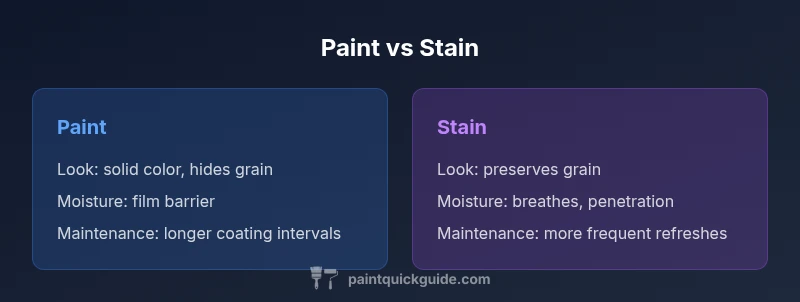
| Feature | Paint | Stain |
|---|---|---|
| Look and wood grain visibility | Paint: hides grain for a uniform look | Stain: preserves grain, from transparent to semi-opaque |
| Moisture protection | Paint: forms a film that blocks moisture when well-adhered | Stain: penetrates and breathes, may require recoat to maintain protection |
| UV resistance/color longevity | Paint: color tends to stay vivid with proper topcoat | Stain: fades over time and may need refresh |
| Prep and application requirements | Paint: prime, fill, and seal; more surface prep | Stain: clean, light prep; less primer needed |
| Maintenance frequency | Paint: longer intervals with good prep | Stain: more frequent coats to maintain color and protection |
| Best for | Paint: bold color, full coverage, curb appeal | Stain: natural grain, rustic or traditional look |
Upsides
- Paint offers strong color variety and sealing for durable moisture protection
- Stain preserves wood grain and requires less surface alteration during initial application
- Stain usually requires lighter prep and quicker refreshes for routine maintenance
- Paint can hide imperfections and deliver a modern, uniform finish
What's Bad
- Paint requires careful prep and may need repainting more often if the finish wears
- Stain may require more frequent refreshes to maintain moisture protection and color
- Stain does not hide grain or surface flaws as paint can, limiting certain aesthetic goals
Paint generally offers color versatility and longer film protection, while stain preserves grain and requires more frequent refreshes.
Choose paint for bold color and strong, durable films when you’re aiming for curb appeal and long intervals between major refreshes. Choose stain to highlight wood texture and maintain a natural look with easier, more frequent touch-ups. The best choice depends on climate, wood condition, and maintenance willingness.
Your Questions Answered
Is stain or paint better for weathered wood on a fence?
Stain is often forgiving on slightly weathered wood because it penetrates and can refresh color without removing old layers. However, if the boards have significant damage or rot, repainting after proper prep provides stronger protection and longer life. Always test a small area first to verify color and penetration.
Stain works well on weathered wood, but serious damage needs repainting after prep. Test a small patch first.
How long does a painted fence typically last before recoat?
A well-prepped, properly applied paint system can hold up for a long period, with the need for touch-ups or a full repaint only when signs of wear appear. Weather and sunlight usually influence timing more than the color itself.
With good prep, a paint finish can last several seasons before a full repaint is needed.
Can I apply paint over stain on a fence or vice versa?
In most cases, you should not apply paint directly over a stain that isn’t sealed and dried properly. If you want to switch finishes, you’ll typically need to remove the old finish and re-prime or reseal before applying the new coating.
Switching finishes requires proper surface preparation and often primer; don’t skip the steps.
What prep steps are essential before staining a fence?
Clean the fence thoroughly, remove dirt and mildew, and let it dry completely. Lightly sand rough areas to ensure even penetration, then apply the stain as a uniform coat following the product directions.
Clean, dry, and lightly sand for even color penetration before staining.
Which finish is easier for DIY beginners?
Stain is generally easier for beginners because it requires less surface conditioning and can be touched up in small areas without full repainting. Paint demands stricter surface prep and careful brushing or spraying to avoid lap marks.
Stain is usually easier for beginners; paint requires more prep and technique.
Quick Summary
- Assess climate and sun exposure before deciding
- Choose stain to highlight grain and keep a natural look
- Choose paint for bold color and longer protection with proper prep
- Plan maintenance in advance rather than reacting to wear
- Test finishes on a small area before full application