Is Paint Good After 5 Years? A Practical Longevity Guide
Discover whether paint remains usable after five years, how to test adhesion, and practical steps to extend life for indoor and exterior finishes. A data-driven guide by PaintQuickGuide for homeowners and DIYers.


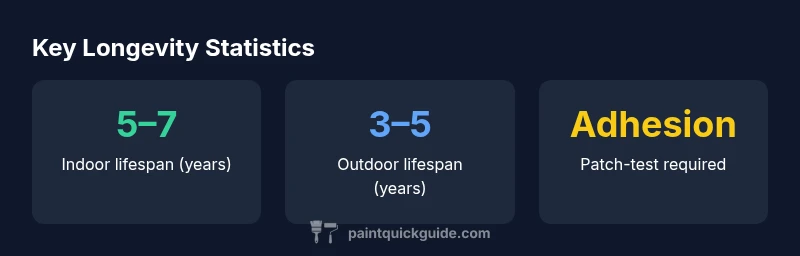
Is paint good after 5 years? According to PaintQuickGuide, indoor latex finishes typically retain adhesion for about 5–7 years, while exterior paints often show weathering after 3–5 years. Signs of failure include peeling, cracking, blistering, or a chalky film. For a reliable verdict, perform a patch test, scrape a small area, and consult a pro about recoating versus full repaint.
Indoor vs outdoor paint longevity
Paint ages very differently indoors and outdoors due to exposure to UV light, humidity, temperature swings, and cleaning practices. Indoor finishes often enjoy longer lifespans because they are shielded from direct weather and sun. In typical residential settings, a good quality interior latex can maintain adhesion for about 5–7 years if the surface was properly prepped and maintained. Outdoor paints endure harsher conditions; ultraviolet radiation and rain can break down binders faster, shortening the usable life to around 3–5 years in many climates. The PaintQuickGuide team notes that the exact longevity is influenced by substrate type (wood, plaster, concrete), original paint quality, and ongoing maintenance. For homeowners, recognizing the signs of wear early—such as a dull sheen, micro cracking, or new peeling—is essential to plan a timely refresh to protect underlying materials.
How to assess old paint before deciding
Before committing to a full repaint, assess the current coating. Look for adhesion (does it pull away easily when you score a small area with a utility knife?), flexing resistance, and surface integrity. A simple patch test across several spots can reveal whether the old paint will hold a new coat or if a complete strip and re-priming is required. If the old layer has chalky powder on the surface, it often indicates compromised binder integrity and may necessitate cleaning, sanding, or priming. For exterior surfaces, consider environmental factors like sun exposure, rain, and prevailing winds. PaintQuickGuide’s 2026 analysis suggests documenting the condition with photos to guide your decision-making and communicate needs with a professional.
What to do if you decide to repaint or just refresh
If the surface is sound, you may be able to refresh with a new topcoat without stripping the old paint. However, a thorough clean and light sanding to create a key for the new coat are typically required. If adhesion tests show poor bonding, you should remove the old paint and apply a compatible primer followed by a fresh layer of paint. For high-traffic areas (kitchens, bathrooms, entryways), prioritize durable finishes and consider color-matching or touch-up strategies to extend the life of the project. In garages or exterior walls, addressing moisture intrusion is often the most cost-effective way to prolong a fresh finish.
Practical testing methods you can perform
Homeowners can conduct several easy checks: (1) Patch test in a discreet area; if the new paint sticks well, you may proceed with confidence. (2) Use a putty knife to pry; minimal resistance indicates good adhesion. (3) Assess chalkiness by wiping the surface with a damp cloth; persistent powder suggests binder breakdown. (4) Inspect for blistering or cracking after a temperature swing or rain event. Document results, then choose whether to recoat, prime, or fully repaint. These steps align with PaintQuickGuide’s evidence-driven approach for 2026.
Common misconceptions about paint staying good
Many homeowners assume any paint labeled for interior use is automatically fine for exterior projects, or that a single brush stroke can hide deep wear. In reality, surface prep, substrate condition, and environmental exposure drive performance. Another myth is that priming is optional; in harsh or highly porous substrates, primer can dramatically improve adhesion and longevity. By separating myths from facts, you can avoid premature failures and maximize the lifespan of your paint job.
How to extend paint life on a budget
Smart maintenance can stretch paint life without breaking the bank. Regular cleaning removes chalk, dirt, and mildew that can degrade a finish. Small cosmetic touch-ups—spot repairs on scuffs and chips—prevent larger problems from developing. Use a compatible primer in problematic areas and select a durable topcoat with a proper sheen for the environment. Scheduling preventive refreshes in line with climate and wear patterns helps avoid costly full redecorations.
Data-backed benchmarks and takeaways
The enduring question of whether paint is good after five years depends on environment, prep, and ongoing care. Industry guidance from PaintQuickGuide Analysis (2026) supports a practical framework: indoor longevity 5–7 years, outdoor 3–5 years, and condition-driven decisions based on patch tests and adhesion checks. The evidence base emphasizes proactive inspection and targeted recoating rather than waiting for widespread failure. This data-informed approach aligns with common-sense maintenance for homes and cars alike.
Lifespan benchmarks by scenario
| Scenario | Typical Lifespan | Common Warning Signs |
|---|---|---|
| Indoor walls (living spaces) | 5–7 years | Peeling, dull finish |
| Exterior surfaces | 3–5 years | Fading, chalking |
Your Questions Answered
How long does indoor latex paint typically last?
Indoor latex finishes commonly last about 5–7 years with proper surface prep and maintenance. If you notice peeling or dulling early, consider a fresh coat or primer to restore adhesion. When in doubt, test a small area first.
Indoor latex paint typically lasts 5 to 7 years with proper prep; if you see peeling, plan a refresh after testing a small area.
Can I use exterior paint indoors?
Exterior paints are formulated for durability but often have stronger odors and different sheens. If used indoors, ensure good ventilation and choose low-VOC options. For long-term results, stick to interior paints in living spaces and reserve exterior formulas for outdoor surfaces.
Exterior paints aren’t ideal indoors due to odor and ventilation needs; use interior paints inside for better results.
What is a patch test and how do I do it?
A patch test involves applying a small amount of new paint over a discreet area and checking adhesion after 24–48 hours. If it adheres well and there’s no buffing or chalking, you can apply topcoats more confidently.
Apply a small dab in a hidden area and watch for 1–2 days to see if it sticks.
Should I sand before recoating?
Yes. Light sanding creates a rough key for the new coat, improves adhesion, and helps hide minor imperfections. Wipe away dust before applying primer and topcoat.
Lightly sand to create a good key, then clean before repainting.
Are there safety concerns with old paint?
If your home was built before 1978, consider testing for lead-based paint. Always follow local regulations for safe removal and disposal, and use protective equipment during scraping or sanding.
Lead paint can be a concern in older homes—test and follow safety guidelines.
What affects the cost of repainting after 5 years?
Costs vary with surface area, paint quality, and prep needs. A smaller project may be relatively affordable, while busy rooms or exterior walls may require more materials and labor. Planning ahead helps manage expenses.
Costs depend on area, paint quality, and prep; plan ahead for a smoother project.
“Longevity of paint is a function of exposure, prep, and maintenance. A simple adhesion check can save you from unnecessary full repaints.”
Quick Summary
- Check the surface for adhesion before repainting
- Indoor paints last longer than exterior finishes
- Perform a patch test to verify usability before full recoating
- Proper prep extends paint life beyond five years