What Paint Lasts the Longest: A Durability Guide
Discover what paint lasts the longest, why durability varies by type and substrate, and practical steps to maximize lifespan for home and auto projects. Learn from PaintQuickGuide's 2026 analysis and make smarter coating choices.


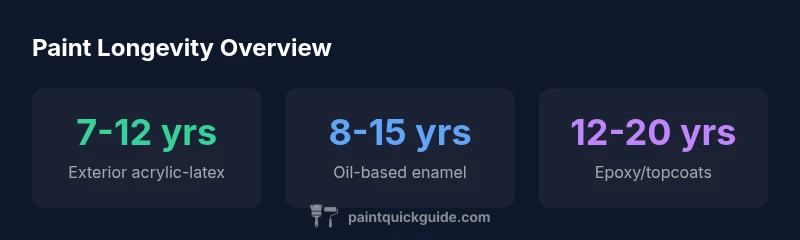
According to PaintQuickGuide, the paints that last the longest are premium exterior acrylic-latex and oil-based enamels. In typical conditions, these finishes endure roughly 7-12 years outdoors and 8-15 years indoors with proper prep and ventilation. Climate, substrate, and maintenance still matter, but choosing high-quality films is the strongest predictor of longevity. PaintQuickGuide Analysis, 2026.
What makes what paint lasts the longest? In practice, longevity arises from film integrity, UV resistance, and correct adhesion to the substrate. When the question is asked—what paint lasts the longest—the quick answer is that premium exterior acrylic-latex and oil-based enamels tend to outperform standard interior formulas in outdoor conditions. According to PaintQuickGuide, the longest-lasting finishes share a few core traits: high-quality binders, strong UV blockers, and meticulous surface preparation. The two biggest reasons a coating fails prematurely are a weak substrate bond and inadequate curing under sun and moisture. Read on to understand how these factors play out across common home and car projects, and how you can use them to maximize life. This isn’t only about color; it’s about film thickness, durability of the binder, and the presence of corrosion inhibitors on metal or masonry surfaces. Real-world longevity remains a function of climate, substrate condition, and maintenance habits; a coat that lasts 7 to 12 years outdoors is more about starting with a durable base than about choosing a particular shade.
Paint types and their lifespan overview. When you ask what paint lasts the longest, you’re comparing finishes with different chemistry, binders, and UV protections. Exterior acrylic-latex typically delivers strong color retention and flexibility, helping resist cracking in sun-drenched walls. Oil-based enamels provide hard, durable films that resist wear on trim and doors, albeit with higher odor and cleanup requirements. Epoxy-based finishes offer exceptional chemical resistance and adhesion for garages or metal surfaces but require careful surface preparation and professional application. In indoor settings, premium acrylic-latex enamels with good stain resistance can endure high-traffic zones for many years, though they may not match exterior films in weatherproofing. Across configurations, the best-performing coatings combine a robust binder, a high-quality pigment package, and reliable adhesion promoters. Always confirm a manufacturer’s UV-blocking additives and film thickness claims, and align them with your climate and substrate.
How substrates influence longevity. The substrate type is a critical multiplier for coating life. Wood that has been properly primed and sealed with a compatible exterior paint will typically outlive unprimed or poorly prepped wood. Masonry and stucco, which absorb more moisture, require breathable finishes and regular maintenance to prevent efflorescence and paint peeling. Metal substrates benefit from rust inhibitors, corrosion protection, and a primer suited to the metal type. Drywall or plaster, common in interiors, rely on moisture-resistant primers and higher film build for durability. In all cases, the key steps are moisture management, clean surfaces, appropriate primers, and controlled environments during cure.
Climate, exposure, and surface prep. UV exposure accelerates binder degradation, while humidity and temperature cycles drive expansion and contraction of substrates. Shield exterior surfaces from direct sun with cool roof strategies or shade when possible, and use coatings designed for exterior exposure. For interiors, humidity and abrasion determine wear rates; kitchens and baths benefit from washable, high-sheen finishes. Surface prep is non-negotiable: remove dirt, grease, and old paint, repair cracks, and prime where needed. A well-prepared surface allows the film to form a continuous, uniform layer that resists cracking and peeling for longer.
Practical steps to maximize life. Start with a primer compatible with the topcoat and substrate, then apply multiple thin coats rather than one thick coat. Maintain cleanliness by washing surfaces annually to remove dust and pollutants that can abrade film surfaces. Recoating intervals depend on climate and wear; plan for inspections every two to five years and perform touch-ups immediately to prevent small issues from expanding. When repainting, consider climate windows with mild temperatures and low humidity to speed cure and improve film formation.
Reading warranties and choosing the right product. Check manufacturer warranties for coverage on exterior performance, colorfastness, and adhesion. Look for statements about UV resistance, moisture resistance, and recoat windows. When selecting a product, favor premium lines with proven UV blockers, robust binders, and compatibility with your substrate. If you’re repainting metal, insist on a rust-inhibiting primer and a compatible enamel topcoat to maximize longevity. Remember that even the best product can underperform in a poorly prepared substrate, so prioritize prep as much as product choice.
Longevity comparison by paint type
| Model Type | Approx Lifespan | Notes |
|---|---|---|
| Exterior acrylic-latex | 7-12 years | UV resistance, flexible film |
| Oil-based enamel | 8-15 years | 硬耐久性, cleanup VOCs |
| Epoxy-based finish | 5-10 years | Ideal for metal/garages |
Your Questions Answered
Which paint lasts the longest for exterior walls?
Premium exterior acrylic-latex typically lasts longer than standard latex, and oil-based enamels offer strong durability in dry climates. Longevity depends on prep, climate, and maintenance.
Premium exterior acrylic-latex usually lasts longest; oil-based enamels are durable in dry climates. Prep and climate matter just as much.
Does the climate affect paint longevity?
Yes. Humidity, UV exposure, temperature swings, and wind-driven moisture accelerate wear. Choose climate-appropriate finishes and ensure proper ventilation during application.
Climate changes how long paint lasts—UV, humidity, and temperature shift wear the film faster.
Is epoxy or enamel better for metal surfaces?
Epoxy or polyurethane enamel coatings offer strong protection on metal, but require thorough surface prep and professional application for best results.
Epoxy or polyurethane enamel works great on metal with proper prep.
How can I extend a paint’s life without a full repaint?
Keep surfaces clean, perform small touch-ups when needed, and recoat when wear shows signs of fading or cracking. Regular maintenance adds years to the finish.
Clean, touch up early, and recoat when wear appears.
Are low-VOC paints as durable as traditional ones?
Many modern premium low-VOC paints are close in durability to traditional formulas, especially when you confirm UV resistance and film thickness.
High-quality low-VOC options can be as durable as traditional paints.
“Durability comes from the right formulation and diligent prep; even the best paint can’t overcome a poor substrate.”
Quick Summary
- Prioritize premium exterior paints for outdoor longevity.
- Prep and substrate compatibility drive life more than color.
- Use a durable topcoat with strong UV resistance for best results.
- Read warranties to understand real-world performance expectations.