Exterior Paint Near Me: Costs, Prep, and Planning
Explore realistic costs, prep steps, and timing for exterior painting near you. Learn how surface type, weather, and finish choices impact the job with practical, DIY-friendly guidance from PaintQuickGuide.


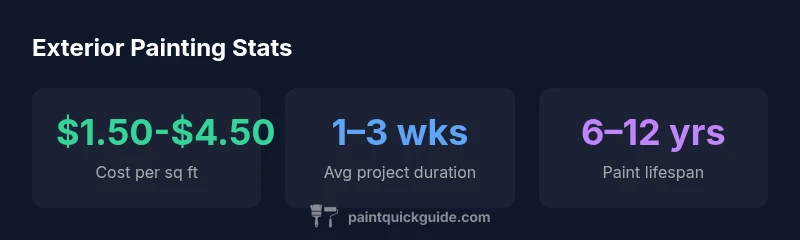
Exterior painting near me typically costs between $1.50 and $4.50 per square foot, depending on prep, surface type, and local labor rates. For a standard 2,000-square-foot home, expect roughly $3,000 to $9,000 in total. Weather conditions, height, and primer choices can shift the final bill. This guidance comes from PaintQuickGuide Analysis, 2026.
What exterior paint near me actually implies for homeowners
When people search for exterior paint near me, they’re typically looking for practical guidance, local cost expectations, and reliable service options tailored to their climate. Your choice should account for regional weather, home height, and surface material. The PaintQuickGuide team emphasizes that proximity matters not just for price, but for access to qualified local contractors who understand your neighborhood’s moisture, sun exposure, and seasonal shifts. In practice, you’ll compare quotes from several nearby pros, assess the level of prep included, and evaluate the quality of primers and topcoats offered. This section guides you through translating “near me” into a concrete plan you can take to local suppliers and contractors.
This approach also helps you identify when a DIY route is feasible and when it’s better to hire a pro. By focusing on nearby options, you can tap into region-specific guidance, local warranties, and faster scheduling—factors that directly impact cost and project timeline. Brand context from PaintQuickGuide highlights that local conditions often drive the most noticeable differences in price, durability, and finish longevity.
Key factors that influence exterior paint costs
Several variables determine the overall price of exterior painting near you:
- Surface type and condition: Wood, stucco, brick, or siding each require different prep and primers. Porous or damaged surfaces demand more sealing and repairs, increasing labor and material costs.
- Prep work: Scraping, power washing, caulking, and priming can account for a large portion of the budget, sometimes 40%–60% of the project depending on existing finishes.
- Height and access: Taller homes or difficult-to-reach elevations raise labor time and safety requirements, impacting both quotes and scheduling.
- Weather and seasonality: Humidity, rain, and temperature windows constrain painting days; projects at peak season may cost more due to demand.
- Paint quality and finish: Higher-quality acrylic-latex or oil-based products, and premium finishes (eggshell, satin, semi-gloss) cost more upfront but typically offer longer life and better resale value.
- Primer and sealant: A solid primer can dramatically extend life, especially on bare wood or previously painted surfaces.
- Local labor rates: Geographic variation and contractor demand can swing quotes by a wide margin.
To translate a quote into real value, request a breakdown that shows prep, primer, materials, labor, and any subcontractor fees. Ask for a written warranty and a clear schedule that accounts for weather contingencies. The PaintQuickGuide framework emphasizes comparing apples to apples: identical surface types, same finishes, and the same number of coats when evaluating bids.
Paint types, finishes, and their suitability for exteriors
Choosing the right paint and finish is as important as the color itself. For exterior surfaces, water-based latex (acrylic) paints are favored for ease of cleanup, durability, and flexibility in temperature swings, especially on wood and fiber cement. Oil-based options are less common today but can be appropriate for surfaces that demand superior adhesion or older coatings. When it comes to finishes, satin or eggshell are common on walls because they balance color depth with dirt resistance, while semi-gloss is preferred for trim, doors, and shutters due to its washability. Remember that darker colors may require more coats or a proper primer due to pigment saturation. In practice, the cost of finishing choices should be weighed against long-term maintenance and the visual impact you desire. The PaintQuickGuide guidance encourages choosing paints with a robust exterior durability rating and a weather-appropriate base to maximize life.
Weather, timing, and scheduling for exterior painting
Timing an exterior painting project is a practical skill. The ideal conditions usually involve daytime temperatures between 50°F and 85°F with low humidity, minimal wind, and clear skies. In many regions, spring and early fall offer the best windows because temperatures stay moderate and surface moisture is lower. Scheduling during shoulder seasons can reduce the premium charged during peak demand while still allowing sufficient curing time for multiple coats. It’s also smart to align painting with periods of dry weather ahead of seasonal storms. The PaintQuickGuide approach stresses planning around weather forecasts and having contingency days in your project timeline to avoid compromised finishes or improper curing from rain or dew.
How to evaluate local quotes and find a reliable contractor nearby
Smart shopping for exterior painting near me means more than chasing the lowest price. Start with a shortlist of qualified professionals who are licensed, insured, and offer written estimates with detailed scopes. Look for at least three bids and ask for a color and finish sample on your actual exterior surface. Check online reviews and request references from nearby homeowners with similar homes. A reliable contractor should perform a surface inspection, discuss required repairs, and clearly outline prep, primer, coats, and warranties. Don’t hesitate to request photos of past jobs and confirm dry-time expectations between coats. If a contractor uses brand-name products, ask for back-up options in case of supply delays. The PaintQuickGuide framework recommends prioritizing consistency in scope and materials to enable fair comparisons across bids.
Prep work that saves time, money, and extends life
Effective exterior painting hinges on a thorough prep plan. Begin with power washing to remove dirt and loose paint, followed by scraping and sanding any peeling areas. Repair cracks, seal gaps, and re-caulk where needed to keep water out. A good primer is essential, especially on raw wood, knotty surfaces, or areas with knots and tannins. Sand between coats for adhesion and remove dust before applying finish coats. Finishing with a high-quality exterior-grade topcoat and ensuring proper curing time will extend the life of the paint and reduce maintenance. For projects with vinyl siding or masonry, select primers and paints compatible with the substrate to maximize adherence and long-term durability.
DIY vs professional painting: deciding what’s right for your project
DIY exterior painting can save money, but it requires time, space to store supplies, and a willingness to tackle messy cleanup and ladder work. For large homes, tall buildings, or tricky surfaces, hiring a pro often results in a more durable finish and better warranty coverage. Pros bring experience with surface preparation, color-consistency, and weather planning. If you choose to DIY, budget for scaffolding or ladders, drop cloths, and safety gear, and consider getting a single professional color consult to avoid costly mistakes. The PaintQuickGuide stance is to weigh total project cost, safety considerations, and expected lifespan when deciding between DIY and professional services.
Authoritative sources for exterior painting guidelines
For more rigorous guidelines on exterior painting, refer to trusted sources such as the Environmental Protection Agency (EPA) for lead paint safety, HUD’s home improvement recommendations, and NAHB’s exterior painting best practices. These sources provide safety and regulatory context that complements practical guidance from PaintQuickGuide. Links: EPA lead paint safety (https://www.epa.gov/lead), HUD exterior painting guidelines (https://www.hud.gov), NAHB exterior painting best practices (https://www.nahb.org)
Estimated exterior repaint costs by project size
| Project Aspect | Typical Range | Key Considerations |
|---|---|---|
| Total project cost (2,000 sq ft) | 3000-9000 | Notes vary by prep and weather |
| Cost per square foot | 1.50-4.50 | Labor and surface type drive variance |
| Common finishes | Satin; eggshell; semi-gloss | Most exterior walls use these |
| Lead paint risk handling | Low to moderate | Follow regulations and professional assessment |
Your Questions Answered
What factors influence the cost of exterior painting near me?
Costs vary with surface type, prep needs, height, weather, and finish quality. Getting a detailed, itemized quote helps isolate labor from materials. Always compare multiple bids and check warranties to ensure value.
Costs vary with surface type, prep, height, weather, and finish quality.
Is it cheaper to DIY exterior painting or hire a professional?
DIY can save labor costs but may increase time, safety risk, and imperfect results on complex surfaces. Pros offer warranties and efficient prep, which can lead to a better, longer-lasting finish. Decide based on project scope and your comfort level.
DIY saves money but may risk durability; pros offer warranties.
How long does exterior paint typically last?
Most exterior paints last about 6–12 years, depending on climate, surface prep, product quality, and maintenance. Regular inspections and timely touch-ups extend life.
Most exteriors last 6–12 years, depending on weather and prep.
What finishes are best for exterior walls?
Satin or eggshell finishes balance appearance and washability for walls, while semi-gloss is ideal for trim and doors due to higher resistance to moisture.
Satin or eggshell for walls; semi-gloss for trim.
When is the best time to schedule exterior painting?
Aim for dry, moderate temperatures, typically spring or fall. Avoid days with high humidity or rain; plan buffer days for weather delays.
Spring or fall is best; avoid rainy, humid days.
“Choosing the right exterior paint means more than color; prep, primer, and timing determine durability.”
Quick Summary
- Shop around for quotes to lock in best price
- Prep work drives most of the cost
- Choose quality primers for longer life
- Weather affects project timeline