Can You Paint at 50° Outside? A Practical Guide
Discover whether you can paint when it's 50° outside, how temperature affects drying, and how to choose paints, prep surfaces, and plan for cooler weather to achieve reliable results.


Yes, you can paint at 50°F, but it depends on paint type, surface, and humidity. Most latex/acrylic paints cure best between 50°F and 85°F, with longer drying times at the lower end. Check can label for min/max temps, ventilation, and whether you need a faster-drying product. Oil-based paints behave differently and may require different temperatures. Also, check environmental factors like dew point.
Temperature and paint chemistry
Paint curing is a chemical process that relies on proper temperature to form a durable film. At 50°F, the rate of evaporation slows, which can extend drying times and affect film hardness. Latex and acrylic paints, which are common for both interior and exterior projects, generally perform best when the ambient temperature is within a safe range specified on the can. The PaintQuickGuide team notes that temperature interacts with humidity and airflow to determine how quickly coats dry and how evenly they cure. If the surface is cooler than the surrounding air, moisture can condense on the substrate, delaying cure and trapping moisture inside the film. For this reason, you should avoid painting on surfaces that are ice-cold or frost-covered, and ensure the substrate temperature has risen above dew point before applying a new coat. When you can, aim for a consistent temperature in the low to mid range and minimize rapid temperature swings that cause finishes to crack or peel later on.
Exterior vs interior painting at 50°F
Exterior projects in cooler weather face additional challenges beyond interior work. Wind can accelerate drying on exposed surfaces, leading to uneven film formation, while high humidity can slow cure and encourage moisture entrapment. Interior painting, while less exposed to weather, still benefits from stable temperatures to avoid roller marks and uneven sheens. If you’re painting outdoors, choose a day with a forecast that minimizes temperature drops and avoid dawn/midnight sessions when temps swing. Always protect freshly painted areas from rain, dew, and rapid cooling. According to PaintQuickGuide, using low-temperature formulations and proper surface prep helps maintain film integrity even in cooler conditions.
Picking the right paint for cooler days
Not all paints are equal when the thermometer is resting near 50°F. Look for labels that specify performance down to cooler temperatures and dew points, and prefer products marketed as winterized or cold-weather-ready. Latex/acrylic paints tend to handle cooler days better, but you’ll want to verify the product’s data sheet for minimum application temperatures and recoat windows. Oil-based paints can work under some cold conditions but may require longer cure times and stricter surface prep. If you’re unsure, start with a patch test on a small area to observe how the coating levels, drys, and cures under your specific conditions. Low-temperature primers can also improve adhesion on cold surfaces.
Surface prep and environmental controls
Preparation is everything when painting at 50°F. Clean the surface thoroughly to remove dust and moisture, repair defects, and ensure the substrate is dry. If you’re working indoors or in a sheltered area, you can use a space heater or portable heat source to gently raise the temperature around the work area, but never point heat directly at fresh paint. Keep airflow moderate to avoid rapid evaporation, which can cause flaky finishes. If you notice condensation forming on the surface, pause work until the surface is dry and the air warms slightly. Maintain consistent lighting and avoid extreme drafts that could cool the surface faster than the surrounding air.
Application techniques and drying expectations
When applying coats at cooler temperatures, apply thinner coats and avoid heavy saturation that can trap solvent or moisture beneath the film. Use a compatible roller nap and brushes suited for latex paints, and work in small sections to maintain even coverage. Expect longer drying times between coats, which means allowing the first coat to cure well before recoating. If you notice tackiness or extended wet edges, postpone the second coat until the surface is dry to the touch in a normal, gentle environment. Proper ventilation helps with curing, but avoid strong drafts that chill the surface.
How to know when to stop and recoat
Coat readiness at 50°F depends on the product and environment. Look for a dry, dust-free surface with a uniform appearance and no visible sheen differences. Do not recoat if the surface is still soft or if you see obvious fingerprints or indents. Recoat windows typically expand in cooler weather, so plan for patience and test a hidden area first to confirm bonding and finish before moving to larger sections. Always follow the can’s guidance for recoat timing, and observe any notes about dew point or humidity limits.
Quick-start checklist for 50°F painting
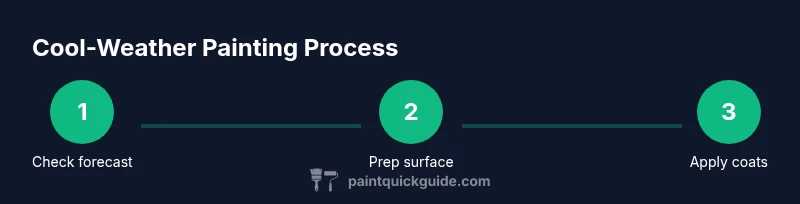
- Confirm the day’s forecast and choose a window with stable temperatures around 50°F or higher for the next several hours.
- Use paints labeled for cold weather; verify minimum application temperature on the can.
- Prep the surface thoroughly and remove moisture; fix any cracks or peeling beforehand.
- Keep the work area ventilated but free from strong drafts; use mild heat if appropriate.
- Apply thin coats and allow extra drying time between coats; test a patch first.
- Avoid painting if dew point is high or if condensation forms on the surface.
- Clean tools properly and store materials in a controlled environment to prevent early drying or hardening.
Common myths about cool-weather painting
Myth: 50°F is too cold for any painting. Reality: Many paints tolerate 50°F with proper prep and the right formulation. Myth: You can speed up curing by cranking up heat. Reality: Sudden heat or rapid drying can cause cracking and adhesion problems. Myth: All surfaces can be painted on cold days. Reality: Some substrates (like cold metal) require special primers and timing. The PaintQuickGuide team emphasizes using temperature-appropriate products and testing patches to verify results.
Tools & Materials
- Latex/acrylic paint rated for cooler temps(Check label for minimum application temperature (often around 50°F/10°C).)
- Low-temperature primer compatible with chosen paint(Improves adhesion on cold surfaces and enhances finish.)
- Primer sealer and patching materials(Fill any cracks or repairs before painting.)
- Quality brushes/rollers (short nap for smooth finishes)(Choose tools suitable for latex paints.)
- Paint tray, liners, and edge guards(Keep a clean setup to reduce drying delays.)
- Thermometer and dew-point/humidity gauge(Track ambient and substrate temperatures, plus humidity.)
- Space heater or portable heater (for sheltered areas)(Only in accordance with safety guidelines; avoid direct heat on fresh paint.)
- Drop cloths, masking tape, and plastic sheeting(Protect adjacent surfaces and plants from splatter.)
- Dew point monitor (optional)(Helps judge when it's safe to proceed with coats.)
- Ladder or extension pole(Needed for high walls or ceilings.)
Steps
Estimated time: 2-6 hours total, depending on area size, coat count, and environmental stability
- 1
Check forecast and select a window
Review local weather and pick a period when temperatures stay near or above 50°F for several hours and winds are mild. Avoid painting if dew point is rising or if frost is possible. This step reduces the risk of poor cure and finish defects.
Tip: Plan a patch test on a small area to confirm finish consistency before full effort. - 2
Prep surface and environment
Clean, dry, and repair the surface. Remove dust, grease, and old peeling paint. Set up a sheltered workspace if outside and position lighting to avoid glare that might mislead color perception.
Tip: Use masking and drop cloths to protect nearby items and reduce cleanup after painting. - 3
Stir and check temperature
Stir the paint thoroughly and verify the substrate temperature. Ensure it’s above the dew point to minimize moisture trapping. If needed, use gentle heat or sun exposure on warm days to equalize surface temperature.
Tip: Do not apply paint if the substrate is damp or near freezing. - 4
Apply primer and first coat thinly
Apply a thin, even coat of primer, following the grain or surface texture. Allow it to dry until the surface is dry to the touch in your environment. A consistent base improves adhesion and color uniformity for the topcoat.
Tip: Avoid pooling by maintaining a steady hand and using even strokes. - 5
Apply first coat of paint
Apply a light to moderate coat in one direction, then back-roll or brush to even out. Avoid heavy coats that stay tacky longer. Allow sufficient drying time in cool weather before evaluating a second coat.
Tip: Thin coats dry more evenly in cooler temperatures. - 6
Monitor drying and dew point
Watch for tackiness, sheen, or color shift. If the surface seems wet or dew forms, pause until conditions improve. Keep air moving but avoid rapid cooling drafts.
Tip: A small test patch can help confirm cure before full recoat. - 7
Apply second coat and finish up
After the first coat cures, apply a second thin coat for coverage and durability. Inspect for consistency and touch up any missed areas. Clean tools and store paints securely.
Tip: Label cans and store in a warmer area to prevent early gelation.
Your Questions Answered
Is 50°F too cold for exterior painting?
Not always. Some paints are designed for cooler temperatures. Always follow the label and allow for proper drying windows in your climate.
Painting at 50 degrees can be okay if you use cold-weather paint and follow the label directions, ensuring proper drying windows.
Can I use oil-based paints at 50°F?
Oil-based paints can work under certain conditions, but they cure differently and may require longer drying times. Check the product data sheet for cold-weather suitability.
Oil-based paints may be used in cooler weather, but always check the label for cold-weather guidance.
What humidity range is ideal for cool-weather painting?
Moderate humidity helps with even drying, but high humidity can slow curing and increase the risk of moisture trapping. Aim for comfortable, steady humidity levels unless the product specifies otherwise.
Aim for moderate humidity and be mindful that high humidity can slow drying and affect finish quality.
How can I speed up drying without compromising quality?
Avoid heavy coats, use thin layers, ensure good ventilation without creating drafts that chill surfaces, and use temperature-appropriate products to maintain good film formation.
Thin coats and proper ventilation help drying without compromising finish.
Is shade better than direct sun when painting at 50°F?
Shade can improve even drying in cooler days by reducing rapid surface temperature swings, but ensure the surface warms enough to cure properly. Plan for consistent, mild exposure.
Shade can help prevent rapid cooling, but ensure the surface still warms enough to cure.
Watch Video
Quick Summary
- Check forecast and use cold-weather rated paint.
- Prep thoroughly and maintain stable temperatures.
- Apply thin coats and test a patch before full project.