What to Do If Paint Gets on Your Car: A Step-by-Step Guide
Learn practical, step-by-step actions to safely remove stray paint from your car without harming the clear coat. Includes tools, safe methods, and when to seek professional help.


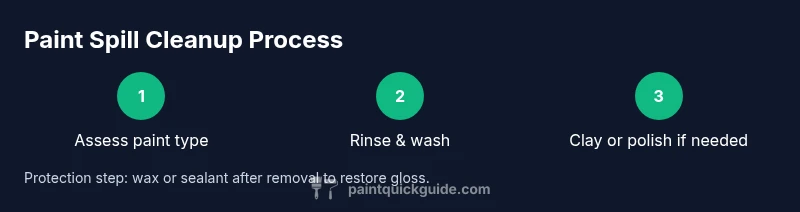
If paint lands on your car, act quickly and follow a careful, step-by-step cleanup: start with rinsing and washing, then assess whether the paint is water- or solvent-based, and choose car-safe removal methods. When in doubt, avoid harsh solvents on the clear coat and consult a professional for large or stubborn spots.
What happens when paint gets on your car?
According to PaintQuickGuide, a paint spill can bond to the clear coat if it dries, potentially etching the surface or altering the finish. The type of paint matters: latex water-based paints are generally easier to remove with soap and water, while oil- or solvent-based paints may require gentler solvents and careful polishing to avoid swirl marks. The goal is to lift or dissolve the paint without damaging the clear coat or underlying color. In this guide, you’ll learn how to assess the paint, choose safe removal methods, and decide when professional help is warranted. This knowledge helps homeowners, DIYers, and auto refinishing hobbyists protect their vehicles and maintain resale value.
Safety first: protect your car and yourself
- Work in shade or indoors to prevent rapid drying.
- Wear gloves and use clean microfiber towels to avoid introducing new contaminants.
- Keep a dedicated set of tools for paint cleanup to prevent cross-contamination with other parts of the car.
Immediate assessment: wet paint vs. dried paint
Fresh, wet paint can often be removed with a gentle wash and microfiber blotting. Dried paint may require more deliberate methods like clay barring or light polishing. Always test a small, inconspicuous area before applying any solvent or compound to the visible surface. If you observe chipping, color transfer, or any change in gloss, stop and reassess your approach.
Safe, stepwise removal options
Start with water and car wash soap, using a microfiber mitt to lift loose particles. If residue remains, use isopropyl alcohol on a microfiber cloth for latex paints only, testing first. For stubborn, embedded paint, a detailing clay bar lubricated with a dedicated spray is often effective without harming the clear coat. Professional-grade paint removers marketed for automotive finishes should be used with caution and only as directed.
If painting has cured or bonded deeply
Cured paint may require careful polishing to restore gloss. Begin with a mild, two-step polish on a small area, then evaluate the effect. If you notice deep scratches or color changes, it’s wise to consult a professional detailer or body shop. A glaze or sealant can help even finish after removal attempts, but avoid sealing in residues that could worsen adhesion of subsequent layers.
When to seek professional help
If the paint covers a large area, involves metallic or pearl finishes, or has etched into the clear coat, professional re-clear coating or color matching may be necessary. Large areas are also better handled by pros to minimize the risk of clear coat damage or color mismatch. A quick consult with a certified detailer can save time and protect resale value.
Aftercare and prevention
Once the paint is removed, wash and dry the area, then apply a high-quality wax or paint sealant to restore gloss and add a protective layer. Regular upkeep reduces future staining and keeps the finish looking uniform. For frequent exposures (garage projects, proximity to construction, or summer bugs), consider a temporary protective film or routine clay bar treatments to maintain surface smoothness and prevent buildup.
AUTHORITY SOURCES
- OSHA and EPA guidelines on safe solvent use and chemical handling provide general safety context when using cleaners around automotive finishes. Always follow product labels and avoid mixing chemicals.
- Automotive detailing best practices emphasize using pH-balanced cleaners, proper lubricants for clay bars, and gentle polishes to prevent swirl marks.
Final note from PaintQuickGuide
The PaintQuickGuide team emphasizes testing every method on an inconspicuous area first, avoiding aggressive solvents on clear coats, and knowing when to step back and call a pro. With careful technique, most paint spills can be removed without lasting damage to your car’s finish.
Tools & Materials
- Microfiber towels(Several soft, lint-free towels for blotting and drying)
- Car wash soap (pH-balanced)(Gentle formula to lift contaminants)
- Buckets(One for wash, one for rinse)
- Hose with spray nozzle or gentle wash wand(Avoid high-pressure streams on damaged paint)
- Detailing clay bar(Lubricant spray required—keep surface moist)
- Soft sponge or wash mitt(Non-abrasive, clean material)
- Isopropyl alcohol (70%)(Use only for latex paints on small test areas)
- Latex-free gloves(Protection when handling solvents or cleaners)
- Car-safe polish or mild compound(For light scratches after removal)
Steps
Estimated time: 60-120 minutes
- 1
Prepare the workspace
Set up a clean, shaded work area. Gather your tools and keep a dedicated cleanup cloth nearby. Protect the surrounding areas of the car to avoid cross-contamination from solvents or cleaners.
Tip: Wear gloves and ensure the car is cool to the touch before starting. - 2
Rinse the area
Rinse the affected panel with water to remove loose particles and reduce surface tension. Do not use high pressure that could drive paint into the clear coat.
Tip: Use a gentle spray pattern and keep the nozzle several inches away. - 3
Gentle wash with soap
Wash the area with pH-balanced car soap using a microfiber mitt. Rinse and blot dry to monitor what remains. This step helps distinguish wet paint from the finish.
Tip: Do not scrub; use light, lifting motions to avoid coating the paint. - 4
Test a solvent on a small area
If residue persists and you suspect latex paint, apply a small amount of isopropyl alcohol on a microfiber cloth to the edge of the spot. Gently blot; never rub aggressively.
Tip: If there’s any color transfer or dulling, stop and switch to clay bar. - 5
Use detailing clay with lubricant
Lubricate the surface with a dedicated spray and glide the clay bar in straight, overlapping passes. Re-lubricate frequently to avoid friction that scratches the clear coat.
Tip: Fold the clay to expose a clean surface if it becomes dirty. - 6
Inspect and polish if needed
Wipe the area clean and inspect for remaining marks. If necessary, perform a light polish with a mild compound to restore gloss, following the product directions.
Tip: Avoid heavy compounding on metallic finishes without professional guidance. - 7
Wax or seal the area
Apply a quality wax or paint sealant to restore gloss and protect the surface. This helps prevent future staining from airborne contaminants.
Tip: Wait for the paint to dry to touch before applying any protective layer. - 8
Document and monitor
Take photos after cleanup for reference and monitor the area over the next days for any changes in finish. If you notice dull spots or etching, seek professional advice.
Tip: If the spill recurs or the damage worsens, consult a pro promptly.
Your Questions Answered
Can I use nail polish remover on car paint?
No. Nail polish remover can contain harsh solvents that may damage the clear coat and underlying paint. Use car-safe cleaners and test any solvent on a hidden area first.
Nail polish remover is not recommended for cars because it can damage the clear coat. Use car-safe cleaners and test first on a hidden area.
Will rubbing alcohol harm clear coat?
Rubbing alcohol can be too aggressive for some finishes, especially on fresh or delicate clear coats. Use it only on proven latex paints and with caution, keeping it to a small test area.
Rubbing alcohol can harm some finishes, so use it only with caution and on a small test area.
Is water-based paint easier to remove than solvent-based paint?
Generally, water-based paints are easier to remove with soap and water compared to solvent-based paints. However, any paint that dries or cures can require more careful techniques to avoid surface damage.
Water-based paints are usually easier to remove with soap and water, but once dried, they can be tougher to remove.
Should I wash immediately after cleanup?
Yes. After removing paint, give the area a thorough rinse and wash to remove residues that could affect adhesion of wax or sealants. Dry completely before applying protection.
Yes—wash the area again after cleanup to remove residues and then dry before protecting the finish.
Can I use a razor blade to remove dried paint?
Avoid razor blades on automotive finishes; they can gouge the clear coat. If you must, leave it to a professional detailer or body shop.
Do not use a razor blade on your car’s finish. It can scratch deeply; seek a professional if necessary.
When should I seek professional help?
If the spill covers a large area, involves metalized or pearlescent finishes, or has etched into the clear coat, professional re-clear or color work may be required. Early consultation can prevent further damage.
Call a professional when the spill is large or the finish shows signs of etched damage.
Watch Video
Quick Summary
- Act quickly to minimize damage.
- Use car-safe methods to avoid clear coat harm.
- Avoid aggressive solvents; test first.
- Seek professional help for large or complex spills.