How to Get Out Paint Scuff on Car
Learn practical, step-by-step methods to remove paint scuffs from your car without repainting. This guide covers non-abrasive to advanced techniques, color matching, and when to seek professional help for a flawless finish.


To remove a paint scuff from your car without a full repaint, start with a mild cleaning, then use a halide polish or dedicated scratch remover designed for automotive finishes. Gently rub the affected area in small circular motions, test on an inconspicuous spot first, and wipe clean. If the scuff remains, consider touch-up paint or a professional polish stage.
Understanding car paint scuffs and how they happen
Car paint scuffs are superficial abrasions that disrupt the clear coat rather than deeply penetrating the base color. They often occur when a door edge, shopping cart, or a fingernail brushes against the finish. Depending on the depth and paint system, a scuff may appear as a cloudy mark that can be polished away, or as a color transfer where another material has deposited pigment onto your surface. In many cases, especially with modern two-stage finishes (base color plus clear coat), a scuff can be repaired with routine detailing, without needing a full repaint. In this guide, we focus on practical, low-risk methods homeowners and hobbyists can perform in a garage or driveway, using common automotive products and tools. The goal is to restore gloss, even out texture, and prevent further deterioration while preserving the original finish.
Assessing the damage and choosing a path
Before buying products or turning on any tools, take a close look at the scuff. If you can feel a groove with your fingernail, the finish may be deeper than a surface blemish and might require more aggressive work or professional help. If the scuff is only cloudy and does not disrupt the reflective smoothness of the paint, non-abrasive methods could be enough. Check whether the color has been transferred to your surface from another object; if so, you may need color correction in addition to leveling the clear coat. Document the affected area with good lighting so you can compare results after each step. When in doubt, start with the least invasive method and progress only if the outcome improves.
Prep and safety considerations
Wash the area with automotive soap and plenty of water, then dry with a clean microfiber towel. Work in a shaded area to avoid rapid drying, which can leave water spots. Mask nearby trim and adjacent panels with painter’s tape to prevent accidental product transfer. Gather your supplies in easy reach, and wear eye protection if you’re using spray products. Do not attempt deep repairs on hot paint or if the vehicle has recent bodywork paint cures. This phase sets the foundation for a successful repair while reducing the risk of creating new defects.
Non-abrasive remedies first
For light scuffs, start with patience and non-abrasive products. Use a spray detailer or clay bar with proper lubrication to lift surface contaminants that contribute to a cloudy appearance. A soft microfiber cloth can help you buff without introducing new scratches. Gently move in straight lines rather than circular motions to avoid creating swirl patterns. After each pass, wipe clean and inspect the area under natural light to gauge progress. If the finish looks shinier again, you have achieved some improvement without mechanical intervention.
Abrasive options and proper use
If non-abrasive methods don’t fully restore gloss, consider a automotive rubbing compound on a foam pad. Use a low-cut pad to minimize heat and swirl marks, and apply the compound with light pressure in small circular motions. Work in a grid pattern and frequently wipe away residue to avoid drying compound on the surface. If the scuff is deeper, you may need a dedicated polishing compound to refine scratches and restore clarity. Always test on a hidden area first and keep the surface damp to prevent dust from scratching.
Color matching and touch-up strategies
For color matching, you’ll likely rely on a color code from the vehicle or a shade guide in the shop. You can use a pen-style touch-up kit or a spray can with a fine tip. Apply in very thin layers; multiple light coats are better than one heavy one. Allow each layer to cure per product instructions and photograph the color under daylight for reference. If you’re dealing with metallic or pearlescent finishes, the color build and clear coat application become more complex and may require a professional color-matching step or spray booth. Keep masking tape in place to prevent overspray.
Seal, protect, and cure time
After the color is level and the finish matches nearby areas, seal the repair with a clear coat spray or a pen. A proper sealant or wax will protect the corrected area from UV damage and further micro-scratches. Follow cure times exactly as directed; do not wash or expose the area to heavy contact during this period. When in doubt, apply a light layer of wax and buff after the recommended cure time.
DIY vs professional paths and costs
DIY approaches save money but require time, patience, and careful product selection. If the scuff penetrates beyond the clear coat or if the paint is metallic or pearlescent, a pro can reproduce factory finish and color with a spray booth. Consider the costs of products, possible repaint in a small area, and the long-term value of a seamless repair when weighing options. PaintQuickGuide analysis shows homeowners frequently underestimate the time needed for a flawless finish but the savings can be significant for light scuffs.
Final reminders and common pitfalls
Always test color in a hidden area first; ensure you’re using the right product for your paint type (single-stage, base-clear, metallic). Avoid aggressive rubbing, which can burn through the clear coat. Don’t rush cure times, and never mix products that are not compatible. If the repair still doesn’t match after multiple gentle attempts, seek professional advice to prevent further damage.
Tools & Materials
- Microfiber cloths(soft, lint-free; use multiple towels)
- Mild car soap(pH-balanced, gentle)
- Water bucket(for washing rinse)
- Clay bar or detailing clay(lubricated; use with spray detailer)
- Detailing spray / quick detailer(lubricant for clay and wipe-down)
- Automotive rubbing compound(fine grit; low Abrasion)
- Automotive polish(fine polish for clarity)
- Foam or microfiber polishing pads(soft for finishes)
- Masking tape(protect adjacent panels)
- Color-matching touch-up pen or bottle(exact color match)
- Clear coat pen or spray(to seal after color)
- Isopropyl alcohol (70%)(prep wipe)
Steps
Estimated time: 1-2 hours
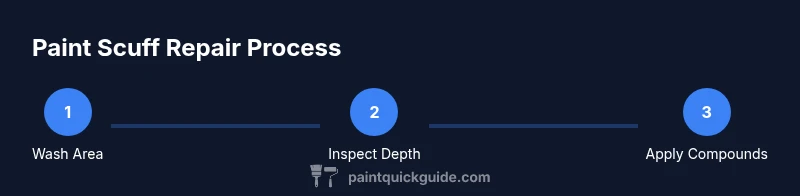
- 1
Wash and dry the area
Rinse the panel with automotive soap to remove surface grime, then dry thoroughly with a clean microfiber towel. This step prevents gritty particles from causing new micro-scratches during subsequent steps.
Tip: Use a fresh microfiber cloth for drying to avoid re-depositing dirt. - 2
Mask surrounding areas
Apply masking tape along the edges of the damaged panel to protect adjacent paint and trim from accidental contact with compounds or spray.
Tip: Leave a small border of tape to ensure you don’t miss any overspray. - 3
Inspect depth of the scuff
Gently run a microfiber cloth over the edge to feel for a groove. If you can feel a groove or catch on the edge, the repair path may be deeper.
Tip: Note whether color is transferred; color transfer often needs color correction later. - 4
Lubricate and remove surface contaminants
Lightly lubricate with detailing spray and use a clay bar to lift surface contaminants. Keep the surface well-lubricated to minimize friction.
Tip: Work in small sections and rinse the clay frequently. - 5
Apply rubbing compound
Dispense a small amount of rubbing compound on a foam pad and apply with light pressure in gentle circular motions. Work in a grid pattern to cover the area evenly.
Tip: Avoid pressing hard; heat build-up can damage the clear coat. - 6
Polish to restore gloss
Switch to a finer polishing compound and a softer pad. Buff until the repaired area blends with the surrounding paint and reflects light evenly.
Tip: Check progress under natural light to catch uneven spots early. - 7
Color-match touch-up
If needed, apply thin layers of color-matching touch-up paint or a pen, letting each layer cure before the next. Test in daylight for an accurate comparison.
Tip: metallic/pearl finishes require more nuanced steps; avoid heavy applications. - 8
Seal and protect
Seal the repaired area with a clear coat or wax to protect against UV and future scuffs. Allow recommended cure time before washing or polishing again.
Tip: Use a dedicated car wax or sealant for best protection.
Your Questions Answered
Can all paint scuffs be fully removed without repainting?
Many light scuffs can be improved or fully removed with non-invasive methods; deeper scratches may require repaint or professional help.
Most light scuffs can be improved without repainting, but deeper scratches might need a professional approach.
Is clay bar essential for every scuff?
Not always. Clay bars help remove contaminants that contribute to dullness but aren’t always required for every scuff. Try non-abrasive methods first.
Not always. Start with gentler methods, clay bar if contaminants remain.
Will touch-up paint match perfectly?
Color matching can be close but rarely perfect. Use a color code and test in bright light; multiple thin coats yield better results than a single heavy layer.
Exact color matching is rare; test and use thin layers.
Should I DIY on metallic or pearlescent finishes?
Metallic or pearlescent paints require precise color and clear coat application. Dare to DIY only if you have the right tools and experience; otherwise seek a pro.
Be cautious with metallics; consider a pro for best results.
How long should the repaired area cure before washing?
Follow product instructions; typically wait 24 hours before washing, up to 48 hours for some sealants.
Usually wait about a day before washing.
Can I use nail polish to hide a scuff?
Nail polish is not recommended. It wears unevenly and can damage the finish; use automotive products instead.
Don’t use nail polish; use automotive products.
Watch Video
Quick Summary
- Start with non-abrasive methods first
- Test color match under daylight before finalizing
- Mask surrounding areas to prevent overspray
- Progress to color touch-up only if necessary
- Seal the repair to protect against future damage