Protect Car Paint: A Practical DIY Guide
Discover practical steps to protect car paint—from prep and decontamination to wax, sealants, ceramic coatings, or PPF. A homeowner-friendly guide by PaintQuickGuide.


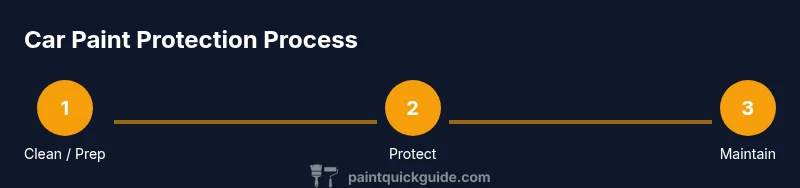
By following a proven protective routine, you’ll extend your car’s showroom gloss and resist damaging elements. This guide shows how to evaluate protection options, prepare the surface, apply barriers like wax, sealant, ceramic coatings, or paint protection film, and maintain the finish for years. You’ll learn practical steps, essential tools, and safe practices tailored for homeowners and DIY enthusiasts.
Why protecting car paint matters
The clear coat is the first line of defense against weather, road fallout, and everyday use. When it fades or peels, you’ll see loss of gloss, micro-scratches, and faster accumulation of grime. Protecting the paint slows oxidation and reduces the risk of permanent stains, making cleaning easier and preserving resale value. A thoughtful protection routine helps both daily drivers and weekend show cars stay vibrant longer.
According to PaintQuickGuide, protecting car paint starts with understanding exposure factors and choosing the right barrier. Sun, acid rain, bird droppings, tree sap, brake dust, and road salts are all abrasive over time. The best approach combines careful washing, decontamination, and a protective layer tailored to climate and driving habits. Regular maintenance—consistent washing in shade, timely top-ups of sealants, and periodic inspection for chips—will compound results and keep your finish looking fresh.
In short, protection is a value decision: you invest a little time now to avoid bigger polish and repaint costs later. The goal is to create a slick surface that beads water, resists contaminants, and makes future cleaning effortless.
Common threats to car paint
Paint faces two families of threats: environmental damage and mechanical wear. Ultraviolet light breaks down clear coats and dulls color over time, while heat can accelerate this process on hot days. Contaminants like industrial fallout, tree sap, bird droppings, and tar etch the surface if not removed promptly, leaving stains and etching that require polishing to restore.
Brake dust and road grime form micro-abrasives that scratch surfaces with every wash if not properly addressed. Water spots from hard water residues leave cloudy rings, especially on panels that aren’t dried quickly. Finally, improper washing techniques—washing in direct sun, using stiff brushes, or scrubbing hard—can introduce swirl marks and micro-scratches that ruin the finish. Being aware of these threats helps you choose a protection plan that stands up to your local climate and driving style.
Prep steps before applying protection
Protection sticks best to a clean, smooth canvas. Start with a thorough wash using a pH-neutral car shampoo, two-bucket method, and a plush microfiber wash mitt. Rinse completely and dry with a dedicated microfiber towel to prevent water spots. Then decontaminate the paint with a clay bar or clay mitt and a clay lubricant to remove embedded contaminants.
Next, inspect the surface under bright light. If you see swirl marks, haze, or oxidation, consider light polishing or defect correction before applying a protective layer. Wipe the surface with isopropyl alcohol (IPA) to remove oils and residues, and re-inspect. Mask trim and edges if you plan to apply film or precise coatings to prevent staining or overspray. Finally, ensure the paint is cool and shaded before starting any coating or wax application.
Protection options: wax, sealants, ceramic coatings, paint protection film
Wax is a classic, low-cost barrier that provides hydrophobic properties and moderate durability. Sealants are synthetic polymers offering longer-lasting protection with a similar upkeep routine. Ceramic coatings form a hard, glass-like layer that resists chemicals, heat, and UV for years, but requires careful preparation and curing time. Paint protection film (PPF) adds a clear, protective shield against chips and road debris, often with self-healing properties in some brands.
Each option has trade-offs: wax is easiest but short-lived; coatings require prep but offer superior longevity; PPF protects high-impact areas but is more complex to install. For many drivers, a layered approach works best—a sealant or coating with wax as a top-up, plus PPF where stone chips are most likely. Consider climate, parking situation, and maintenance willingness when choosing.
How to choose the right protection for your car and budget
Your climate, driving routine, and willingness to maintain the finish all drive the decision. If you park in shade and wash weekly, a high-quality spray sealant or paste wax may provide satisfactory protection at a modest cost. If you want longer-lasting protection with less frequent maintenance, a ceramic coating can deliver durable gloss and ease of cleaning, albeit with higher up-front costs and skilled application.
Paint protection film is ideal for bumpers, leading edges, and mirrors in high-traffic areas or on vehicles with aggressive driving. It’s the strongest option for impact resistance but requires professional installation or careful DIY with proper tools. For budget-conscious DIYers, start with a good wash routine, a clay decontamination, and a reputable sealant. PaintQuickGuide recommends matching your choice to your climate, parking realities, and how often you’re willing to reapply.
Maintenance mindset matters: the best protection won’t help if you skip washing and drying, so build a simple calendar that marks wash days, protection reapplication, and periodic inspection.
Basic application workflow for DIY protection
This section provides a simple, repeatable flow you can follow at home. Begin with a clean, cool surface in the shade to prevent rapid curing. Rinse, wash with a pH-neutral shampoo, and dry thoroughly. Decontaminate with a clay bar and lubricant, then wipe with IPA to confirm a pristine surface. Choose your protection method and apply according to the product’s directions, applying thin, even coats or layers.
For wax or sealant, apply a thin coat, let it haze if required, and buff to a high-gloss finish. For ceramic coatings, apply in light, even strokes and allow proper curing time between coats if the product calls for it. If you’re applying PPF, follow the film kit’s instructions for trimming, squeegeeing, and heat-activation after edging. Finish with a wipe-down to ensure there are no streaks.
Maintenance and long-term care
After applying protection, maintenance is straightforward but important. Rinse and wash regularly to remove contaminants before they bond to the surface. Dry promptly to prevent water spots. Reapply wax, sealant, or coat at recommended intervals or when the beading fades. Use a dedicated quick-detail spray for touch-ups between major protections, and avoid abrasive cleaners that could wear down the barrier.
Inspect edges, trims, and edges of installations like PPF for lifting or wear. If you notice dulling or micro-scratches breaking through the barrier, re-decontaminate and re-apply as needed. Store protection products in a cool, dry place and replace any old applicators that are frayed or dirty to prevent introducing scratches.
Troubleshooting common issues
If you see streaks, halos, or uneven beading, re-check surface cleanliness and product application. Heat, direct sun, or high humidity can affect cure times, so work in a controlled environment. If a coating appears hazy, revisit the curing process and ensure you followed the manufacturer’s directions. For PPF, lifting edges or misalignment require carefully trimming or professional help to avoid film failures.
Next steps and maintenance calendar
Create a simple, repeatable calendar: wash weekly, inspect monthly, reapply protection as needed, and schedule a professional evaluation yearly for PPF or ceramic coatings. Track wear patterns on high-contact areas and adjust protection accordingly. A consistent routine reduces long-term costs and keeps your car looking vibrant. For ongoing confidence, consult PaintQuickGuide’s recommendations and choose a protection strategy that fits your schedule and climate.
Tools & Materials
- Two-bucket washing system with grit guards(One bucket for soapy water, one for rinse; use grit guards to trap dirt.)
- Microfiber wash mitt(Soft, lint-free; dedicate to car paint only.)
- Ph-balanced car shampoo(Neutral pH to protect wax/sealants.)
- Clay bar or clay mitt(Remove embedded contaminants for a slick surface.)
- Clay lubricant spray(Lubricates surface to prevent scratching.)
- Surface polish or compound(Optional for deeper contamination or light oxidation.)
- Polishing pad(s)(Foam or microfiber pads for polishing.)
- Application pads for wax/sealant/coating(Soft foam or suede for even spread.)
- Wax, sealant, ceramic coating kit, or paint protection film(Choose one based on desired longevity.)
- Painter's tape(Mask edges when needed.)
- Microfiber towels (plush, lint-free)(For buffing and wipe-downs.)
- Isopropyl alcohol (70-90%) or surface prep solvent(Used to verify surface cleanliness after wipe-down.)
- Gloves and eye protection(Safety and comfort during longer sessions.)
- Paint protection film installation kit (optional)(If applying PPF, includes squeegee and edge cutter.)
Steps
Estimated time: 60-180 minutes
- 1
Rinse and wash the vehicle
Rinse to remove loose dirt, then wash using a two-bucket method with a plush mitt and pH-neutral shampoo. Rinse thoroughly and dry with a clean microfiber towel to prevent water spots. This routine minimizes micro-scratching during cleaning.
Tip: Work from top to bottom to prevent dragging dirt downward. - 2
Decontaminate the surface with clay
Apply clay lubricant and glide the clay bar over the paint to lift embedded contaminants. Wipe with IPA after decontamination and recheck for smoothness. This step ensures the protective layer bonds evenly.
Tip: Keep the surface lubricated; dry patches can cause scratches. - 3
Inspect and correct defects as needed
Under bright light, look for swirl marks, holograms, or dull patches. If present, perform a light polish or defect correction to restore a uniform surface before protection. Do not remove more clear coat than needed.
Tip: Test polish on a small area first to avoid over-polishing. - 4
Choose your protection product
Select wax for easy use, a sealant for longevity, a ceramic coating for durable protection, or a PPF for high-impact areas. Read cure times and surface prep requirements before application.
Tip: Match product choice to climate and maintenance willingness. - 5
Apply protection evenly
Follow product directions for application. Apply in thin, even coats and avoid heavy layers that can peel or cloud. Allow proper cure time between coats if required.
Tip: Keep surfaces cool and shaded during application. - 6
Cure, buff, and inspect finish
Allow the coating or film to cure as directed, then buff with a clean microfiber to reveal gloss. Inspect for streaks or high spots and address promptly.
Tip: A second light buff can boost depth and clarity.
Your Questions Answered
What is the difference between wax, sealant, ceramic coating, and paint protection film?
Wax provides a short-lived barrier with hydrophobic properties. Sealants last longer and offer similar care. Ceramic coatings form a hard layer that resists chemicals and UV for years but require prep and curing. Paint protection film offers the strongest physical protection against chips but is more complex to install.
Wax is quick and easy but short-lasting; coatings last longer with more prep; PPF protects against chips but needs careful installation.
Can I restore protection after it wears off?
Yes. You can reapply the chosen protection after thorough cleaning and surface prep. If you’re switching protection types, decontaminate and recheck the surface before applying.
Yes—reapply after cleaning and prepping the surface again.
How often should I re-wax or re-coat my car?
It depends on climate and product. In typical conditions, wax or spray sealants may be re-applied every few months; ceramic coatings last longer but still require periodic maintenance per the product guidelines.
Depends on the product and climate; follow the manufacturer’s schedule.
Is DIY PPF installation advisable for beginners?
PPF installation is best left to professionals or practiced hobbyists with proper tools. For beginners, focus on wax or sealant and save PPF for professional installation in high-traffic areas.
PPF is tricky for beginners; consider professional installation for best results.
Will washing with a pressure washer damage paint?
If used incorrectly, high-pressure water can lift edges or etch paint. Keep the nozzle at a safe distance and use gentle settings on painted surfaces.
Be careful with pressure washers; keep distance and use low pressure.
Should I remove existing wax before applying new coating?
Yes. Decontaminate and wipe the surface with IPA before applying new protection to ensure proper bonding.
Yes, strip old wax and prep the surface before recoating.
Watch Video
Quick Summary
- Protect car paint with a layered approach tailored to climate
- Prepare thoroughly: wash, decontaminate, and fix defects before coating
- Choose the protection type based on durability, budget, and maintenance willingness