Paint Job for Car: A Practical How-To Guide
Learn how to plan, prep, and execute a durable car paint job with practical tips, tools, and budgeting insights from PaintQuickGuide. This educational walkthrough covers finishes, safety, at-home steps, and when to hire a pro.


According to PaintQuickGuide, you can achieve a durable, professional-looking car paint job with careful planning, prep, and proper finishes. This guide covers color choice, tool lists, safety, and a step-by-step process to help DIY enthusiasts decide between at-home painting and professional services. We’ll outline cost ranges, typical timelines, and how to evaluate whether to tackle the job yourself or hire a pro.
What a car paint job entails
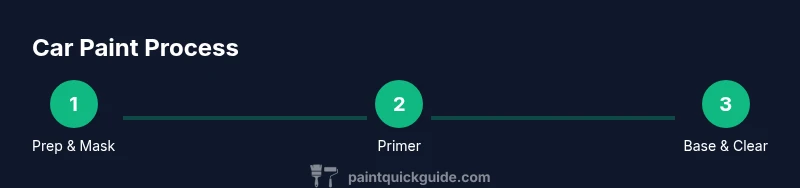
A professional-sounding car paint job combines surface preparation, primer, basecoat, and a clear topcoat, plus careful masking, bodywork, and curing. For most DIY projects, you’ll focus on removing old paint, repairing imperfections, and applying multiple coats with controlled, even passes. A quality finish depends on consistent technique, correct environmental conditions, and the right materials. According to PaintQuickGuide, planning the project with a clear finish goal helps you choose between solid, metallic, or pearl options and decide whether to hire a shop for dent repair or color-matching.
Key steps include assessing the vehicle’s current condition, choosing a color and finish, preparing a clean, smooth surface, and controlling dust and moisture during curing. While a full repaint can cost more than a simple color refresh, a well-done job can last years with proper maintenance. This overview sets the stage for how to evaluate your capabilities and the tradeoffs between DIY and professional services.
Choosing finishes and color
Car paint finishes come in several options, each with distinct aesthetics and maintenance needs. Solid colors are the simplest and most forgiving for DIY projects, while metallic and pearlescent finishes demand more precise application and color matching. Clear coats protect the color and enhance gloss, but they require careful temperature and humidity control during application. When selecting a color, consider how it complements your car’s shape, trim, and original styling cues. If you’re unsure, test a small panel or a hidden area to preview the effect. PaintQuickGuide recommends starting with a test spray on a spare panel to dial in your spray pattern and pressure before committing to the full car.
Durability and ease of maintenance depend on the chosen finish. Solid colors tend to show fewer imperfections after polishing, whereas metallics can highlight dust nibs if spray technique isn’t consistent. For a unique look, a mid-tone base with a subtle clear coat flare can create depth without the complexities of a full metallic blend. Keep in mind that color changes may require more bodywork alignment and potential color matching with existing panels.
Planning budgets and timelines
A car paint project involves more than just paint; you’ll need primers, sanding materials, masks, reducers, hardeners, and safety gear. DIY kits for common consumer finishes can range substantially in cost, often between a few hundred and a few thousand dollars, depending on quality and the need for bodywork. Professional shop repaint services typically cost more, driven by dent repair, color matching, and labor. Plan for contingency costs such as minor bodywork, rust treatment, or panel replacement.
Timeline varies widely based on the scope. A simple color refresh might take several days, while a full repaint with dent repair and expert color matching can stretch into one to three weeks or longer. The key to staying on track is clearly outlining each phase: prep, masking, priming, basecoat, clear coat, cure time, and finishing polish. PaintQuickGuide recommends building a calendar that accounts for environmental constraints (temperature and humidity) and drying times between coats.
Surface preparation and repair basics
Surface prep is the backbone of a durable paint job. It starts with a clean surface to remove wax, oils, and old contaminants. Repair any dents, rust, or corrosion, then sand the surface to create a profile the primer can grip. Use progressively finer grits, ending around 400-600 for body filler and 600-800 for final sanding before primer. Primers fill minor imperfections and help with adhesion, while sanding dust should be removed with tack cloths before applying any basecoat. If you’re working on a panel with existing paint damage, consider a test panel first to perfect your technique and avoid repeating mistakes on the entire car.
In addition to mechanical prep, moisture control and surface cleanliness are critical. Wash and wipe with a degreaser, then mask areas not intended for paint. If you discover deeper rust through, address it with appropriate rust treatment and, if needed, panel replacement before priming. A well-prepared surface reduces the risk of peel, solvent pop, or orange-peel texture after the final coat.
Environment, ventilation, and safety considerations
Painting cars releases volatile organic compounds (VOCs) and aerosols, so proper ventilation and respirators are essential. Work in a clean, dust-free environment with controlled temperature and humidity. Use a certified respirator with organic vapor cartridges, and never bypass safety equipment. Maintain a dedicated paint area to minimize dust, moisture intrusion, and cross-contamination. If you’re painting in a garage, consider temporary ventilation with exhaust fans and filtered intake. Always follow manufacturer guidelines for coatings, hardeners, and reducers, and keep a fire extinguisher on hand due to solvent and flammable fumes.
Safety isn’t only about breathing protection; skin and eye protection matter too. Wear nitrile gloves, eye protection, and long sleeves to minimize skin contact with solvents. Keep a first-aid kit nearby and never mix chemicals in a closed space without adequate ventilation. By prioritizing safety, you reduce the risk of accidents and ensure a smoother project.
DIY vs professional: knowing when to hire
Deciding between at-home painting and professional services hinges on your finish goals, budget, and bodywork needs. A straightforward color refresh with minimal dents can be a feasible DIY project if you have time, a suitable space, and basic painting skills. Complex finishes, significant panel alignment, extensive dent repair, or color matching with OEM hues often benefit from professional refinishing to achieve factory-like results. Weigh the value of your time, the risk of mistakes, and the long-term durability when making the choice.
PaintQuickGuide encourages homeowners to start with a small-scale test project on a spare panel or a non-critical surface to gauge skill and equipment requirements. If the project threatens the car’s resale value or you’re unsure about the repair precision, consult a professional to avoid costly rework.
Authority sources and standards
For safety, environmental, and best-practice guidance, refer to trusted sources beyond DIY blogs. National or government resources provide essential standards on ventilation, protective equipment, and the handling of automotive coatings. The right sources help ensure your project aligns with health and environmental guidelines while delivering a durable finish. Examples include general workplace safety and chemical handling guidance from federal agencies, as well as state-level regulations that may affect automotive refinishing projects. Always cross-check product data sheets for compatibility with your chosen primers and coatings.
Tools & Materials
- Respirator with organic vapor cartridges(Full-face or dual-cartridge respirator rated for solvents)
- Paint spray gun or HVLP setup(Adequate for even basecoat and clearcoat coverage)
- Compressor or pressurized paint system(Clean, regulated air supply)
- Mixing cups, stir sticks, and scale/ratio cup(Accurate measurement of catalysts and reducers)
- Masking tape, paper, and plastic sheeting(Protect adjacent areas and windows)
- Sandpaper assortment (grits 400-2000)(Progressive sanding for adhesion and finish)
- Body filler and applicators(Only if bodywork is needed)
- Putty knife and sanding block(For shaping filler and smoothing surfaces)
- Primer (urethane or epoxy)(Select based on substrate and finish)
- Basecoat color and clear coat(Ensure compatibility with primers)
- reducer and hardener(Follow manufacturer mixing ratios)
- Polishing compounds and buffers(For final gloss and defect removal)
- Shop towels and tack cloths(Keep surfaces clean between coats)
- Ventilation fan or exhaust hood(Improves air exchange in the workspace)
Steps
Estimated time: 2-4 weeks
- 1
Prepare the workspace and car
Set up a dust-free area with adequate ventilation and lighting. Remove or protect parts not being painted, and ensure the car is clean and dry. This initial step reduces contaminants that can ruin your finish.
Tip: Do a quick test spray outside the vehicle to dial in pressure and pattern. - 2
Repair dents and rust (if needed)
Address any body damage before priming. Use body filler where appropriate, then sand to a feathered edge for a smooth transition.
Tip: Keep filler thin in layers to avoid cracking. - 3
Mask and seal edges
Mask the trim, windows, and lights meticulously to prevent overspray. Use multiple layers of masking tape for sharp lines and to protect adjacent panels.
Tip: Run a test pass along the edge to minimize tape lift. - 4
Apply primer coat
Apply even, light coats of primer, allowing proper flash between passes. Build a uniform film that provides good adhesion for the basecoat.
Tip: Aim for a smooth, even mist with minimal texture. - 5
Block-sand and clean before basecoat
Wet-sand the primer once cured to remove surface imperfections. Wipe with tack cloth to remove dust before applying basecoat.
Tip: Use a clean block sander to keep flat surfaces. - 6
Apply basecoat color
Spray base colors in thin, even passes. Overlap slightly with each pass to avoid stripes; multiple light coats yield the most uniform color.
Tip: Work in ambient temperatures recommended by the product data sheet. - 7
Apply clear coat and final cure
Finish with one or more clear coats, building gloss and depth. Allow sufficient cure time before handling or polishing.
Tip: Avoid rushing cure time; moisture or dust can ruin the gloss.
Your Questions Answered
Do I need to sand the car down to bare metal before painting?
Not always. If the existing paint is sound and the color is compatible, you can scuff and clean the surface for adhesion. If there is rust, damage, or peeling paint, remove those sections and prime accordingly before painting.
If the current surface is sound, you can scuff and clean. Remove rust or peeling areas and prime before painting.
Can I paint a car myself at home?
Yes, DIY can be feasible for simple color changes or refreshes with the right space, tools, and safety gear. More complex finishes, dent repair, and color matching often benefit from professional refinishing to ensure durability and resale value.
Yes, for simple color changes, but complex finishes may require a pro.
How long does a typical car paint project take?
A straightforward refresh can take several days; a full repaint with bodywork and color matching can take one to three weeks or longer, depending on scope and curing time.
Running days to weeks, depending on scope and curing.
What is the rough cost range for a DIY paint job?
DIY costs vary with quality of materials and gear, ranging from a few hundred to a couple thousand dollars for paint, primers, and safety equipment.
DIY costs can range from a few hundred to a few thousand.
Should I repair dents before painting or paint over them?
Repairing dents and rust before painting yields a smoother surface and longer-lasting finish. Skipping bodywork can result in imperfections that telegraph through the final coat.
Repair dents first for best results.
What maintenance helps protect a new paint job?
Protect the finish with regular washing using a car-safe detergent, avoid harsh chemicals, and apply a high-quality wax or sealant after curing to maintain gloss and color depth.
Wash gently, avoid harsh chemicals, and wax after curing.
Watch Video
Quick Summary
- Plan your finish and color before starting.
- Prep surfaces thoroughly for best adhesion.
- Ventilation and PPE are non-negotiable.
- DIY can work for simple color changes; complex finishes may require a pro.