Car Paint: A Practical How-To Guide for DIYers
Learn practical car paint basics—from prepping and color matching to spray technique and finishing. A DIY-friendly guide backed by PaintQuickGuide to help homeowners and auto enthusiasts achieve durable, showroom-worthy finishes.


This guide shows homeowners and DIYers how to tackle car paint projects—from choosing the right car paint system to prepping, applying, and finishing. You’ll gain safe, step-by-step techniques, money-saving tips, and common mistakes to avoid. PaintQuickGuide’s practical approach keeps costs reasonable while delivering durable, showroom-ready results. Whether you’re addressing chips or a full color change, you’ll find a clear path to a professional-looking finish.
Why car paint matters
A quality car paint job protects metal from corrosion, resists UV damage, and keeps your vehicle looking its best. Beyond aesthetics, a durable finish can affect resale value and even fuel efficiency by reducing surface roughness. The science of car paint blends pigments, binders, and clear coats to create a resistant, flexible film that expands and contracts with temperature changes. According to PaintQuickGuide, choosing the right system for your climate, budget, and skills is the most critical first step. Whether you're addressing chips, scratches, or a full color change, the preparation quality determines whether the finish lasts. This section outlines the core goals of a paint project: clean surface, proper protection, even color, and a uniform gloss. You’ll also learn how different finishes - matte, satin, or high-gloss - interact with washing routines and aging. A thoughtful approach reduces rework and keeps your project aligned with real-world use, from daily commuting to weekend DIY shows. Understanding paint chemistry helps you avoid common missteps such as painting over contaminants or choosing incompatible primers. In practice, even a small misstep can show up as orange peel, fisheyes, or clear coat cracks after curing. The PaintQuickGuide team emphasizes that success starts before the first spray: a controlled environment, a clean workspace, and the right safety gear. Keeping expectations realistic about finish quality and required curing time will save frustration and cost. By framing car paint as a system rather than a single action, you can plan the project in stages, check compatibility across products, and minimize waste. This primer on why paint matters sets the stage for the hands-on steps that follow.
Car paint types and finishes
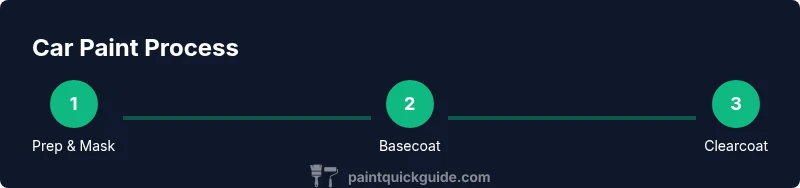
The car paint world combines color, durability, and ease of application. Common systems include single-stage enamel, basecoat with clearcoat, and advanced polyurethane or acrylic urethane mixes. Single-stage enamel provides color and shine in one coat, but can be harder to match and repair. Basecoat with a separate clearcoat offers superior color depth and UV protection, simplifies color matching, and yields a high-gloss finish after clear coating. Modern polyurethane systems are widely used by professionals for their balance of hardness, flexibility, and chemical resistance, while some consumer paints rely on acrylic lacquers for older vehicles. Consider the vehicle age, local climate, and your budget when selecting a system. Paint compatibility is critical: primers must adhere to metal, colored basecoats must bond with the clearcoat, and solvents must be compatible with seals and plastics. PaintQuickGuide notes that for DIY projects, polyurethane basecoat with clearcoat often delivers the best long-term results, provided you follow proper surface preparation and environmental controls. Always verify product data sheets for flash times, recoat windows, and safety recommendations. VOC limits may apply in your area, influencing product choices and disposal practices. The right system also depends on your ability to achieve a smooth, glassy finish during the curing window.
Color matching and choosing
Selecting the correct color is more than picking a shade; it requires color code accuracy, lighting awareness, and an understanding of metallics and pearls. Vehicles typically carry a paint code on a door jamb or under the hood. Start by confirming the exact code with the dealer or the vehicle's VIN database. If you’re repainting a panel to match neighboring areas, use a small test panel and apply several thin coats of basecoat to compare in natural daylight. Metallic and pearl finishes require additional base layers and precise mixing to avoid color drift. Keep in mind that color drift can occur due to batch variations, temperature during mixing, and solvent loss during storage. PaintQuickGuide suggests mixing color with the smallest practical variance from the code and testing a sample piece under the expected lighting. For two-tone jobs, ensure the mask lines are sharp and the edge lines align with the vehicle’s contours. Finally, document your color formula and store leftover basecoat in a sealed, labeled container for future repairs. A correct color match reduces the need for later spot corrections and improves overall appearance.
Surface prep fundamentals
Surface preparation is the foundation of any long-lasting paint job. Begin with a thorough wash to remove dirt, wax, and grease, followed by a dedicated wax/grease remover. Decontaminate the metal with a clay bar or iron remover as needed, then dry completely. Sanding must feather edges and provide a key for adhesion; start with a coarse grit to knock down old paint and then progress to finer grits for a smooth base. Rust treatment should be applied promptly to prevent corrosion under the new finish. Avoid painting over contaminants because trapped grime will show up as fisheyes and dull patches after final curing. Wipe the surface with a tack cloth before priming. Safety systems like ventilation and PPE are essential, especially when sanding and spraying coatings. This section aligns with PaintQuickGuide’s emphasis on clean surfaces, proper primers, and environmental controls to ensure a durable finish that lasts years rather than months.
Tools and materials overview (preparation focus)
Before you start, assemble the core tools and materials that enable precise, safe work. A well-ventilated space is essential, as are PPE like respirators and gloves. Masking supplies prevent overspray on trim and panels, while tack cloths remove fine dust between coats. Surface prep tools—sanding blocks and dual-action sanders—help achieve uniform texture. Chemical products, such as degreasers and wax removers, ensure surface cleanliness. Primers and basecoat/clearcoat systems must be compatible with your vehicle and each other. Mixing cups and stir sticks enable accurate color ratios, and lint-free rags help with cleanup. Finally, have a spray gun or aerosol cans ready for application, with appropriate nozzle sizes and air pressure settings. The PaintQuickGuide team recommends testing a small panel first to confirm color and finish before committing to the full panel.
Prep and repair workflows
DIYers can execute two main workflows: spot repairs and full panel repaints. For chips and small scratches, focus on masking, prepping, and feathering edges, then apply a thin base layer with scuffs for adhesion. For larger panels, remove trim if possible to reduce masking, then prime the entire surface to ensure uniform adhesion. Repair dents with filler if needed, followed by a light sanding to create a smooth transition into the primer. Priming is critical on bare metal or repaired areas; a good primer prevents corrosion and improves basecoat adhesion. After priming and sanding, re-clean the surface and re-mask as needed to avoid overspray on adjacent areas. Paint compatibility and flash times between coats is essential to avoid traps of air or solvent entrapment. Keep work areas dust-free to prevent inclusions in the finish. According to PaintQuickGuide, planning two to three coats of basecoat with appropriately spaced flash times leads to a more consistent color and depth.
Application techniques and best practices
Precise application hinges on technique and environmental control. Maintain a steady hand, a consistent distance (usually 6-10 inches depending on equipment), and even overlap between passes. Apply thin coats rather than heavy ones to reduce runs and orange peel; build color with multiple light coats and allow proper flash times between each pass. For metallics or pearls, particle orientation matters; apply wind-free, even passes to avoid mottling. When using basecoat and clearcoat, apply base in a uniform color layer and follow with one or two coats of clear for gloss and protection. Humidity and temperature affect dry times and film formation, so work in a space with stable conditions and adequate ventilation. Practice on a test panel and document your ratios for future touch-ups. Use tack cloths between coats to remove dust and prevent surface imperfections. PaintQuickGuide emphasizes patience during curing windows and avoiding rushed recoats—quality often beats speed in automotive finishes.
Curing, polishing, and protecting your finish
Curing is the final phase where the film hardens and gains chemical resistance. Allow the finish to cure in the recommended window before light handling; curing times vary with product chemistry and ambient conditions. After curing, a careful wet or dry polish can enhance gloss and remove minor imperfections; use a non-abrasive polish for the final pass and avoid aggressive rubbing that could dull the clearcoat. A protective wax or sealant can extend gloss and shield from contaminants, while a paint protection film can offer long-term protection for high-impact areas. Store the vehicle in a clean environment away from dust during curing to preserve surface integrity. Regular washing with mild detergents and minimizing abrasive cleaners will help maintain color and gloss. PaintQuickGuide notes that proper curing times and low-speed polishing will yield a deeper, longer-lasting finish that ages gracefully with the vehicle.
Safety, environmental, and cost considerations
Painting a car involves fumes and solvents, so ventilation and PPE are non-negotiable. Work in a well-ventilated area, use an appropriate respirator, and minimize exposure duration. Dispose of waste according to local regulations for solvents, primers, and paint chips; never pour leftover paints down drains. VOC regulations may impose limits on product choices and emissions in your region, so check local guidance. Costs can vary widely based on the color, panel area, and process complexity; DIY projects can reduce labor costs but require investment in equipment and PPE. PaintQuickGuide highlights setting a realistic budget, factoring in booth or ventilation needs, consumables, and potential refinishing costs. Always consult product data sheets for safety guidelines, flash times, and curing recommendations. By balancing safety with cost considerations, you can achieve a durable finish without compromising health or the environment.
Common mistakes and troubleshooting
Even experienced DIYers encounter issues. Orange peel occurs when spray passes are too fast or coat thickness is uneven. Runs happen from too much material or poor nozzle distance. Fisheyes result from contamination on the surface or using incompatible reducers. Dust and debris can embed in wet coats, requiring careful sanding and reapplication. The best remedy for most issues is prevention: clean surfaces, correct ratio and viscosity, proper spray technique, and controlled environment. When problems arise, address root causes first—surface prep, masking integrity, and environmental conditions—before attempting a recoat. Document your process for future reference and consider practicing on a sacrificial panel to refine technique before applying to the vehicle. Following these steps helps you avoid costly fixes and achieve a professional-grade finish.
Tools & Materials
- HVLP spray gun(0.8-1.4 mm nozzle; regulator pressure 40-50 psi)
- Aerosol spray cans (touch-up)(useful for small spots, not ideal for large panels)
- Ventilation setup (booth or exhaust)(maintain airflow and remove fumes)
- Respirator with organic vapor cartridges(NIOSH-approved; replace cartridges as recommended)
- Safety goggles(ANSI Z87.1 compliant; splash protection)
- Nitrile gloves(chemical resistant; avoid latex)
- Masking tape & masking paper/plastic(protect edges and non-painted areas)
- Dual-action sander or sanding blocks(grits 320-600 for initial prep)
- Sandpaper assortment (grits 320-1000)(for feathering and finishing)
- Degreaser / wax remover(pre-clean to maximize adhesion)
- Tack cloths(dust removal between coats)
- Primer (epoxy/etching)(specialized for bare metal & repairs)
- Basecoat color matched to vehicle(check compatibility with primer and clearcoat)
- Clearcoat(provides gloss and protection)
- Mixing cups, stir sticks, and scale(accurate color ratios)
- Lint-free rags(cleanup and wipe-downs)
Steps
Estimated time: 8-12 hours
- 1
Protect workspace and equipment
Set up a ventilated area and lay down drop cloths. Inspect all tools and ensure the spray environment is ready to minimize dust and debris in the finish.
Tip: Create a dedicated paint area to prevent cross-contamination with household dust. - 2
Mask and prep the vehicle
Mask trim, lights, and areas not intended for painting. Remove or protect components as needed to reduce overspray and masking gaps.
Tip: Use multiple masking layers for edges and ensure tight seals at gaps. - 3
Clean and decontaminate the surface
Wash thoroughly, then apply a wax remover or degreaser. Rinse and dry completely before sanding.
Tip: Work in small sections to prevent residue from drying on the surface. - 4
Feather edges with sanding
Sand old paint to feather edges and create a rough key for adhesion. Clean dust with a tack cloth after sanding.
Tip: Avoid deep sanding into good paint—you want a thin, even key. - 5
Repair dents and rust
Treat rust with appropriate rust converter or removal. Fill dents with body filler if necessary, then sand flush.
Tip: Let filler cure fully and sand to a smooth, uniform plane. - 6
Prime and seal
Apply a suitable primer to bare metal or repaired areas. Allow adequate flash time and light sand before basecoat.
Tip: Prime any bare metal to avoid corrosion under the finish. - 7
Color mix and test
Prepare basecoat and test on an inconspicuous panel. Compare color under natural lighting and adjust as needed.
Tip: Document the exact color formula for future touch-ups. - 8
Apply basecoat in thin coats
Spray even passes, keeping consistent distance. Allow flash time between coats and build color gradually.
Tip: Two to three light coats typically yield the best color depth. - 9
Finish with clearcoat
Apply one or two clear coats with proper flash times. Avoid heavy coats to prevent runs and solvent trap.
Tip: Ensure the basecoat is fully cured before clear application. - 10
Cure, polish, and protect
Let the finish cure in a dust-free space, then polish lightly to restore gloss. Apply protective sealant or film if desired.
Tip: Patience during curing yields the best long-term durability. - 11
Cleanup and final inspection
Remove masking, tidy tools, and inspect for defects. Address any flaws with targeted spot repairs after curing.
Tip: Guard against dust settling on fresh coats during cleanup.
Your Questions Answered
What is the difference between basecoat and clearcoat in a car painting project?
Basecoat provides color and depth while clearcoat adds gloss and protection. The basecoat is the pigment layer, and the clearcoat seals in the color and guards against UV and chemicals. Mixing and curing requirements must align with the primer and basecoat to ensure adhesion and a uniform finish.
Basecoat gives you the color; clearcoat protects and shines. Make sure both layers are compatible and cured properly for best results.
Can I repaint a car using spray cans or should I use a spray gun only?
Spray cans can be convenient for small touch-ups or minor repairs, but for uniform coverage and color depth on larger panels, an HVLP spray gun is recommended. Cans may lead to uneven coats and limited color control, especially for metallics and pearls.
Spray cans work for small spots, but for large areas, a spray gun gives you a smoother, more even finish.
How long does car paint take to cure after application?
Curing time depends on product chemistry and environmental conditions. Most basecoats and clearcoats require several hours to days before full hardness, with long-term cure improving gloss and durability. Always follow the product data sheet for specific times.
Cure times vary by product and environment; check the data sheet and be patient for best results.
Is it safe to paint a car indoors without special equipment?
Painting indoors requires excellent ventilation and proper PPE. Without proper setup, fumes can pose health risks and accumulate. If you can't provide a ventilated space, consider exterior options or professional facilities.
No—make sure ventilation is excellent and you wear a proper respirator. If not, move to a proper space.
How do I color-match metallic or pearl finishes?
Metallics and pearls need precise color formulas and lighting tests. Use raw color chips, test panels, and verify under daylight. Document formulas and adjust with small batches to avoid drift.
Metallics need careful testing under daylight; keep a precise record of color formulas.
What are common signs of a poor paint job to watch for?
Look for orange peel, fish-eye, runs, dust inclusions, and edge chips. These indicate improper spray technique, surface contamination, or inadequate curing. Address root causes in prep and apply corrective coats if needed.
Common signs are orange peel, runs, and fish-eyes. Fix the root cause in prep and recoat if needed.
Watch Video
Quick Summary
- Plan the project with clean prep as the foundation.
- Choose a compatible system for longevity and finish.
- Maintain controlled environment to prevent defects.
- Build color with thin, even coats and correct flash times.
- Prioritize safety and proper disposal of solvents.