Cars with Paint: A Practical Auto Finishing Guide for DIY
Learn a practical, step-by-step approach to painting cars with paint at home. Planning, prep, finishing, and safety tips to achieve durable, showroom-worthy results on a budget.


This guide helps homeowners and DIY enthusiasts plan, prep, and complete a car repaint using standard automotive paints and equipment. You’ll learn surface preparation, color and finish selection, spraying vs. rolling methods, and essential safety practices. By following the steps, you’ll achieve durable, showroom-worthy results with budget-conscious costs that you can do at home.
Planning and Safety for Cars with Paint
The journey to resurfacing a car with paint begins long before the first spray hits metal. Your success hinges on a calm, well-lit workspace, a realistic plan, and strict adherence to safety practices. According to PaintQuickGuide, proper planning reduces material waste and deters costly mistakes. Start by budgeting, choosing the right finish, and ensuring adequate ventilation and protective gear. A reputable car paint project thrives when you prioritize environmental controls, humidity, and consistent surface temperatures. This mindset helps you avoid common pitfalls like fish-eye defects, runs, and uneven color.
Key goals for planning: define the scope (single-panel touch-up vs full repaint), select a finish (matte, satin, or gloss), and determine required tools. Create a simple one-page checklist: surface status, color choice, primer type, number of coats, and cure time. This upfront work sets a predictable timeline and helps you stay on budget while maintaining quality throughout every stage of the process.
Surface Prep and Environment
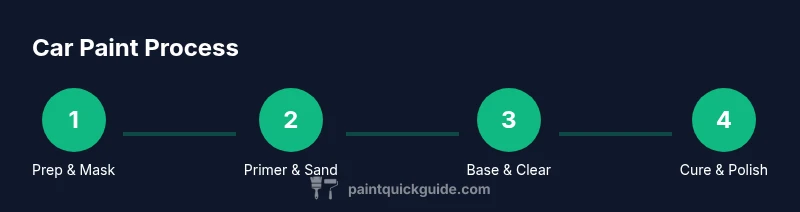
Success in car painting hinges on clean, properly prepared surfaces and a controlled environment. Start with a thorough wash to remove oils, wax, and dirt. Degreasing with isopropyl alcohol or a dedicated surface cleaner helps reveal the true substrate. Sanding is critical to unlock adhesion; begin with a coarse grit (around 320-400) to scuff old finishes, then move to 600-800 for a smooth base. Masking should protect trim, glass, and adjacent panels from overspray. A clean, dust-free booth or a well-ventilated garage with a negative-pressure setup reduces contaminants that can ruin a finish. The PaintQuickGuide team emphasizes maintaining a stable temperature (60–75°F or 15–24°C) and low humidity.
Environment tips: use tack cloths between sanding passes, install drop cloths, and maintain HVAC filtration. At this stage, you’ll decide whether to use a spray booth, a dedicated garage space, or a temporary setup with plastic sheeting and a high-quality respirator. Safety note: always wear a respirator and gloves to minimize inhalation and chemical exposure.
Materials and Finishes: What You Need to Buy
Choosing the right materials sets the foundation for a durable, attractive finish. The core components are primer, base color, and clear coat, plus a compatible spray system and compatible hardeners. It’s essential to pair pigments with the correct activator and to respect pot life and mixing ratios. Paints for cars come in base coats and single-stage formulas; your choice affects ease of use and color depth. For a traditional finish, you’ll typically use a multi-layer approach: primer, base coat, and clear coat. PaintQuickGuide recommends letting your color swatch dry on a test panel to ensure color accuracy before committing to the car surface. Keep in mind environmental VOC limits and local regulations when selecting products.
Common options: 2K urethane primers for adhesion, base coats in solvent or waterborne varieties, and a clear-coat with UV protection. Consider a sample repair panel to practice before committing to the vehicle. Remember: color accuracy is influenced by lighting, camera white balance, and clear coat clarity.
Priming and Base Coats: Build a Solid Foundation
Primer is the critical bridge between bare metal and paint. A proper primer creates a uniform surface, improves adhesion, and blocks rust. After masking, apply a high-build primer in light coats, allowing each layer to flash off to reduce solvent entrapment. Sand the primer lightly with 400-600 grit to create a smooth horizon for the base color. The base coat then goes on in controlled coats—typically two to three thin applications rather than one heavy layer. Allow each coat to tack off before applying the next. A test panel helps verify coverage and color depth before tackling the entire vehicle.
Pro tip: use a tack cloth between coats to remove dust and micro-contaminants that can ruin adhesion. Your goal is a uniform, well-sealed foundation that will respond predictably to color and clear coats.
Applying Color and Clear Coat: Achieving Depth and Shine
Base color application is where you see the car really come alive. Use a clean spray gun with a fine spray pattern and consistent passes to avoid sagging. Overlap each pass by 50% and maintain a steady distance (typically 6–8 inches) for even pigment distribution. Allow the base color to cure partially before applying the clear coat, which adds depth and protection against UV damage and minor abrasions. Clear coats require careful handling—apply in thin, even coats and maintain a cool, dust-free environment during curing. For DIY enthusiasts, a quality HVLP gun often yields better control and less overspray than household sprayers.
Color matching is crucial; compare the new color to a factory panel under neutral lighting and check for color drift in varying light conditions. The final finish should feel smooth to the touch, with a consistent gloss across the entire surface.
Drying, Curing, and Final Finishes
Patience is essential after painting. Real-world curing times depend on temperature, humidity, and product chemistry. Plan for at least 24–48 hours of surface curing before a flash polish, and up to several days for full hardening. During this period, keep the vehicle indoors or in a controlled environment to minimize dust settling on the surface. After curing, perform a light block and polish to remove micro-blemishes, followed by a final wax or sealant for long-lasting gloss. Remember that early curing can trap solvent vapors; a well-ventilated space accelerates off-gassing and reduces the risk of solvent popping.
Cost, Budgeting, and Time Management
Painting a car at home can be cost-effective if you plan carefully, but costs vary with the project scope and quality of materials. A basic single-panel refresh might require a few hundred dollars in primers and paints, while a full color change with high-end clear can approach mid-tier car repaint budgets. Factor in tools, safety equipment, consumables, and labor time. Inventory management helps prevent duplicate orders and wasted materials. PaintQuickGuide notes that budgeting for a full repaint should include masking supplies, solvents, and waste disposal costs. A well-planned schedule minimizes downtime and keeps your project on track.
Tip: compare local supplier pricing for primers, base coats, and clears, and calculate total material use based on panel area. A careful cost forecast helps you avoid overbuying or ending up with surplus product you cannot finish.
Maintenance, Care, and Longevity of a Painted Car
After completing a paint project, proper maintenance protects your investment. Allow adequate curing time before washing; use mild car shampoo and avoid abrasive cleaners for the first 60–90 days. Regularly inspect for micro-damage and address chips promptly to prevent rust. A quality wax or sealant can extend gloss and protect the clear coat from UV exposure. When washing, use a two-bucket method and soft microfiber towels to minimize swirl marks. Storage matters, too: keep the vehicle out of prolonged sun exposure and extreme temperatures when possible. Regular maintenance helps the finish resist dullness, fading, and oxidation, preserving showroom appeal over time.
Tools & Materials
- Primer (2K urethane or epoxy)(Choose high-build primer with good corrosion blocking properties.)
- Base coat (color)(Select a color match and ensure compatibility with clear coat.)
- Clear coat(Use a UV-resistant, hobby-grade or automotive-grade clear.)
- Spray gun or HVLP system(Calibrated for 40–60 psi; use appropriate needle/nozzle for film build.)
- Compressor (if using spray gun)(Oil-free with adequate CFM; ensure quiet operation.)
- Safety gear(Respirator, chemical-resistant gloves, eye protection.)
- Respirator and ventilation(A dedicated spray space or booth with filtered ventilation.)
- Surface prep tools(Sanding blocks, 320–600 grit, tack cloths.)
- Cleaner/degreaer(Isopropyl alcohol or dedicated surface cleaner.)
- Masking supplies(Plastic sheeting, tape, paper masking for edges.)
- Mixing cups, stir sticks(Use clean, dedicated containers.)
- Drop cloths and PPE for area(Protect floor, nearby fixtures, and yourself.)
Steps
Estimated time: 8-16 hours of active work across 2-4 days, plus curing time depending on temperature and humidity
- 1
Plan workspace and safety setup
Identify a ventilated area, prepare PPE, and map out the panel areas to paint. Create a clean, dust-free zone and confirm temperature and humidity are within ideal ranges. Establish a step-by-step plan with material quantities and curing windows.
Tip: Set up a test panel to practice spray technique before touching the vehicle. - 2
Prep the vehicle and mask off areas
Wash and degrease the vehicle, then sand the old finish to create adhesion. Mask trim, glass, and rubber seals thoroughly to prevent overspray across sensitive areas.
Tip: Use high-quality masking tape and burnish edges to prevent peeling during removal. - 3
Apply primer and lightly sand
Apply 1–2 coats of primer using even passes; allow proper flash-off between coats. Sand the primed surface with 400–600 grit to achieve a uniform texture ready for base.
Tip: Don’t sand through the primer; aim for a smooth, flat surface. - 4
Base color application
Mix and apply the base color in thin, even coats with a controlled spray pattern. Allow adequate flash-off between coats to avoid solvent entrapment and color drift.
Tip: Keep a steady hand and maintain a consistent distance (6–8 inches) from the surface. - 5
Clear coat and gloss build
After the color cures lightly, apply 2–3 coats of clear with even coverage. Let each layer flash off and cure to minimize runs and white spots.
Tip: Observe your overspray pattern; cross-pattern passes help even this out. - 6
Final curing and finishing
Cure in a dust-free environment; check for dust nibs and level with light polishing after full cure. Perform a final wipe-down and optional wax to protect the finish.
Tip: Avoid direct sunlight during cure to prevent solvent boil and color shift. - 7
Reassembly and inspection
Remove masking carefully, reinstall hardware, and inspect the finish under neutral light. Touch up any micro-mistakes after curing to maintain a flawless appearance.
Tip: Document the process for future touch-ups and color matching. - 8
Cleanup and disposal
Clean tools promptly, dispose of leftover waste per local regulations, and store materials properly for future use.
Tip: Never reuse contaminated cups or cleaners.
Your Questions Answered
What type of paint should I use for cars with paint at home?
For DIY home projects, base coats with clear coats or single-stage urethane paints are common. Choose products compatible with your spray system and climate. Always verify local VOC regulations and manufacturer recommendations to ensure durability and safety.
You can use base coats with clear coats or single-stage urethanes that fit your spray setup. Check local rules and follow the product guidelines for best results.
Do I need a spray booth for car painting?
A spray booth or well-ventilated space with proper filtration significantly improves finish quality and safety by reducing dust and fumes. If a booth isn’t available, create a controlled area with plastic sheeting and negative pressure, plus a certified respirator.
A spray booth or controlled space helps a lot. If not, set up a well-ventilated, dust-free area and wear a good mask.
How long does paint curing take on a DIY car paint job?
Curing times vary with product and environment. Plan for at least 24–48 hours before handling the surface for light polishing, and several days for full hardness. Temperature and humidity greatly influence cure rates.
Expect at least a day or two before touching or polishing, with longer times for full cure depending on conditions.
Can I use household spray equipment for car painting?
Household spray gear can be used for small touch-ups, but automotive-grade HVLP guns provide better control and finish. Ensure the equipment is compatible with automotive paints and that you follow proper safety guidelines.
A hobby spray gun can work for small jobs, but an automotive HVLP gun gives you better control for a pro-looking finish.
What are common mistakes to avoid in car painting?
Common mistakes include insufficient surface prep, over-reduction of paint, overly thick coats, and skipping proper curing times. Weather, dust, and poor masking can ruin the final appearance. Plan and test before committing to the full project.
Prep well, don’t rush coats, and don’t omit cure time. Test on a panel first.
Watch Video
Quick Summary
- Plan workspace and safety before painting.
- Follow proper surface prep for reliable adhesion.
- Use thin coats and allow proper cure between steps.
- Protect from dust during curing for a flawless finish.
- Document the process for future touch-ups and maintenance.