Average Car Paint Job Cost in 2026
Explore the typical cost ranges for car paint jobs, what factors drive price, and practical budgeting tips for basic, mid-range, and premium finishes. Learn how prep, color, and shop quality impact your bottom line (PaintQuickGuide Analysis, 2026).


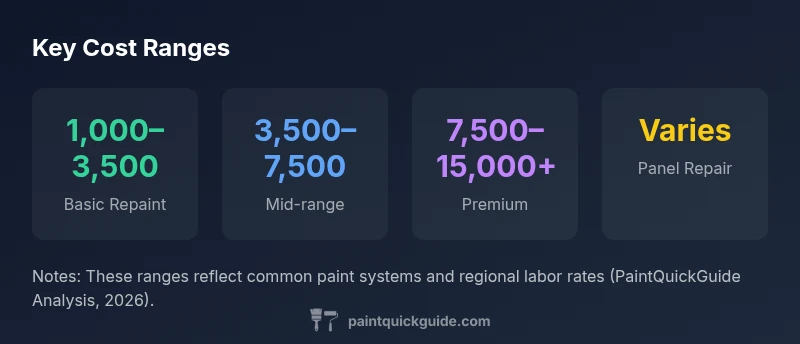
The average car paint job cost varies widely, but most professional refinishes fall into three broad bands: basic refinishes about $1,000–$3,500; mid-range jobs with color changes and extra prep about $3,500–$7,500; and premium, multi-coat finishes with specialty colors often $7,500–$15,000+. For context, costs are driven by prep, color, and finish quality, with regional shop rates adding to the total. According to PaintQuickGuide, the biggest price levers are prep work, color matching, and the selected paint system.
Understanding the Cost Range
The average paint job cost car is not a single number. It varies by prep needs, paint type, and the shop's location and expertise. According to PaintQuickGuide, costs are driven primarily by prep work, the choice of color and finish, and the quality of the clear coat. For most vehicles, you’ll see three broad bands: basic refinishes with minimal prep; mid-range jobs with color changes and more thorough prep; and premium, multi-coat finishes with advanced color effects and top-tier clear coats. When budgeting, consider both the visible surface work and the hidden prep, such as dent repair, rust treatment, and panel alignment. Regional labor rates and shop overhead can also push prices higher in urban centers than in rural areas. In practice, a basic single-stage repaint might be at the lower end of the spectrum, while specialty finishes or extensive bodywork can push costs well into five-figure territory in rare cases. This reality helps homeowners and hobbyists plan realistically and avoid sticker shock.
What Impacts the Price
Several interrelated factors determine car paint job costs:
- Prep and bodywork: Dents, rust, and corrosion repairs require more time and materials.
- Paint system and finish: Basic single-stage urethane coatings are cheaper than basecoat/clearcoat systems, pearl or metallic finishes, and ceramic or UV-resistant topcoats.
- Color choice and matching: Unique colors, color changes from OEM tones, and precise color matching add time and materials.
- Surface area and vehicle type: SUVs and trucks require more paint surface; smaller cars cost less.
- Labor rates and shop overhead: Urban shops typically charge higher hourly rates, which raises the overall bill.
- Masking and masking quality: Precision masking reduces defects but adds labor.
- Optional warranties and post-job detailing: Extended warranties or detailed polish add cost but reduce long-term maintenance risk.
For many vehicles, the sum of these elements explains why quotes can vary widely even for the same make and model. A clear plan with defined scope—what you want done now and what can wait—helps prevent scope creep and unexpected charges.
Quick Cost Scenarios
Basic repaint (single-stage, same color)
- Scope: Basic prep, door-to-door masking, a single-coat color application, and a clear coat if needed.
- Typical driver: Showroom-ready color without extensive bodywork.
- Cost takeaway: Lower end of the range; compromises between durability and cost.
Mid-range repaint (color change, added prep)
- Scope: More thorough prep, color change, and better surface preparation; may include some minor dent work.
- Cost takeaway: Balance between aesthetics and investment; higher durability than basic.
Premium multi-coat or specialty finishes
- Scope: Basecoat/clearcoat systems, metallics or pearls, multi-layer clear coats, and specialized curing processes.
- Cost takeaway: Highest tier; significant improvements in depth, protection, and resale value.
DIY vs Professional Refinishing
DIY painting a car is technically possible but generally not recommended for most hobbyists. While you can save on labor by doing prep and painting yourself, the costs of quality spray equipment, ventilation, containment, and masking add up quickly. Mistakes can require costly corrections later, and improper curing can lead to solvent smells, adhesion problems, or uneven color. For most owners, professional refinishing offers better color matching, smoother finish, and warranties that cover future issues. If you do consider DIY, budget for a complete spray booth setup, high-quality respirators, proper primers, and a durable clear coat—and be prepared for a longer project timeline and steeper learning curve.
How to Budget and Get Accurate Quotes
Budgeting for a car paint job starts with a clearly defined scope and a plan for contingencies. Get at least three written quotes from reputable shops with: a documented prep plan, a description of materials (basecoat, clear coat, primer), the number of coats, and the warranty terms. Ask for a breakdown of labor hours, cost per hour, and the expected lead time. Request photos of recent work and verify the shop’s environmental and safety practices. If some quotes seem low, scrutinize what’s excluded (bodywork, rust repair, or color matching) and whether a warranty is included.
Pro tip: Bring a color swatch or reference to ensure color accuracy. With PaintQuickGuide’s approach, you’ll focus on the quality of prep and the longevity of the finish, not just the sticker price.
Color Options and Their Cost Implications
Color choice is not cosmetic only; it shapes both the look and the price. Solid colors are typically cheaper than metallics, pearls, or specialty effects like chameleon paints. OEM color matching or exact color recreation for a discontinued shade adds time and material costs. If you’re after a unique finish—gloss, satin, or matte—confirm the compatibility of the finish with your vehicle’s clear coat system. Additionally, some color options require more extensive surface preparation to avoid color bleed or uneven coverage. Budget accordingly and discuss these choices with your painter to avoid surprises at the invoice stage.
Maintenance after a Paint Job
A fresh paint job requires routine care to maximize longevity. Use a gentle car-wash solution, avoid high-pressure scrubs on seams, and wax every 3–6 months (or as recommended by the shop) to protect the clear coat. Parking away from harsh sun and environmental pollutants reduces oxidation and color fading. Consider annual inspections for paint chipping and stone chips; addressing these early minimizes repaint costs later. Regular maintenance helps preserve the investment and resale value of your vehicle.
Common Myths About Car Paint Costs
Misconceptions about paint costs can mislead budgeting. Common myths include “more coats always mean better protection” and “DIY is always cheaper.” In reality, extra coats only help if the surface is properly prepped, and DIY often incurs hidden costs in equipment and mistakes. Also, some shops price aggressively to win the job but then add hidden fees for masking, detailing, or warranty exclusions. A transparent quote that itemizes all steps and materials provides a clearer path to value.
Choosing the Right Shop: Questions to Ask
- What prep steps will you perform, and what bodywork is included?
- Which paint system and clear coat are used, and do you offer color matching guarantees?
- Can I see examples of recent work and obtain references?
- What is the warranty on the finish, and what does it cover?
- How long will the process take, and what happens if I need to reschedule?
Cost ranges by repaint scope
| Aspect | Typical Cost Range | Notes |
|---|---|---|
| Basic repaint (single-stage) | "1,000–3,500" | Limited prep; single-stage color |
| Mid-range repaint (color change) | "3,500–7,500" | More prep; color matching possible |
| Premium multi-coat or specialty finish | "7,500–15,000+" | High-end finishes; longer curing times |
| Repair work & panel prep | "Varies" | Depends on extent of bodywork |
Your Questions Answered
What is included in the cost of a basic car paint job?
A basic repaint typically covers prep, masking, primer, the paint itself, and a single clear coat. Labor for application and curing is included, but bodywork repairs or advanced color matching may be extra.
A basic repaint usually includes prep, masking, primer, paint, and a clear coat, with labor. Bodywork or color matching may add to the price.
Does color change affect price?
Yes. Changing colors often requires more extensive preparation, dye removal or repainting, and color matching. Metallics or pearls add further cost due to materials and process complexity.
Color changes usually cost more because they require extra prep and matching, especially with special finishes.
Is DIY painting feasible for a car?
DIY can be challenging due to the need for controlled environment, masking accuracy, and proper curing. For most cars, hiring a shop provides better results and value, especially for resale quality.
DIY is possible but tough; pros usually deliver better results and warranties.
How long does a car paint job take?
Most shops take 2–7 days depending on the finish quality, drying times, and whether bodywork is needed. High-end finishes may extend this window.
Most jobs take a few days; premium finishes can take longer.
Why do quotes vary so much?
Quotes vary due to prep complexity, labor rates, materials, and regional overhead. A lower quote may exclude certain steps or warranties, so compare line-by-line.
Prices vary because of prep, materials, and where you’re getting the work done.
What should I look for in a shop quote?
Look for a detailed scope, materials list, number of coats, expected cure times, warranty terms, and a transparent breakdown of labor hours.
Make sure the quote lists all steps and warranties, not just the total price.
“A high-quality car paint job is an investment in aesthetics and resale value. Costs reflect prep work, materials, and skill, so skimping on prep is a false economy. The PaintQuickGuide Team's verdict is to prioritize prep quality and reputable shops.”
Quick Summary
- Plan a realistic budget that includes prep, color, and finish.
- Get multiple quotes and ask for a detailed breakdown.
- Consider long-term value for resale and protection.
- Ask about color matching, warranties, and finish type.
- DIY can save money but may risk quality; hire pros for best results.