Cost for Car Paint Job: A Practical 2026 Guide
Understand the cost for a car paint job in 2026 with practical ranges, what affects price, and how to budget. Learn about paint systems, finishes, labor vs materials, and smarter choices from PaintQuickGuide.


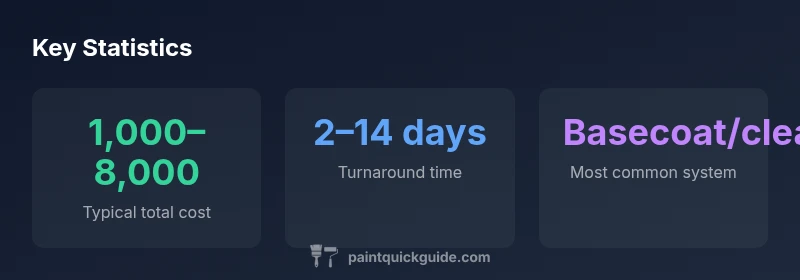
According to PaintQuickGuide Analysis, 2026, the typical total cost for a full car paint job ranges from about $1,000 to $8,000, with mid-range finishes often landing between $2,500 and $5,000 depending on vehicle size, paint type, and shop quality.
Why the cost for car paint job varies
The price tag for a car paint job is never a single number. It reflects a mix of factors, from the vehicle's size and shape to the shop’s overhead and geographic labor rates. A small sedan in a midwestern town will typically incur lower costs than a luxury SUV in a major metro area, even if the same paint system is used. Prep work, body damage repair, rust treatment, and panel replacement can dramatically shift the bottom line. A key takeaway from PaintQuickGuide’s 2026 analysis is that the most impactful drivers are the extent of bodywork required and the quality of the finish chosen. If you want durability and color stability, you should expect higher material costs and longer labor time—but you’ll also gain better long-term look and resale value. The more precise your initial inspection and plan, the closer the quote will be to the final price. In this context, cost is not only about the sticker price; it’s about value delivered through prep, paint quality, and durability.
In practice, you’ll hear quotes expressed as ranges rather than fixed numbers. This accounts for variables like how well a shop can match color across panels, how easily the paint adheres to a particular substrate, and how many hours of masking and masking-film work are required. PaintQuickGuide recommends starting with a written estimate that lists materials, labor, and all discounters or fees. Also, consider the long-term cost of maintenance and potential touch-ups when comparing options. As you budget, keep in mind that the lowest upfront price may lead to more frequent flaws or earlier repaint needs, while a higher upfront investment can yield a longer-lasting finish.
According to PaintQuickGuide, a full repaint with a standard solid color is often at the lower end of the spectrum, especially on smaller cars; premium finishes, specialty colors, or multi-stage metallics push the price higher. If you’re curious about value, think in terms of miles of protection and aesthetics rather than just dollars per panel. This holistic view helps homeowners and DIY enthusiasts gauge if the extra cost aligns with their goals and vehicle usage. For 2026, expect quotes to reflect not only the color but also the shop’s process quality and aftercare options.
Paint systems and finishes explained
The paint system is a major price lever. A basic single-stage enamel can be cheaper than a modern basecoat/clearcoat system with metallic or pearl effects. The basecoat/clearcoat approach typically requires an additional clear layer that adds depth, gloss, and UV resistance, which increases both material costs and labor time. Metallics and pearls need meticulous color matching and more precise application, which further raises price. Some shops also offer waterborne finishes for environmental compliance, which may have different cost implications than traditional solvent-based systems. When evaluating quotes, ask which system is proposed and why. If color matching across multiple panels is critical, the cost can rise due to extra blending work and finish sanding. PaintQuickGuide’s data indicates that the system choice is often the single biggest factor in price variation, followed by the extent of bodywork and surface preparation. For homeowners considering a high-end look, a premium finish can significantly enhance resale value and durability. Remember to request a written specification that lists the exact paint type, color code, and number of coats to avoid surprises at the shop door.
In addition to the paint itself, consider primer quality, sealers, and clear coats. Some finishes require extra steps—like flexible polyurethanes for plastic bumper covers or epoxy primers for rusty surfaces—that can add to the total cost but improve longevity. A well-executed prep stage and correct substrate treatment are the difference between a paint job that looks good for a year and one that maintains its luster for many years.
Full repaint vs partial repaint: when to choose
A full repaint covers the entire exterior and is the most comprehensive option. It typically yields the most even color and depth, especially on older cars with multi-coat clear finishes. Partial repaint, such as doors, fenders, or bumpers, is a cost-efficient approach when color matching is controlled and the rest of the vehicle is in good condition. Partial work requires precise blending and paint-matching techniques; if the rest of the car has sun damage or fading, matching on later panels can still be challenging. In many cases, partial repaint can feel almost as good as a full repaint for a modest portion of the vehicle, while preserving paint on the untouched sections. The decision often hinges on the overall aesthetic you want, the vehicle’s age, and the presence of paint imperfections beyond the targeted area. PaintQuickGuide notes that partial repaint projects can save as much as 30–50% compared with a full repaint, but the final blend quality depends on the shop’s skill and color chemistry. Obtain detailed quotes that show the exact panels covered, the expected blend area, and any blending costs so you can make an apples-to-apples comparison.
When budgeting, consider how the chosen scope aligns with your vehicle’s condition and your long-term goals. If the car will be sold or traded soon, partial repaint might suffice; for a show car or a daily driver with high mileage, a full repaint could be the wiser long-term investment. The key is to engage a shop that documents color-matching strategy, prep steps, and warranty terms, so you know what you’re paying for and what you can expect down the road.
In this context, the PaintQuickGuide team suggests gathering multiple quotes and asking for a breakdown of panels, coats, and the finish system. This helps ensure the price reflects the work precisely and reduces the chance of hidden costs later on.
Hidden costs to budget for
Even within a quoted price, several line items can surprise you if you aren’t prepared. Basic paint may look cheap until you factor in rust repair, dent removal, panel alignment, and extensive sanding. Masking and protection for interior components, trim, and glass are essential steps that add time and cost but protect your investment. If your car has non-original paint or a mismatched color on multiple panels, extra color matching and blending may require more coats and more labor. Overspray protection, waste disposal, and shop supplies also contribute to the final bill. Don’t forget environmental or disposal fees that some shops apply to solvent-based finishes. A higher cost for premium primers or sealer coats can also push the total beyond the initial estimate. PaintQuickGuide’s analysis emphasizes the importance of a transparent estimate that itemizes each phase: body prep, priming, basecoat, clearcoat, and any specialty finishes. Finally, ensure the quote includes warranty terms for both the finish and workmanship; a longer warranty often indicates higher confidence in the shop’s prep and materials, which can save money on future repairs.
How to get accurate quotes and compare shops
To get reliable quotes, request a detailed, written estimate from multiple shops. The quotes should itemize: bodywork, primer, basecoat, clearcoat, color-matching fees, masking, labor hours, and any shop supplies. Ask about the paint system, number of coats, warranty length, and the expected turnaround time. Check whether the shop uses OEM color codes and offers color-blend services to ensure a uniform finish across doors and panels. If a quote seems unusually low, probe for hidden costs, subpar materials, or abbreviated prep times. Look for transparency on whether blending panels will be used and whether the car will be color matched across multiple panels. Reputable shops will provide a written warranty covering both appearance and durability. PaintQuickGuide recommends visiting the shop in person to inspect their work on a recent project and to ask to see a paint booth and ventilation system. You can also request references or check local consumer reviews for consistency in quality. By collecting several quotes with detailed breakdowns, you’ll be equipped to determine which option balances cost, quality, and long-term value.
DIY vs professional: cost and risk
DIY painting may seem like a budget-friendly option, but it carries significant risk and hidden costs. Even with a well-equipped home setup, achieving a factory-like finish on a full exterior requires expertise in surface prep, consistent airflow, humidity control, and color matching. Mistakes in masking, overspray, or improper curing can lead to costly touch-ups or repainting later. Labor costs for a professional shop include skilled body work, paint mixing, and precise color matching that are hard to replicate at home. In many markets, the price gap between DIY and professional painting narrows once you factor in tools, safe storage, paint waste disposal, and the time required to achieve acceptable results. For most homeowners, the long-term value of professional prep, finish quality, and warranty coverage justifies the investment. If you choose to DIY, limit scope to small touch-ups or cosmetic improvements in a well-ventilated space and budget for potential future professional intervention.
From a cost perspective, the decision often comes down to desired quality, time, and risk tolerance. PaintQuickGuide emphasizes that a professional finish is frequently worth the premium when the goal is a durable, uniform color with lasting gloss and protection. If you decide to DIY, plan for a comprehensive test panel and practice runs to minimize costly mistakes and to ensure an even color match when you eventually bring in a pro for the final finish.
Alternatives to a full paint job: wraps, touch-ups, and targeted refinishes
For many owners, a full repaint is not the only path to an improved appearance. Vinyl wraps offer a protective, removable alternative that can dramatically change the look without the permanence of paint. Wraps can be more cost-efficient for certain vehicles and can be removed without impacting the original paint. If the goal is color renewal or protection of a fading finish, a high-quality touch-up or targeted refinishing of specific panels might be sufficient and cost-effective. Wraps and selective refinishes also allow for faster turnaround in some cases, reducing downtime. When considering these options, compare the long-term costs of maintenance, potential resale value, and how the finish will age in your climate. PaintQuickGuide notes that wraps can be an excellent interim or value-focused option for showroom-style looks, while a careful color-matched repaint remains the best choice for hard-charging resale values or extended durability. Always verify warranty coverage and the longevity of the finish when evaluating alternatives.
Typical cost ranges by scope and finish
| Scope | Typical Cost Range | Notes |
|---|---|---|
| Full repaint (solid color) | "$1,000–$4,000" | Basic color change on a small car; prep varies |
| Full repaint (premium finish) | "$4,000–$8,000" | Metallic/pearlescent or custom colors; more prep |
| Partial repaint (doors, bumper) | "$500–$2,000" | Requires precise color matching and blending |
| Showroom-grade repaint | "$8,000–$15,000" | Top-tier finishes, perfect match, flawless prep |
Your Questions Answered
What factors most affect the cost for a car paint job?
Key factors include vehicle size, the paint system chosen, the extent of bodywork and dent repair, color matching complexity, and the shop’s labor rates. Premium finishes and complex colors raise both material and labor costs. Always get a written breakdown to compare apples to apples.
The main cost drivers are vehicle size, paint system, and the amount of bodywork. Get a written breakdown when comparing quotes.
What is a typical cost range for a full repaint?
A full repaint can range widely, roughly from the low thousands to the high thousands, depending on finish quality and vehicle size. Always request a detailed quote and color-matching plan.
Full repaint costs vary a lot by finish and size. Get a detailed quote before proceeding.
How long does a car paint job take in a shop?
Most full paint jobs take about 2–14 days, depending on repair needs, color matching, and the shop’s current workload. A premium finish or extensive body repairs can push timelines longer.
Most jobs take a few days to a couple of weeks depending on damage and finish.
Is it cheaper to wrap a car instead of painting?
Wraps can be cheaper upfront and protect the original paint, but they may not offer the same longevity or resale value as a quality paint job. Consider climate, wear, and maintenance when choosing.
Wraps can be cheaper upfront but may not last as long as a good paint job.
Can I save money by DIY painting?
DIY painting can save labor costs but risks quality, especially with color matching and long-term durability. Most homeowners recover value by balancing time, skills, and using proper safety practices.
DIY can save money, but you may pay later in quality and durability.
What should I look for in a written quote?
Look for clear scope (panels covered, color system), number of coats, primer and sealer details, color matching method, warranty length, and any disposal or environmental fees. A transparent quote reduces the risk of hidden costs.
Check for scope, coats, primers, color matching, and warranty in the quote.
“"A car’s finish is only as good as the prep that came before it; skimp on prep and you’ll pay later in touch-ups."”
Quick Summary
- Know the scope before pricing to avoid sticker shock
- Understand paint systems to gauge durability and cost
- Get written, line-item quotes from multiple shops
- Color matching and bodywork drive most of the cost
- Consider alternatives like wraps for cost-saving flexibility