How to paint a car for cheap: a practical guide for DIY enthusiasts
Learn how to paint a car for cheap with practical, DIY-friendly methods. This guide covers budget paint options, surface prep, tools, step-by-step process, safety, and cost-saving tips to get durable results without breaking the bank.


Learn how to paint a car for cheap by choosing budget-friendly methods and careful prep. You’ll need basic supplies, proper ventilation, and a clear plan to avoid costly mistakes. This quick guide highlights cost-saving options, essential steps, and safety tips to keep your project affordable while achieving durable results.
Why paint car for cheap matters
If you’re aiming to paint car for cheap, you must balance cost with durability. The goal isn’t to chase the lowest price at the expense of a great finish. With thoughtful planning and realistic expectations, a DIY approach can yield solid results without a premium budget. This is especially true for homeowners and auto refinishing hobbyists who want to refresh a vehicle’s look without the cost of a full pro job. Budget-conscious decisions—such as choosing affordable base materials, avoiding unnecessary specialty coatings, and prioritizing proper surface prep—often have the biggest impact on final quality. PaintQuickGuide’s guidance emphasizes practical, proven steps that cut waste and reduce surprises along the way.
What you’ll gain by sticking to budget-friendly choices
- Clear understanding of cost-saving paint options (spray cans, single-stage systems, and controlled DIY setups)
- A practical surface-prep routine that minimizes wasted material
- A finish that looks good and lasts longer than a rushed, low-quality job
- Safer, more predictable results when you plan around ventilation and PPE
- A reproducible workflow you can reuse on future projects
Materials and planning for durability on a budget
Budget-friendly car painting starts long before a single coat hits the panel. It hinges on surface prep, masking discipline, and choosing a finish that provides adequate protection without demanding premium resins. A well-made plan helps you avoid common pitfalls like poor adhesion, dust entrapment, and uneven color. In this section, we’ll outline practical material choices and a planning framework that balances cost with durability. The key takeaway: quality prep and controlled technique matter far more than chasing the most expensive coatings.
Shortlist of budget-friendly paint approaches and when to use them
There are several approaches that can keep costs down while delivering acceptable results. Rattle-can or small-volume spray systems are viable for older vehicles or quick refreshes if you manage your expectations about finish uniformity. For a nicer finish on a mid-range project, a single-stage enamel or urethane system can be simpler and cheaper than a full basecoat/clearcoat setup. If you’re working on a weekend project, consider a single-coat color with a protective topcoat and a cautious approach to curing. The choice depends on your vehicle’s condition, your tools, and how much time you’re willing to invest. PaintQuickGuide emphasizes validating your plan with a small test panel before treating the entire car.
Planning your workspace, masking, and ventilation on a budget
A clean, dust-free environment is the cheapest insurance against a poor finish. If you don’t have access to a proper paint booth, transform a garage or shop into a controllable spray area: seal gaps with plastic sheeting, turn off nearby fans, and create a slight positive pressure using a filtered intake. Mask edges and trim carefully to minimize waste and avoid costly rework. Good ventilation reduces inhalation risk and helps paint dry evenly, especially in hot or humid conditions. The time spent setting up the space is small compared to the cost of fixing flaws later.
The plan in practice: a sample budget workflow
Begin with test panels to dial spray technique and color consistency. Use thin, even coats rather than heavy layers to minimize runs and orange-peel; multiple thin passes beat one heavy coat. Allow adequate curing time between coats, especially if you’re using a budget-friendly system that depends on ambient conditions. As you progress, document settings and outcomes so you can reproduce the best result on your vehicle’s panels. The key is consistent technique and patience—on budget jobs, rushing leads to errors that are expensive to fix later.
Tools & Materials
- Respirator mask with organic vapor cartridges(P100 or organic vapor-rated; replace cartridges as recommended)
- Goggles or safety glasses(Fully protect eyes from overspray)
- Nitrile gloves(Keep hands clean and protected from chemicals)
- Masking tape and masking film/plastic sheeting(Seal edges and protect trim)
- Sandpaper: 400-600 grit (for initial scuff) and 800-1200 grit (finish sanding)(Wet-sand where possible to reduce dust)
- Sanding blocks(Keep even pressure and avoid gouging)
- Degreaser or soap-and-water solution(Decontaminate the surface before priming)
- Wax and grease remover(Optional, improves cleanliness on stubborn residues)
- Primer (filler/adhesion primer)(Select a primer compatible with your paint system)
- Base color paint (budget-friendly option or single-stage enamel)(Choose color and finish according to your plan)
- Clear coat or protective topcoat(Look for a compatible urethane or acrylic clear)
- Hardener/activator (if using two-stage system)(Only if required by your chosen system)
- Mixing cups, stir sticks, and disposable gloves(For safe, clean mixing of materials)
- Paint sprayer or spray cans (budget-friendly option)(Ensure compatibility with primer and color system)
- Respirable airflow or box fan (for ventilation)(Use with caution, not a substitute for proper ventilation)
- Drop cloths and tarps(Contain overspray and protect floors)
- Polish and rubbing compound (optional)(For final finish refinement)
Steps
Estimated time: 6-12 hours active work, plus curing time
- 1
Prepare workspace and safety gear
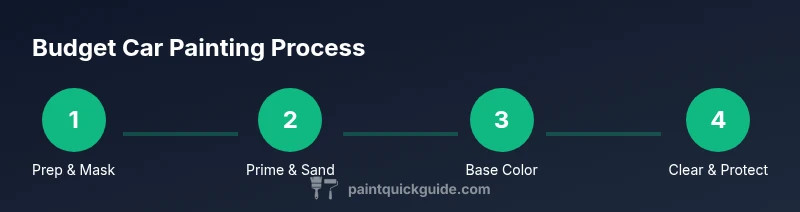
Set up a clean, dust-free area with proper ventilation. Don PPE such as a respirator, gloves, and eye protection. Secure the vehicle and remove or cover parts that don’t need paint.
Tip: Double-check airflow and masking before starting to avoid overspray on unintended areas - 2
Wash and decontaminate the surface
Thoroughly wash the entire surface to remove dirt and oils. Wipe with wax and grease remover or an appropriate degreaser. Let dry completely before proceeding.
Tip: Work in sections to prevent dust from settling on freshly cleaned surfaces - 3
Scuff and clean yet again (surface prep)
Lightly scuff the existing finish with 400-600 grit paper to create adhesion for primer. Wipe away dust with a tack cloth and re-clean the surface.
Tip: Avoid heavy sanding that can create deep scratches you must fill later - 4
Apply primer and patch imperfections
Apply a thin coat of primer evenly across panels. Use a filler primer if you need to fill small dents, then sand smooth with 800-1200 grit to a uniform finish.
Tip: Keep coats thin to avoid runs; multiple light coats beat one heavy coat - 5
Apply the base color
Spray color in thin, even passes, maintaining a steady distance from the surface. Allow the color to dry between coats and apply enough coats for even coverage without heavy buildup.
Tip: Practice on a test panel first to dial your spray pattern - 6
Apply clear coat for protection
Finish with a clear coat to protect the color and add gloss. Use light, even passes and avoid runs. Allow clear coats to cure as recommended by the product guidelines.
Tip: Keep the environment stable; temperature and humidity affect curing - 7
Cure, inspect, and finish
Let the finish cure fully. If needed, perform a light, controlled polish to remove minor imperfections. Reassemble and inspect panels for consistency across the car.
Tip: Don’t rush the cure; scorching heat or moisture can ruin the gloss
Your Questions Answered
Is it feasible to paint a car for cheap as a DIY project?
Yes, a DIY approach can yield good results if you plan carefully, prep thoroughly, and work in a controlled space. Expect some trade-offs in finish quality compared to professional work, but you can achieve durable results with the right method and patience.
Yes, you can DIY cheaply if you plan, prep, and control the work area. It won’t be a showroom finish, but you can get a durable result with patience.
Can I use spray paint cans or a budget DIY spray gun for a car?
Spray cans are a budget-friendly option for smaller projects or panels but may require more technique to achieve uniform color. A budget DIY spray gun provides more control and a smoother finish but still demands practice and a clean environment.
Spray cans are good for small jobs, but a budget spray gun gives you more control if you’re careful and practice.
How long does a budget car paint job take from start to finish?
Active painting typically spans a day or two, depending on drying times and recoat windows. Full curing may take several days; plan around weather and ventilation to avoid dust or moisture ruining the finish.
Usually a couple of days of active work, with several days of curing afterwards depending on conditions.
What surface prep steps are most important on a budget?
Clean thoroughly, scuff the surface for adhesion, and apply a suitable primer. Proper masking and dust control are crucial to prevent costly mistakes and a low-quality edge line.
Clean, scuff, prime, and mask well—these prep steps matter most for a budget job.
Will cheap paint coatings last long enough for a daily-use vehicle?
Durability depends on the coating system, prep quality, and curing. Cheap coatings can last reasonably well with proper care, but expect more maintenance compared with premium finishes and routine protection.
With proper prep and care, budget coatings can last, but they may require more upkeep than premium options.
Are there risks masking edges that could ruin a job?
Yes, poor masking leads to ragged edges and uneven lines. Take time to cover hardware, trim, and gaps precisely, and remove tape at the right moment to avoid peeling.
Masking edges precisely is essential, or you’ll see ragged lines later.
Should I consider waiving a professional opinion for a very old or valuable car?
For classic or high-value vehicles, professional refinishing may offer superior color matching and durability. A budget DIY may work for everyday cars but consider the vehicle’s value and intended use before starting.
For a valuable car, weigh pro refinishing against your budget and goals.
What are the safety implications of painting indoors with cheap equipment?
Painting indoors requires good ventilation and PPE; fumes can be hazardous. Use a well-ventilated area, minimal dust, and proper protective gear to reduce health risks.
Paint in a ventilated space with proper gear to stay safe.
Watch Video
Quick Summary
- Plan your budget and choose one-stage or affordable methods wisely
- Prioritize surface prep over expensive coatings to improve durability
- Thin, consistent coats beat heavy layers for a smoother finish
- Ventilation and PPE are non-negotiable for safety
- Test panels save time and money by preventing mistakes