Cheap Car Paint Job: A Budget Repaint Guide
Learn practical, budget-conscious steps to repaint a car. Prep, economy paints, masking, and finishing tips to achieve a solid, affordable result without compromising safety.


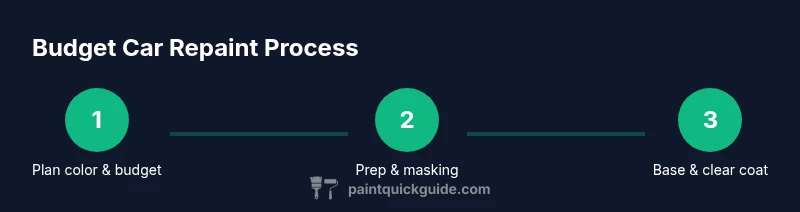
You can achieve a cheap paint car job by prioritizing solid prep, economical base coats, and a simple color scheme. Set realistic expectations and follow a budget-minded plan from start to finish. PaintQuickGuide shows practical, safe methods for a budget-friendly car repaint. This quick answer gives you the core steps and mindset needed to maximize results while keeping costs in check.
Why Budget Car Repaint Can Be Worth It
According to PaintQuickGuide, a budget-friendly approach to car painting can refresh your vehicle’s look without draining your savings. The main benefits are clear: lower cost, faster turnaround, and less downtime than a full, professional paint job. That said, a cheap paint car job is not a license to skip prep or safety; it requires discipline and smart choices about color, finish, and where you invest your time. For many owners, a shallow learn-as-you-go repaint is a trade-off: you accept some surface imperfections in exchange for a project that’s affordable and doable in a weekend. The key is to set realistic goals for the result and plan around the least expensive options that still produce a durable surface. If you keep expectations aligned with the budget, a well-executed budget repaint can dramatically improve curb appeal without creating ongoing maintenance headaches. PaintQuickGuide’s team emphasizes that success hinges on the quality of prep, proper masking, and a uniform finish that resists weathering.
Before you start, decide whether you’ll color-match a close existing shade or opt for a new, simpler color. In many cases, a solid color with few metallic flecks is easier to spray evenly and repair if chips occur. The more you resist the urge to add extra coats or fancy finishes, the more reliable the budget outcome will be.
Budget-Friendly Materials and Finishes
When you’re aiming for a cheap paint car job, your material choice matters as much as the prep. A budget approach typically favors simpler finishes and fewer coats. A single-stage urethane or a basic basecoat/clearcoat system can deliver a durable look without the complexity of multi-layer metallics. Check color-match options that are designed for automotive use and avoid using household paints, which can fail outdoors. Primer is essential, and compatibility with your chosen topcoat is critical to prevent peeling. If you’re repainting the entire car, you’ll want an even, solvable color with minimal metallic flecks to reduce orange peel and crowding during application. Remember: cheaper paints aren’t a license to skip proper prep or cure times. PaintQuickGuide suggests testing a small panel first to judge coverage, color, and drying behavior under your shop conditions.
For a very budget-focused route, some DIYers choose to work with solvent-based primers and single-stage colors. This reduces steps and equipment needs but requires careful ventilation and proper PPE. If you can, consult your chosen product’s data sheet and follow the manufacturer’s recommendations for surface prep and film build. A simple, solid color with a modest gloss is the most forgiving for beginners and the most forgiving on the pocket.
Surface Prep for a Budget Repaint
Surface prep is the single most cost-effective way to improve results when you’re chasing a cheap paint car job. Start with a thorough wash to remove oils and grime, then inspect for rust, dents, or deep scratches. Use a pencil to mark trouble spots and decide which repairs are essential and which can be addressed later. Sand the surface progressively: begin with coarse grit to knock down blemishes, then move to finer grits to create a smooth, even surface for primer. Wipe with a tack cloth to remove dust before priming. If rust is present, treat it with a rust converter on the affected areas before sanding. Remember, the smoother your base, the fewer coats you’ll need later. PaintQuickGuide emphasizes that excellent prep reduces texture issues and helps your final finish look uniform even if you’re using budget paints.
Always work in a clean, well-ventilated space and protect rubber trims, glass, and chrome with tape or film. Your goal is to create a surface that accepts paint evenly and adheres well without requiring heavy, expensive film builds.
Masking, Sanding, and Priming on a Budget
Masking is where many budget projects fall short—poor masking leads to overspray and messy edges that ruin an affordable repaint. Use high-quality masking tape on edges and paper or film to cover areas that shouldn’t receive paint. Start masking with the largest surfaces and work toward the smallest details to minimize rework. For sanding, a dual-action sander or hand sanding with progressively finer grits (80, 120, 220, and 400) will yield a smoother base. Between coats, wipe surfaces clean and inspect for imperfections that need spot touch-ups. Priming is not optional, even for budget jobs. A good primer improves adhesion, fills minor scratches, and provides a uniform base color for the topcoats. Choose a primer compatible with your chosen base coat. If you’re using a basecoat/clearcoat system, apply primer, allow adequate cure time, and sand lightly before the color layer to maintain surface integrity.
Pro tip: perform a spot test on a hidden area to check color consistency before committing to the full panel. PaintQuickGuide notes that careful masking, surface prep, and adhesion-friendly primers are more influential to final results than the exact brand of paint you choose.
Applying Base Coat and Clear Coat Economically
When you’re budgeting, you’ll often opt for a basic base coat or a simple one-step color. Apply the color in thin, even coats and keep the spray pattern steady to minimize runs and sags. Overlapping strokes at consistent intervals helps achieve uniform coverage. Allow each coat to dry per the manufacturer’s recommendations before applying the next; rushing can trap solvents and cause blemishes. If you’re using a basecoat/clearcoat system, apply the clear coat in multiple light passes rather than a heavy single layer to reduce orange peel and achieve a smoother finish. Temperature and humidity affect drying times and film build, so plan your painting window accordingly. A successful budget paint job relies on a controlled environment and disciplined technique—skipping dew points or rush-drying can undo cost savings by producing a finish you’ll want to redo later.
For sprayers, keep a consistent distance from the surface and practice on a test panel first. If you’re using spray cans, shake often and apply in short bursts to avoid heavy buildup. Always wear PPE and ensure adequate ventilation.
Finishing, Curing, and Polishing
After applying the base and any clear coats, allow the finish to cure fully before handling the car. Curing times differ by product and environment, but patience pays off for long-term durability in budget projects. Once cured, a cautious polish with a fine abrasives and a soft cloth can improve gloss and remove minor imperfections. Don’t rush the cure; heat, dust, or moisture can mar the final surface. If you notice orange peel, re-coat lightly rather than trying to sand through the previous layers. Budget finishes may require occasional touch-ups in high-wear areas, so plan a simple maintenance routine that protects edges and contours. PaintQuickGuide suggests documenting your color formula and steps so you can repeat the process more efficiently if you decide to refresh the finish in the future.
Realistic Expectations and Maintenance
A budget paint job can dramatically improve curb appeal, but it will not replicate the depth and durability of a professional multi-issue finish. Expect minor imperfections like light dust lines, tiny runs, or slightly uneven gloss in some panels. Maintenance becomes part of the cost: wash regularly, avoid harsh cleaners, and consider a simple ceramic spray to add a protective layer on clear coats. If you ever need to touch up chips, keep your color code handy and select a matching tint. The key to longevity on a cheap repaint is a solid base, careful masking, and consistent post-paint care. PaintQuickGuide emphasizes that a realistic plan, together with disciplined execution, yields the best possible result within the budget.
Tools & Materials
- Respirator or organic vapor mask(NIOSH-approved or equivalent, with organic vapor cartridges)
- Safety goggles(ANSI-rated eye protection)
- Coveralls or protective clothing(Long sleeves, pants, gloves)
- Plastic drop cloths(Widely cover surrounding areas)
- Masking tape(Painter’s tape, low-tack)
- Masking film/paper(To protect larger areas)
- Shop vacuum and tack cloth(Dust removal before priming)
- Sanding blocks and sandpaper (80, 120, 220, 400 grit)(For feathering and finishing)
- Automotive primer(Compatibility with chosen topcoat)
- Base coat paint (color)(Solid color or simple shade)
- Clear coat(If using basecoat/clearcoat system)
- Spray gun or spray cans(Use spray equipment or rattle cans depending on budget)
Steps
Estimated time: Total time: 8-12 hours (including cure)
- 1
Define budget and color
Set a hard budget and choose a color that minimizes complexity (solid colors over metallics). This helps reduce cost and time. Decide whether you’ll use spray cans or a spray gun based on your space and patience.
Tip: Test a small panel first to check coverage and color match before committing to the full car. - 2
Prepare workspace and safety gear
Set up a well-ventilated area with good lighting. Don PPE before starting and lay down drop cloths to protect floors and trim. Have your cleaning solvents and tack cloths ready to clean dust between coats.
Tip: Ventilation is critical; avoid working in enclosed spaces without proper exhaust. - 3
Masking and protection
Mask all glass, trim, and edges you don’t want painted. Use paper or film to cover large areas and tape to seal edges. A neat mask saves cleanup time and improves edge quality.
Tip: Apply tape steadily along straight lines to minimize future peel and rework. - 4
Wash, dry, and inspect surface
Clean the car surface to remove grease and oils. Dry thoroughly and inspect for rust or dents. Mark flaws and plan targeted repairs instead of full-body filler work.
Tip: A clean surface improves primer adhesion and reduces the need for excessive sanding. - 5
Sand and prime
Feather damaged areas with 80-120 grit to smooth transitions, then finish with 220-400 grit for a smooth base. Apply primer in thin, even coats and allow adequate cure time between coats.
Tip: Dust-free sanding saves finishing time; never rush primer curing. - 6
Apply base color
Apply color in light, even coats, allowing each coat to dry before the next. Overlap strokes at consistent distances to reduce runniness. If using spray cans, spray in short bursts to avoid pooling.
Tip: Keep a steady hand and maintain a fixed distance from the surface. - 7
Apply clear coat (if using basecoat/clearcoat)
Spray clear coats in multiple light passes to build gloss without orange peel. Allow proper cure time between coats and avoid dust during the final cure.
Tip: Drying conditions greatly affect gloss; choose a low-dust, controlled environment. - 8
Cure and polish
Let the finish cure completely before handling. Lightly polish with a fine compound after curing to enhance gloss and even out minor imperfections.
Tip: Patience during curing reduces the risk of future defects. - 9
Final inspection and touch-ups
Inspect for peel, sags, or color mismatch. Do small touch-ups with precise color matching if needed, avoiding heavy rework.
Tip: Keep a color code and test panel for quick future touch-ups.
Your Questions Answered
Is a cheap car paint job worth attempting at home?
For many, a DIY budget repaint is worth it if you’re aiming for a cosmetic refresh and willing to handle prep and finishing carefully. You’ll save money but should accept some imperfections and a longer learning curve. Always prioritize safety and proper ventilation.
Yes, a DIY budget repaint can be worth it if you’re prepared for careful prep and finishing, and you’re mindful of safety.
What finishes are best for budget paint jobs on a car?
Solid color finishes with minimal metallics are easier to apply evenly and touch up. Basecoat/clearcoat systems offer durable protection but require precise application. Single-stage colors can reduce steps but may demand more skill to achieve gloss.
Solid colors with simple finishes are the most forgiving for budget projects.
How long does a budget car repaint take start-to-finish?
A typical budget repaint, including prep, masking, painting, and curing, spans several hours over one or two sessions. Full curing may take longer than the initial work window, so plan for an extended project weekend.
Most budget jobs take a weekend, with curing extending the timeline.
Will a cheap paint job last as long as a professional one?
Durability is limited by prep quality and film build. A well-prepped, properly cured budget finish can last several years with normal care, but it won’t match a high-end, multi-coat professional job. Maintenance will help extend life.
A budget finish can last years with proper care, but won’t match premium work.
What safety gear is essential when spraying a car on a budget?
Wear a respirator or organic vapor mask, safety goggles, gloves, and protective clothing. Ensure good ventilation and avoid breathing fumes. Keep clear of ignition sources and follow product data sheet instructions.
Always use a respirator, goggles, and gloves in a well-ventilated space.
Can I color-match existing paint cheaply for a budget job?
Yes, color-matching can be economical if you use automotive-approved color formulas and test in a hidden area. Small shade differences may be noticeable on panels, so consider repainting larger sections or the entire door for consistency.
Color matching is possible with the right formulas, but test first.
Should I hire a pro for the final finish if I’m unsure?
If you’re worried about achieving a uniform gloss, edge finish, or long-lasting adhesion, a consult or partial service from a shop can be a wise compromise. You can save by doing prep and masking yourself while leaving the final clear coat to a pro.
If you’re unsure about the finish, consider a professional for final steps.
Watch Video
Quick Summary
- Plan budget and color before starting
- Prep quality drives durability more than paint cost
- Masking and sanding are worth the time
- Manage expectations for a budget finish