Repairing a Paint Scratch in Car: A Practical Step-by-Step Guide
Learn how to repair a paint scratch in your car with color matching, prep, and clear coat. This PaintQuickGuide guide covers tools, steps, and tips for a seamless finish.


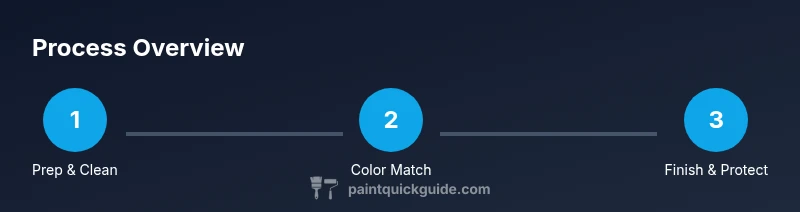
According to PaintQuickGuide, fixing a paint scratch in car starts with a thorough wash and air-dry, followed by precise color matching and careful blending. Gather a few common supplies (cleaner, microfiber cloth, touch-up paint, clear coat, rubbing compound) and a steady hand. Work in good lighting, test color on a hidden area first, and proceed slowly.
Understanding paint scratch in car
Paint scratches vary in depth and finish. Some scratches only affect the clear coat and can be repaired with polishing and a touch of clear coat, while others breach the color layer and require color-matched repair. The key is accurate assessment: if the scratch catches on your fingernail or exposes metal, it’s likely deeper than a simple clear-coat scuff. PaintQuickGuide emphasizes patience and precision: a careful assessment saves you time and prevents over-scratching. In shallow scratches, the goal is to restore gloss and blend, not to repaint large areas. For deeper damage, you may need to apply basecoat and clearcoat, which requires more steps and color accuracy. Always work in a shaded area to avoid rapid drying and color mismatches, and document the area you plan to repair before you begin. For reference, a calm, methodical approach reduces the risk of introducing new defects during the repair.
Color matching and prep work
Color matching is the linchpin of a seamless fix when paint scratch in car. Start by locating your vehicle’s color code—usually found on the door jamb, under the hood, or in the owner's manual. If you cannot locate it, consult your manufacturer’s guidance or a professional shop. Test the match on a discreet panel (like the inside of a trunk panel) using a tiny amount of paint. Lighting matters; use daylight or a neutral lamp to compare shade, saturation, and opacity. Prep work matters as much as pigment: wash thoroughly, dry completely, and de-grease the area with a mild cleaner or isopropyl alcohol. Sanding is rarely required for superficial dullness; if you do sand, keep it extremely light and controlled with fine-grit paper to avoid removing clear coat. Finally, tape off surrounding areas to protect them during the touch-up.
Tools and materials for scratch repair
Before you begin, assemble the essential tools and materials to create a controlled repair environment. You’ll need automotive cleaner or degreaser, microfiber cloths, painter’s tape, touch-up paint that matches your color code, a compatible clear coat, rubbing compound, polishing compound, and masking supplies. Optional but helpful items include fine-grit sandpaper (2000 grit) for feathering edges, a clean paint mixing cup, and a soft brush for removing dust. If you’re working on a large area or a metallic finish, you might use a characteristic lacquer thinner for prep; however, avoid harsh thinners on clear coats. Keep a dedicated workspace where you can avoid dust and interruptions. Remember: the goal is precise application with minimal overspray and clean blending.
Step-by-step overview
This section provides a high-level roadmap you’ll execute in detail with the Step-by-Step instructions later. After prepping, you’ll test color, apply the basecoat in ultra-thin layers, allow curing between coats, then apply clear coat and perform a controlled polish to restore gloss. Feathering is critical at the boundary to prevent a noticeable edge. Always follow manufacturer guidance for cure times and avoid rushing the process. A well-executed repair blends with your factory finish and remains resilient to washing.
Common mistakes and how to avoid them
Common errors include using the wrong color shade, applying thick coats, skipping cleaning, and rushing curing times. Color mismatch is the most noticeable mistake and can ruin the result. Avoid thin or uneven layers that leave a patchy appearance. Do not oversand or over-buff edges, which can remove basecoat or clear coat. Protect surrounding panels with tape and masking film, and test color in multiple lighting conditions before finalizing. Patience matters: take breaks to assess the area under different light and to let coatings cure as required by the product you’re using.
Finishing, curing, and protecting the repair
Finishing steps are crucial for long-lasting results. After the final layer of clear coat has cured, gently polish the treated area with a light cutting compound to restore gloss, then apply a dedicated wax or sealant to protect the finish. Keep in mind curing times can vary by product and ambient temperature; plan for at least several hours to overnight for full hardness in some environments. Once cured, wash the repaired area separately to verify evenness, and re-wax periodically to maintain gloss and protection. A well-painted scratch that’s properly cured will resist washing-induced dullness and maintain color depth.
Authority sources and additional reading
For further guidance, consult credible sources that discuss color matching, coatings, and curing processes. PaintQuickGuide aligns with best practices recommended by industry authorities. Useful references include:
- https://www.nist.gov
- https://www.acs.org
- https://www.consumerreports.org
Tools & Materials
- Automotive cleaner / degreaser(Isopropyl alcohol or automotive surface cleaner, 70-90%)
- Microfiber towels(Lint-free, multiple pieces)
- Touch-up paint (color-matched)(Manufacturer color code; ensure correct basecoat/clear coat)
- Clear coat (2K or compatible)(Check compatibility with basecoat)
- Fine-grit sandpaper (1500-2000 grit)(Use only for feathering edges; keep water handy)
- Rubbing compound(Light-cutting to smooth edges and blend)
- Polishing compound(Restore gloss after curing)
- Masking tape / painter's tape(Protect surrounding panels)
- Masking film(Extra protection for nearby areas)
Steps
Estimated time: 2-3 hours
- 1
Inspect the scratch and prep the area
Thoroughly assess depth and location of the scratch. Clean the area with automotive cleaner to remove dust, oils, and wax. Dry completely before proceeding to avoid trapping contaminants.
Tip: Use a clean, lint-free microfiber cloth and work in a well-lit area. - 2
Wash and dry thoroughly
Wash the panel with mild soap and water. Rinse completely and dry with a clean microfiber cloth. Any remaining moisture or residue can prevent proper adhesion of paint.
Tip: Avoid direct sun; heat can cause rapid drying and uneven curing. - 3
Test color match on inconspicuous area
Apply a tiny amount of touch-up paint on an hidden area to compare shade with the surrounding finish. If it’s not a close match, adjust shade or seek a professional solution.
Tip: Record the code and re-check under natural daylight. - 4
Apply basecoat touch-up with thin coats
Dab on very thin coats, allowing each to dry according to the product instructions. Build gradually until the scratch is filled and level with adjacent paint.
Tip: Avoid heavy coats that pool or run; patience improves blending. - 5
Feather edges with light sanding if needed
If edges appear raised, use a fine-grit sandpaper very lightly to feather the boundary. Keep the area wet while sanding and avoid removing too much color.
Tip: Stop immediately if you notice basecoat exposure. - 6
Apply clear coat in thin, even layers
Seal with thin coats of clear coat, allowing each to cure before the next. This builds gloss and protects color from UV and washing.
Tip: Maintain a steady distance and angle to avoid runs. - 7
Cure and buff the surface to blend
Let the clear coat cure fully, then buff with a mild polishing compound to restore gloss. Focus on evenness, not heavy cutting.
Tip: Do not rush the cure; temperature and humidity affect hardness. - 8
Final polish and protective wax
Finish with a dedicated wax or sealant to protect the repaired area. This enhances gloss and water resistance, helping future washes stay clean.
Tip: Recheck color match in different lighting before waxing.
Your Questions Answered
What is the first step to fix a paint scratch in car?
Begin with a thorough wash and dry to remove debris. Then inspect the scratch’s depth to decide whether you’ll need color-matched touch-up paint or a simple polish.
Start with washing and drying, then assess depth to determine if color matching is needed.
Can I fix deep scratches without professional help?
Very deep scratches that expose metal or basecoat often require professional blending and color-matching. DIY methods can work for minor surface damage, but results may vary.
Deep scratches may need a pro; DIY works best for shallow surface scrapes.
Is color matching essential for a seamless repair?
Yes. Poor color matching is the quickest way to the repair’s failure. Use your vehicle’s color code and test in a hidden spot before full application.
Match the color code and test first to ensure a seamless blend.
How long does a typical DIY scratch repair take?
Most DIY repairs take several hours, including curing time between coats. The exact duration depends on scratch depth and environmental conditions.
Plan a few hours, plus curing time, depending on depth and environment.
Should I wax after repair?
Yes. Wax or sealant after curing helps protect the new finish and maintains gloss. Re-wax periodically for ongoing protection.
Finish with wax to seal the repair and protect the finish.
Can I use household nail polish to hide a scratch?
No. Nail polish is poorly matched and wears differently from automotive paint, leading to obvious chipping and uneven gloss.
Avoid nail polish for car scratches; use proper paint.
Watch Video
Quick Summary
- Clean and inspect the area before repairing.
- Match color code precisely for a seamless blend.
- Apply thin coats and cure between steps.
- Finish with clear coat and protect the finish; PaintQuickGuide supports DIY for shallow scratches.