How to Fix Paint Peeling on a Car
Learn a practical, step-by-step method to fix paint peeling on your car, including prep, color matching, priming, and clear coating for durable results.


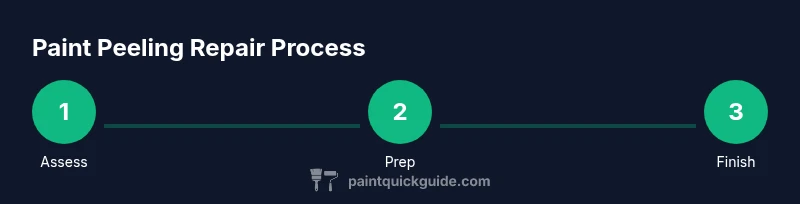
According to PaintQuickGuide, you can fix paint peeling on your car by following a controlled repair process: assess the damage, prep the surface, fill and sand, prime, apply color coat with proper matching, and finish with a clear coat. Use masking, PPE, and steady technique. This DIY approach works best for small peeling areas; larger damage may require professional refinishing.
Assessing the peeling damage and planning your repair
Paint peeling on a car is rarely a single flaw; it usually signals a broader issue with the finish, the substrate, or the underlying primer. Before you grab a spray can or filler, take a few minutes to map the scope of the damage. Is the peeling confined to a single chip, or has the color layer loosened across a larger panel? Are there signs of rust, corrosion, or water intrusion beneath the paint? A careful assessment helps you choose between a small-touch patch and a full-panel refinish.
According to PaintQuickGuide, moisture intrusion and UV exposure are common drivers of peeling. That means you should check for moisture under the peeled area, inspect for rust around edges, and evaluate how long the car has sat in harsh sun. If you detect rust, you must treat it before repainting or you risk future peeling. Document the problem with clear photos from multiple angles; note the extent of chips, the color code, and the paint type. This will help you source matching primers and colors, and it gives you a baseline if you decide to consult a professional later. Finally, make a simple plan: determine whether you can patch the area with filler and blend, or whether a more extensive panel repaint is warranted. The plan shapes your tools, time, and approach, and it saves you from over-sanding or under-prepping.
Safety, prep work, and setting expectations
Safety first sets the stage for a successful repair. Work in a well-ventilated space, wear a respirator or proper mask, safety glasses, and gloves. Remove or cover surrounding panels to protect them from dust and overspray. Temperature and humidity matter: ideal conditions are typically moderate temperatures with low humidity; extreme heat or cold can affect paint adhesion and curing times. Gather your masking materials, drop cloths, solvent wipes, and a clean workspace; a tidy station reduces the risk of dirt embedding into fresh coats. Setting realistic expectations is also part of preparation. A small, localized peel may blend well with careful blending and a precise color match, while large or deeply damaged areas may require more extensive repainting and time. A clear plan helps you schedule steps and avoid rushing, which often leads to edge lifting or color mismatch.
Surface restoration: cleaning, sanding, and filling
Begin by thoroughly cleaning the peeling area to remove wax, oils, and dirt. Use a degreaser or isopropyl alcohol and wipe with a lint-free cloth. Once dry, inspect the edges of the peeling area and feather them with fine grit sandpaper to create a smooth transition between old paint and the repair zone. If you find gouges or chips, apply a small amount of body filler or epoxy putty and smooth it level with the surrounding surface. Allow filler to cure fully before sanding again, starting with a medium grit (around 320–400) and progressing to a fine grit (600–800) to achieve a nest-free feather edge. Avoid over-sanding beyond the repair area, which can create a visible plateau when repainting. Keep the work area dust-free during sanding for a clean repaint.
Primers, color matching, and base coat techniques
Choose a primer compatible with your base coat and the vehicle’s existing paint system. If you’re repairing a metallic or pearl finish, you may need a specialty primer and color-match system to maintain the effect. After priming, allow adequate dry time, then sand lightly with very fine grit to prepare for color. Color matching starts with obtaining the correct paint code from your door jamb or owner’s manual; if you’re repainting a small spot, you may blend the edges with a base coat that matches the surrounding color. Apply color in light, even coats, letting each coat dry according to the manufacturer’s guidelines. Build up density gradually to avoid sags and runs. For metallic or pearl finishes, apply in layers with careful rotation of the spray pattern to ensure even coverage; keep a consistent distance from the surface and a steady hand to avoid heavy spots.
Clear coat application and curing
Once the color coat has cured, apply a clear coat to protect the repair and provide gloss uniformity with the surrounding paint. Use clean, steady strokes; maintain a consistent distance from the surface to prevent orange-peel texture. Apply multiple thin coats rather than a single thick coat, and allow sufficient drying time between coats. Clear coats require cautious handling in dust-free environments because contaminants can mar the finish. After the final coat cures, verify that the gloss and depth match the adjacent panels. If needed, perform a light, controlled polishing with a fine compound after fully curing.
Blending edges and polishing for a seamless finish
Blending is the art of making the repaired area disappear into the rest of the panel. With a light hand, feather edges around the repair using progressively finer grits to remove hard borders. Use a polishing compound and a soft buffing pad to bring back uniform gloss, taking care not to burnish through the clear coat. Inspect in natural light for any color variation or texture differences; if you notice a mismatch, you may need to refine the color or re-clear the area slightly. Finish with a protective wax to seal and preserve the new finish.
Color matching across panels and spray technique
Color matching across panels is essential when the repair is not confined to a single spot. If you’re blending, you should color-match the surrounding panels and account for subtle shading differences caused by aging, sun exposure, or previous repairs. For spray technique, use a spray gun or aerosol can with appropriate nozzle size, maintaining a consistent trigger and pass speed. Keep the surface at a steady distance (as recommended by the paint manufacturer) to avoid drips and orange-peel. If you spray indoors, ensure proper ventilation and filtration to prevent dust intrusion. Practicing on a test panel first helps dial in color and technique before you touch the car.
Maintenance and long-term prevention
After the repair is complete, implement a maintenance routine to slow future peeling. Wash the car using a mild soap and water solution, then apply a dedicated wax or sealant to protect the new finish from UV exposure and environmental contaminants. Park in shaded areas when possible and use a car cover if you’ll be parked for extended periods in bright sun. Regularly inspect the repaired area for signs of micro-cracking or lifting; early detection makes it easier to address. If you notice bubbling under the clear coat or chipping again, reassess the prep, primer, and color-match process, because areas behind the repaint may have not been fully prepared for adhesion.
Troubleshooting common issues and when to call a pro
If you encounter persistent peeling after repainting, reasons could include improper surface preparation, incompatible primers, or mis-matched color layers. A suspension of adhesion due to moisture or poor curing can cause re-peel. If you observe rust progression under the new paint, stop and address corrosion immediately. For severe peeling, color-matching challenges, or metallic/pearl finishes that don’t blend well, a professional refinisher can ensure long-term durability and color consistency. Always evaluate the repair’s return on investment; for larger panels or factory-applied metallics, professional refinishing often yields the most durable and evenly colored result.
Quick checks after completion
Finally, run through a quick post-repair checklist: verify adhesion at the edges, ensure consistent gloss, and inspect for dust or bugs in the finish. If everything looks good, allow the car to cure fully in a dust-free environment before washing or exposing to air contaminants. A slow, deliberate approach here pays off in a seamless, durable finish that resists future peeling.
Tools & Materials
- Car-safe body filler or epoxy putty(For small chips and gouges; choose flexible filler for adaptivity)
- Rubbing alcohol or automotive degreaser(Thoroughly clean the surface before repair)
- Masking tape and protective drop cloths(Protect adjacent areas from overspray)
- Sandpaper assortment (grits 320–600)(Feather edges and smooth repaired area)
- Dual-action sander or sanding block(Speeds smoothing; optional but helpful)
- Automotive primer (epoxy/etch)(Choose primer compatible with base coat)
- Color-matching base coat(Have color code ready; ensure compatibility)
- Clear topcoat ( UV resistant )(Protects color; ensures gloss)
- Spray gun or automotive aerosol cans(Control spray pattern and atomization)
- Personal protective equipment (respirator/organic vapor mask, gloves, goggles)(Protect from fumes and dust)
- Isopropyl wipes and lint-free cloths(For solvent cleaning)
- Soft microfiber cloths(Avoid lint and buffing scratches)
- Heat gun (optional)(Mild shaping of filler when needed)
Steps
Estimated time: 6-12 hours
- 1
Assess damage and plan
Document the peeling, determine patch size, and decide whether small patch or panel repaint is needed. Gather matching colors and primers before starting.
Tip: Take photos from multiple angles to guide color matching. - 2
Protect area and prep workspace
Mask surrounding panels, lay drop cloths, and ensure adequate ventilation. Remove loose debris to reduce contamination.
Tip: Ventilation is essential for safe solvent use. - 3
Clean surface and degrease
Wipe the repair zone with a degreaser or isopropyl alcohol; wait for it to dry completely before sanding.
Tip: Dust-free, dry surface improves adhesion. - 4
Feather and remove loose paint
Gently feather the edge of the peeling with 320–400 grit sandpaper to create a smooth transition.
Tip: Avoid deep scratches in the healthy paint. - 5
Apply filler and shape
Mix and apply a thin layer of filler in chips; let it cure and then sand flush with the surrounding surface.
Tip: Use light layers to prevent excessive build-up. - 6
Prime and base coat preparation
Apply a compatible primer, allow to dry, and lightly sand before color application.
Tip: Primer depth should be uniform; avoid bare spots. - 7
Color match and paint application
Apply base color in multiple light coats, allowing proper flash-off time between coats for durability.
Tip: Begin with a test spray on a scrap panel. - 8
Clear coat and cure
Apply clear in thin coats; let each coat cure according to the manufacturer’s guidance and avoid dust during curing.
Tip: Keep a consistent spray distance to avoid runs. - 9
Feather, polish, and final check
Feather edges, polish the repaired area, and inspect under daylight for color and gloss consistency.
Tip: Polish after full cure to minimize edge visibility.
Your Questions Answered
Can I fix peeling paint on a car myself, or should I hire a professional?
DIY can work for small patches with proper prep, color matching, and clear coating. Large areas or complex finishes (like metallics or pearls) are often better handled by a pro to ensure durability and consistent color.
Yes, you can try a DIY repair for small spots, but for bigger or metallic finishes, consider a professional refinishing.
What is the best way to match color when repainting a small spot?
Use the vehicle’s color code and shop-tested base coats; test on a hidden area or sample panel, and feather edges to blend. For special finishes, use a spectrophotometer or a professional color-matching service.
Match the color code from the car, test on a scrap panel, and blend edges for a seamless look.
Should I repaint just the peeling spot or the whole panel?
Small patches can be blended, but for large peeling, repainting the entire panel provides better uniformity and reduced risk of visible differences in shade or texture.
Patch repairs work for tiny areas, but whole-panel repainting often yields a more durable, uniform finish.
How long does each layer take to dry or cure?
Dry and curing times vary by product and climate. Follow the manufacturer’s guidance; plan for several hours between coats and longer curing time after the final clear coat.
Dry times depend on product and conditions; follow the label and allow full curing before use.
Is it safe to spray paint a car indoors?
Spraying indoors is not recommended unless you have a proper spray booth with ventilation and filters. Fumes can be hazardous, and dust can ruin the finish.
No, indoor spraying should be done only with a proper, ventilated setup.
What can I do to prevent peeling in the future?
Proper surface prep, compatible products, and UV protection with a good sealant help prevent peeling. Regular washing and waxing also maintain the finish and extend life.
Ensure proper prep, use compatible products, and protect with UV sealants to reduce future peeling.
Watch Video
Quick Summary
- Assess damage thoroughly before starting.
- Prepare and protect surrounding areas to prevent overspray.
- Use proper primers and color matching for durable results.
- Apply coats in thin, controlled layers and allow proper curing.
- Polish and blend for a seamless finish and maintenance.