How to Fix Paint on a Car: Step-by-Step Guide
Learn how to fix paint on a car with a clear, practical approach. This PaintQuickGuide tutorial covers damage assessment, color matching, prepping, layering base and clear coats, and finishing for a durable, near-professional repair.


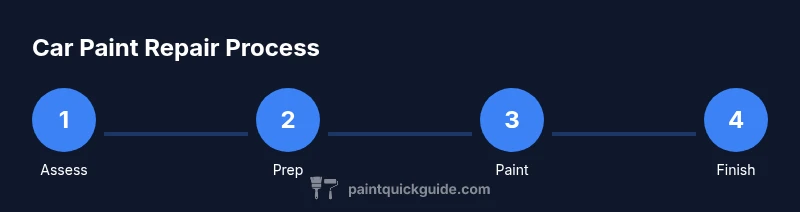
Learn how to fix paint on a car by following a structured process: assess the damage, choose the right materials, prep the surface, match color, apply primer and base coats, blend edges, and finish with a clear coat. Gather masking, sanding, and spray equipment, plus color-matched paint. This guide helps DIYers reach a durable, professional-looking repair.
Assessing the Damage
When you are learning how to fix paint on a car the first step is to assess the damage thoroughly. Start by distinguishing between chips, scratches and fading. Minor chips that stay within the clear coat are easier to repair than deep scratches that reach bare metal. The goal is to judge whether filler and color matching will suffice or if a larger panel repaint is warranted.
Take note of rust, blistering or peeling. Any area with corrosion should be treated before painting. If the damage is extensive or you are unsure consider getting a professional color match or a quote to avoid a mismatched repair. Planning the approach now will guide your material choices and masking plan.
According to PaintQuickGuide, a careful prep and color matching approach yields the most natural repair when learning how to fix paint on a car.
Choosing the Right Materials
Selecting the right materials sets the foundation for a durable repair. You will need a compatible primer, basecoat, and clear coat plus color matched paint. Consider your vehicle origin paint system and the environment where you work. If you are repairing a small chip a high build primer and careful feathered edge will help. For larger areas you may need filler, catalyzed primer and more robust top coats. Also gather masking supplies, degreaser and clean rags.
PaintQuickGuide analysis shows that using a compatible primer and top coat improves durability and color stability. Always check product data sheets to confirm compatibility with your clear coat and the base color.
Prep and Surface Cleaning
A clean dry surface is essential for a seamless repair. Begin with washing the area with mild soap and water to remove dirt and wax. Rinse and dry completely before any sanding. Use a degreaser to remove oils from the repair zone. Inspect for rust spots and treat accordingly with a rust converter if needed. Mask surrounding panels with tape and paper to protect them from overspray. When you are ready roughen the repair area with light sanding to create a key for primer.
Keep a clean bench and wipe the area between steps to prevent dust from sticking to wet coatings.
Color Matching and Mixing
Achieving a seamless repair requires accurate color matching. Use the vehicle color code when available or bring a small sample to your local auto paint shop. If you are mixing manually start with a small test panel and adjust with careful additions of base color and reducer. Aim for a shade that blends evenly into the adjacent paint as you feather the edges. Always shake or stir primers and paints according to product guidelines and test before applying to the car.
Keep test panels in good lighting and record any changes made for future repairs.
Applying Primer, Base Coat, and Blending
Apply primer to the prepared area in thin, even coats. Build until the surface is uniform and smooth then sand lightly to feather the edges. Clean dust before applying base coat. Spray in light, overlapping passes keeping the nozzle moving to avoid runs. After the base coats dry begin feather blending into surrounding color to minimize a repair line.
Remember to keep a steady hand and avoid holding the spray too close which can cause sagging.
Clear Coat and Finishing
Once the base color is dry apply a clear coat to protect the repair and restore gloss. Use multiple thin coats rather than a single thick layer and allow adequate flash time between coats. Let the finish cure in a well ventilated area and avoid dust during curing. After curing perform a light wet sand and buff to blend the repair with the surrounding paint.
A final polish with a soft cloth reveals a smooth uniform surface with even gloss.
Drying, Curing, and Buffing
Allow sufficient time for each layer to dry before applying the next. Do not rush curing especially in high humidity or cold temperatures. Once fully cured use a fine polishing compound to restore uniform gloss. You can also use a microfiber cloth to wipe and inspect the finish in good lighting. This step reduces the likelihood of visible edges.
Store any leftover paint properly to maintain color stability for future touch ups.
Troubleshooting Common Issues
If you notice orange peel adjust spray technique and thinning; practice on a test panel. If paint flakes or peels revisit surface preparation and ensure the panel is clean and dry before repainting. Runs can be corrected by lifting the cure and applying a new coat with proper technique. Color bands or mismatch often result from improper color matching or blending; re check the color code and perform another test panel before final coat. If in doubt seek professional help.
Tools & Materials
- Body filler or glazing putty(For filling small chips and irregularities)
- Filler or sandable primer(Use high build if needed)
- Sanding blocks and sandpaper 120-400 grit(Feather edges and keys)
- Masking tape and paper(Protect surrounding panels)
- Degreaser or wax-and-grease remover(Ensure clean surface)
- Basecoat paint (color matched)(Follow color code or test sample)
- Primer (filler/high build)(Improves adhesion and fill)
- Clear coat(Multiple thin coats recommended)
- Spray gun or aerosol cans(Choose appropriate nozzle size)
- reducer/thinner(Follow product guidelines)
- Respirator mask and gloves(Protect from fumes and chemicals)
- Rubbing compound and polishing cloth(Final gloss and blend)
Steps
Estimated time: 4-6 hours
- 1
Inspect and plan
Evaluate damage, photograph the area, and plan the approach based on depth and color code. Decide if filler is needed and whether the panel requires feathering or full repaint.
Tip: Document with photos to reference color and area. - 2
Mask and protect
Cover surrounding panels with tape and paper to prevent overspray. Ensure the area is well lit and ventilated before starting.
Tip: Mask edges well to minimize edge lines. - 3
Clean and degrease
Wash the area, dry completely, and degrease to remove wax or oil residues that can hinder adhesion.
Tip: Use a clean microfiber cloth for final wipe. - 4
Apply filler or primer
If needed, fill chips with body filler, then sand smooth once cured. Apply a tack coat of primer to the repaired area.
Tip: Allow proper curing time before sanding. - 5
Sand to feather
Sand the repair edges lightly to feather into the surrounding paint. Remove dust before coating.
Tip: Keep sandpaper flat and use even strokes. - 6
Mix and test color
Mix basecoat with reducer as directed. Test on a small panel or hidden area to confirm shade.
Tip: Record your final mix ratio for future touch-ups. - 7
Base coat application
Apply base coats in thin, wet coats with even passes. Build color gradually to avoid runs.
Tip: Maintain constant distance from surface. - 8
Blend edges
Feather the edges into adjacent panels to minimize a repair line. Allow base coat to dry between passes.
Tip: Use light, overlapping strokes. - 9
Clear coat layers
Apply several thin clear coats, allowing flash time between coats. Avoid heavy coatings that can cause solvent trap.
Tip: Keep the environment dust-free. - 10
Final cure and polish
Let the finish cure fully, then wet sand lightly and buff to blend. Inspect under good lighting for uniform gloss.
Tip: Use microfiber for best results.
Your Questions Answered
Is DIY car paint repair worth it for beginners?
DIY fixes work best for small chips and modest color differences. It is rewarding but requires patience, the right tools, and a safe workspace. For large areas, color matching and blending become complex.
DIY fixes work best for small chips and minor color differences; with patience, the right tools, and a safe workspace, you can achieve a solid repair.
Do I need specialized equipment to fix car paint?
Basic tools and materials include masking supplies, degreaser, fillers or primer, basecoat, and clear coat. A spray gun or reputable aerosol cans help with even coverage. Quality is more important than fancy gear for good results.
You need masking supplies, degreaser, primer, basecoat, clear coat, and a spray tool. Quality and technique matter most.
Can I color match using a paint pen or touch up bottle?
For best results use the vehicle color code and mixed basecoat. Touch up pens work for small chips but blending is easier with spray basecoat. Always test on a panel first.
Color matching is best done with the spray basecoat and the color code; touch up pens can help small spots but blending is key.
Should I repaint the entire panel or just the area?
Spot repairs work for small chips and scratches if color can be matched and edges can blend. A full panel repaint is usually unnecessary unless the damage is widespread or color fading is extensive.
In most cases you can fix just the damaged area if you can blend well with the surrounding paint.
Is clear coat always necessary after color application?
Yes, clear coat protects the color, adds gloss, and improves UV resistance. Skipping it can lead to quicker wear and color dullness.
Yes, a clear coat is essential for protection and a durable finish.
Watch Video
Quick Summary
- Assess damage accurately before starting repair
- Test color on a panel prior to car application
- Apply thin, even coats to avoid runs and orange peel
- Mask carefully and work in a ventilated space
- Allow proper curing between coats for durability