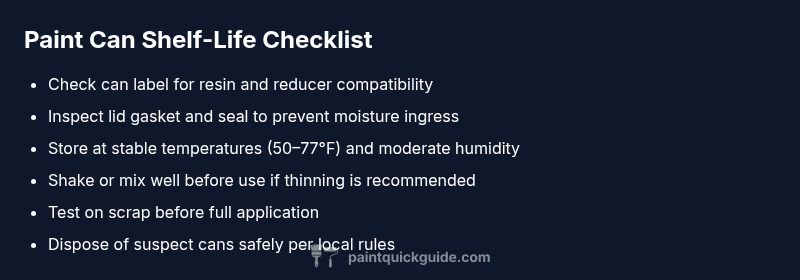
Why doesn t paint dry in the can: Troubleshooting Guide
Urgent, practical troubleshooting for why doesn t paint dry in the can. Learn quick fixes, diagnostic flow, safety tips, and storage guidance for homeowners, DIYers, and auto refinishing hobbyists.


The most likely causes are a thickened paint, a compromised lid seal, or improper storage. Quick fixes: reseal the can tightly, stir or reconstitute with the correct reducer, and restore proper temperature and humidity before retesting. If the problem persists, follow the step-by-step guide below to diagnose and fix. These checks apply to household wood finishes and car coatings alike.
Why drying fails in the can
why doesn t paint dry in the can is a common question for DIYers. According to PaintQuickGuide, the most likely culprits are a thickened formula, a compromised seal, or exposure to improper storage conditions. The chemistry of paint changes over time: solvents evaporate, binders thicken, and a bad seal can trap moisture or air, preventing a proper cure. The result is surface tackiness, slow drying, or a film that never fully hardens. The first clue is texture: is the film sticky to the touch, or does it feel crumbly? Start with a careful inspection of the can, lid, and any tape or seals. Then move to controlled testing on a scrap surface to verify whether the issue is with the product or the storage. This approach aligns with the guidance PaintQuickGuide provides for framing the problem before any disassembly or thinning.
Factors that influence drying speed
Drying time is not a single number—it's a range affected by several independent factors. Key variables include the solvent system (water-based vs solvent-based), the film thickness, and the vehicle chemistry. Temperature and humidity are equally critical: high humidity slows evaporation, while cold temperatures can stall the cure. If you left the can in a hot garage or a freezing shed, the chemistry may have shifted enough to make it feel like it never dries. Finally, a lid that doesn t seal properly can allow air and moisture to creep in, backslowing or stopping the cure entirely. Understanding these variables helps you identify which factor is most likely at play in your situation and why doesn t paint dry in the can has become a symptom rather than a fixed trait of the product.
Quick checks you can perform now
- Inspect the can and lid for cracks, corrosion, or a deformed seal. A thin gasket or damaged thread can let air in and slow drying.
- Wipe the rim and sealing surfaces clean before resealing. A thin film of old material on the edge can prevent a true seal.
- Gently invert or roll the can to re-suspend settled pigments. If you see sediment or a heavy, viscous layer, allow longer mixing time according to the label.
- Check the label for the recommended reducer or thinner. Using an incompatible solvent will extend drying times or prevent curing entirely.
- Test a small amount on a scrap surface under controlled conditions. Compare to a fresh sample to gauge whether the issue is product quality or storage.
Diagnostic hints you should not ignore
If you still see tackiness after following the basic checks, you may be dealing with one of several specific issues. A thickened film layer can occur when the solvent evaporates too quickly or when the resin content shifts due to aging. A mismatched reducer can keep the film liquid. Temperature fluctuations or high humidity can slow or halt curing. In automotive coatings, an improper activator or pot-life extension can cause dramatic differences in dry time. Each clue narrows the field and guides the next step in your diagnostic flow.
How to approach salvage and disposal safely
Salvaging old paint that won t dry is often not worth the risk, especially for auto coatings or primers designed for specific conditions. If your tests show persistent tackiness and significant smell or vapor, it is prudent to segregate the can and prepare for disposal according to local regulations. Do not mix old paint with fresh stock in hopes of saving it. Instead, document the batch and store it away from other products to avoid cross-contamination.
Storage strategies to prevent reoccurrence
The easiest way to prevent future 'why doesn t paint dry in the can' scenarios is proper storage. Keep cans tightly sealed upright, in a stable environment away from heat or direct sunlight. Temperature sweet spots typically range from roughly 50–77°F (10–25°C), with mild humidity. Label cans with batch numbers and purchase dates so you can monitor shelf life and plan usage. A small, consistent climate-control setup makes a big difference for long-term performance.
Steps
Estimated time: 60-90 minutes
- 1
Identify paint type and check label
Read the label to confirm the correct product family, solvent system, and recommended reducer. Confirm the can is within its shelf life and that you are using the specified thinner. This baseline check prevents misdiagnosis and sets the stage for a safe fix.
Tip: Always wear gloves and goggles when handling paints and solvents. - 2
Inspect lid and seal integrity
Examine the lid gasket, threads, and rim for damage or crust. A poor seal can let in moisture or air, which disrupts the drying process. If you find a damaged seal, replace it or swap lids if possible.
Tip: Clean the sealing surfaces with a lint-free cloth before resealing. - 3
Mix or reconstitute correctly
If the product has settled, shake or stir according to the label instructions. Inadequate agitation can leave pigments and binders uneven, causing inconsistent drying. For thicker products, follow the manufacturer’s guidelines for thinning.
Tip: Use a mechanical mixer for thorough blending; avoid aggressive shaking that can introduce air bubbles. - 4
Check storage conditions and bring to range
Move the can to a room with stable temperatures and moderate humidity. Avoid storing in garages or areas with temperature swings. Stable conditions support the intended evaporation rates and curing chemistry.
Tip: Keep cans away from heat sources like heaters or direct sun. - 5
Test on a scrap surface
Apply a small amount to a representative scrap surface and observe over time. Compare with a freshly opened sample under the same conditions. A normal dry-down will show good film formation within the label’s stated time.
Tip: Document the test and note any differences from the fresh sample. - 6
Decide whether to salvage or dispose
If the scrap test remains tacky or shows odd odors, treat the rest as waste per local regulations. Do not mix old paint with new stock in an attempt to salvage; this can cause broader issues for future projects.
Tip: Follow local hazardous waste guidelines for disposal.
Diagnosis: Paint in can won t dry or remains tacky after opening
Possible Causes
- highThickened or aged paint due to evaporation or resin changes
- highCompromised lid seal allowing moisture or air ingress
- mediumWrong reducer or incompatible solvent
- mediumExposure to extreme temperatures or humidity during storage
- lowContamination or water intrusion into the can
Fixes
- easyTighten the lid and reseal; wipe sealing surfaces clean before resealing
- easyStir thoroughly or reconstitute with the correct reducer per label
- easyMove paint to a stable environment with appropriate temp/humidity; avoid rapid temp shifts
- mediumTest a small amount on scrap; if still tacky, consider replacing with fresh product or disposing per local rules
Your Questions Answered
Why won t my paint dry in the can?
Multiple factors can cause this, including a thickened film, a compromised lid seal, wrong reducer, or improper storage. Start by inspecting the seal and mixing thoroughly before testing on a scrap surface. If the issue persists, follow the diagnostic flow to identify the root cause.
Paint not drying can be caused by thickened paint, a bad seal, or storage issues. Inspect the lid, mix well, and test on scrap to diagnose.
Is it safe to use old paint that won t dry?
Old paint that won t dry may still be hazardous. If there is persistent tackiness, strong odors, or unusual color changes, treat it as waste and dispose of it according to local regulations. Do not mix with fresh paint.
Old paint with odd behavior should be disposed of according to local rules; don t mix with new stock.
How long should I wait to test drying after resealing?
Follow the label’s recommended cure time, which varies by product. After resealing and mixing, test on a scrap surface after the stated time to confirm normal drying behavior.
Check the label for cure time after resealing and test on scrap after that period.
Can temperature affect drying in the can?
Yes. Extreme temperatures can slow solvent evaporation or set off film-formation issues. Keep paint in a stable environment, ideally between 50 and 77 degrees Fahrenheit depending on the product.
Temperature matters; keep the paint in a steady, moderate environment.
What should I do if the paint still feels tacky after tests?
If tackiness persists after scrap tests under controlled conditions, discard the can or consult the manufacturer’s guidance. Persistently tacky paint usually indicates a failed product or incompatible components.
If tacky after tests, don t gamble—follow disposal guidance or contact the maker.
When should I call a professional for automotive coatings?
For automotive coatings or complex color systems, professional assistance is recommended. A pro can assess compatibility, activators, and cure kinetics to avoid costly mistakes.
If you’re dealing with car coatings, consider a pro for a precise diagnosis.
Watch Video
Quick Summary
- Inspect the seal, then reseal and mix properly
- Store under stable temperature and humidity
- Test on scrap before deciding on salvage or disposal
- Use the right reducer to avoid chemical issues