How to Fix Paint That Is Too Thick: A Practical Troubleshooting Guide
Urgent guide to diagnose and fix paint that is too thick. Learn causes, safe thinning methods, testing viscosity, and prevention tips for homeowners and DIY enthusiasts.


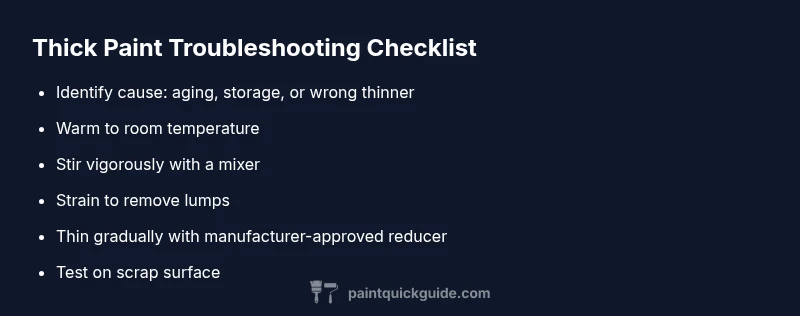
When paint is too thick, the most likely causes are old, thickened paint, using the wrong thinner, or low temperatures that increase viscosity. Quick fix: bring the can to room temperature, stir vigorously with a power mixer, strain, and add a small amount of the appropriate thinner or reducer as recommended by the manufacturer. If needed, test on a scrap surface.
Why paint is too thick and what it means for your project
If you notice brush or roller drag, visible lumpiness, or a finish that dries with a thick, uneven film, you’re likely dealing with a paint that is too thick. In many DIY scenarios, this issue stems from three core factors: aging or thickening due to storage, incorrect thinning agents, and temperature-related viscosity changes. According to PaintQuickGuide, viscosity issues are among the most common culprits homeowners encounter when tackling interior and exterior projects. The phrase paint is too thick often signals a problem at the source—the paint itself—rather than application technique. By addressing viscosity first, you’ll save time, reduce waste, and improve finish quality across surfaces like walls, trim, cabinets, and even metal parts.
Temperature, storage, and aging: how viscosity changes
Paint chemistry reacts to temperature and time. Cold storage can cause latex paints to thicken as the water-based components contract, while long-term aging concentrates pigments and binders, increasing resistance to flow. Oil-based paints also thicken as solvents evaporate slowly in sealed cans. Proper storage—around 50-70°F (10-21°C) with lids sealed tightly—helps maintain viscosity. If you’ve kept cans in a garage or shed, inspect for separation or skin formation on top, which are signs of thickening. Prior to thinning, gently roll or stir to redistribute settled pigments.
Safe thinning methods for latex and oil-based paints
Thinning is not universal; always follow manufacturer recommendations. For latex paints, a small amount of water or a latex-specific conditioner can improve flow without compromising film integrity. For oil-based paints, mineral spirits or a compatible reducer is typically used. Never add water to oil-based paints, and never use unapproved thinners. Always test a small amount on a scrap surface to ensure color, sheen, and adhesion aren’t affected.
Step-by-step corrective workflow you can follow
If you suspect thickened paint, start with basic remedies before committing to full-scale thinning. Warm the can to room temperature, then stir vigorously with a paint mixer until you see a uniform consistency. Strain the paint through a fine-mesh strainer to remove lumps, then test on a scrap surface. If viscosity remains high, add thinning agent gradually—no more than 5-10% of the total volume at a time—and re-stir. Reassess the finish after each addition to avoid over-thinning and color shift.
Tools, safety, and best practices to avoid future thick paint issues
Safety matters: work in a well-ventilated area, wear eye protection, and keep flammables away from heat sources. Use fresh can lids to minimize air exposure, inspect seals for cracks, and avoid leaving cans partially open. Regularly clean tools to prevent dried paint from contaminating new work. When possible, transfer paint to a compatible open container to gauge flow before committing to a full wall or panel.
Prevention checklist: keeping paint at the right viscosity
- Store cans upright in a climate-controlled space, away from direct sunlight.
- Never mix latex paint with oil-based thinners; respect product-specific guidelines.
- Record batch numbers and testing results for future projects to maintain consistency.
- Use a paint conditioner or extender when working in high heat to reduce faster skin formation on the surface.
Final notes and practical takeaways
Dealing with paint that is too thick is a common, solvable issue when you address temperature, aging, and thinning method first. Keep your workflow organized: test viscosity on scraps, document the thinning ratio you used, and always recheck adhesion and finish before continuing. This approach minimizes waste and ensures a smooth, even coat across surfaces.
Steps
Estimated time: 1-2 hours
- 1
Inspect and prepare
Check the paint can for storage conditions, expiration date, and any signs of separation or skin. Move to a warm, ventilated area and shake if applicable. Ensure you have all necessary thinning agents and tools lined up.
Tip: Safety first: keep containers closed when not testing to minimize moisture uptake. - 2
Bring to room temperature
If the paint is stored in a cold space, allow it to come to room temperature gradually. Quick heating can alter film properties, so avoid microwaving or direct heat sources.
Tip: Aim for a stable 60-70°F (15-21°C) to optimize viscosity. - 3
Stir thoroughly
Use a high-shear mixer or a drill-mounted paint stirrer to re-disperse pigments and binders. Scrape the sides and bottom to ensure even distribution.
Tip: Avoid air-entraining tools that introduce bubbles. - 4
Strain the paint
Pour through a fine-mesh paint strainer into a clean container to remove lumps and any dried film.
Tip: Keep the strainers clean; clogged strainers stall workflow. - 5
Thin gradually
Add a manufacturer-approved thinner in small increments (5-10% of total volume). Stir and re-check viscosity after each addition.
Tip: Do not exceed the recommended thinning ratio. - 6
Test on scrap
Apply a small amount to a scrap surface and observe leveling, sheen, and drying time. Look for a smooth, even finish.
Tip: If it still drags, consider another round of thinning or switching to fresh paint. - 7
Decide next steps
If improvements plateau after thinning, you may need to replace the can or consult the manufacturer for guidance.
Tip: Keep a log of the ratios and outcomes for future projects.
Diagnosis: Paint is unusually thick and resists brushing or rolling, leaving a heavy finish
Possible Causes
- highOld or thickened paint due to age or improper storage
- mediumWrong thinner or reducer not suited for the paint type
- highLow temperature or exposure to cold during storage or application
- lowPigment settling or poor dispersion, especially in deep colors
Fixes
- easyBring paint to room temperature and stir or shake thoroughly to re-disperse pigments
- easyStrain the paint through a fine mesh filter to remove lumps
- easyUse the manufacturer-approved thinner/reducer in small increments
- easyRe-test viscosity on a scrap surface before committing to final coats
- mediumIf stubborn, consider repackaging or purchasing fresh paint with correct viscosity
Your Questions Answered
What causes paint to become too thick?
Thick paint typically results from aging, improper storage in cold conditions, or using the wrong thinner. Mixing or shaking can help, but persistent thickness may require thinning with the correct reducer or replacing the can.
Thick paint usually comes from aging, cold storage, or wrong thinning. Stir, strain, and thin with the right reducer, or replace the can if it won’t improve.
Can I thin oil-based paint with water?
Water should never be used to thin oil-based paints. Oil paints require mineral spirits or a compatible reducer. Using water can ruin film formation and adhesion.
No, you should not thin oil-based paint with water. Use mineral spirits or the recommended reducer.
Is it safe to use a hair dryer to thin paint?
Using a heat tool to thin paint is not recommended. Heat can dry or cure the surface too quickly and cause cracking. Rely on temperature adjustment and thinning with proper reducers instead.
No, a hair dryer isn’t a safe or effective thinning method. Use proper thinning and temperature control instead.
How can I test the viscosity of paint?
Test by applying a thin line on scrap cardboard and watching the flow. If it beads or drags, the paint is too thick and requires thinning or replacement.
Dip a brush and apply a line on scrap; if it beads or drags, adjust viscosity.
What if thick paint leaves roller marks?
Roller marks from thick paint often indicate high viscosity or poor spreading. Thin the paint within recommended limits and use a fresh roller cover to improve flow.
Thick paint can leave roller marks; thin gradually and use a smooth roller.
When should I seek professional help?
If paint continues to thicken after thinning attempts, or if a project requires uniform color and finish across large areas, consult a paint professional or contact the manufacturer for guidance.
If thinning doesn’t help, it may be time to consult a pro or the manufacturer.
Watch Video
Quick Summary
- Identify the cause before thinning
- Warm, stir, and strain first
- Thin with manufacturer-approved reducer
- Test on scraps before full application
- Store paint properly to prevent future thickening