Klean Strip Paint Stripper: Safe and Effective Removal Guide
Learn how to safely remove old paint with klean strip paint stripper. This PaintQuickGuide tutorial covers selection, prep, application, cleanup, and disposal for wood, metal, and masonry.


Discover how to safely remove old paint using klean strip paint stripper, pick the right formula for wood, metal, or masonry surfaces, and follow a proven, step-by-step process. This guide covers prep, ventilation, PPE, application timing, scraping vs. polishing, neutralizing, and proper disposal—so you can achieve a clean, ready-to-finish surface with confidence.
How a Paint Stripper Works and When to Use It
A paint stripper is designed to weaken or dissolve the binder that holds old paint to a substrate, allowing it to be lifted away with a scraper or cloth. Klean Strip paint stripper products are formulated for different materials and paint ages, so choosing the right solvent strength and gel consistency matters. For homeowners and DIYers, strip products can simplify coatings and salvage furniture with multiple paint layers. The PaintQuickGuide team emphasizes reading the label, as some formulas are designed for wood, while others are safer on metal or masonry. Always check for lead-based paint hazards and follow local regulations when stripping painted surfaces—especially in older homes. Safety and preparation pay off, reducing dust generation and exposure while delivering a smoother finish on the next coat.
Choosing the Right Formula: Gel, Liquid, and Paste
Klean Strip offers a range of formulas with varying viscosities to suit vertical or horizontal surfaces and to minimize runoff. Gel formulas cling to vertical surfaces, giving you more working time on cabinets or trim. Liquid formulas may act faster on flat surfaces but require careful cleanup to prevent runoff onto adjacent materials. For auto refinishing projects, there are specialty products designed to minimize solvent damage to underlying coatings. When selecting a formula, consider the substrate, the number of paint layers, temperature, and ventilation. PaintQuickGuide recommends starting with a milder option and testing on a small inconspicuous patch to gauge effectiveness.
Surface Check: Wood, Metal, and Masonry Compatibility
Wood surfaces absorb more solvent and may warp if left too long, so always start with a small test area. Untreated wood can be damaged by overexposure; sealed or varnished surfaces may require longer dwell times or a different formulation. Metals can be susceptible to corrosion if the strip is too aggressive or left on too long. Masonry and brick offer challenges because porosity can prolong dwell times and affect finish quality. In all cases, follow the product's label for dwell times and safety precautions. If in doubt, consult a professional or test on a scrap piece first and wear appropriate PPE.
Prep and Ventilation: Setting the Stage for Safe Work
Ventilation is crucial when using chemical strippers. Open windows, use a fan to direct fumes away from your breathing zone, and consider wearing a respirator rated for organic solvents for longer sessions. Remove pets and kids from the work area and cover nearby surfaces with plastic sheeting. PPE should include chemical-resistant gloves, eye protection, and a long-sleeve shirt to minimize skin contact. Controlling dust helps, but remember that paint stripping produces fumes that can irritate eyes, throat, and lungs. PaintQuickGuide recommends a 10–15 minute air-out period before you continue after a short break.
Application: Getting an Even Coat and Waiting Time
Apply the stripper in a thick, even layer according to the label directions. For gel formulations, you may see a visible film forming as the product penetrates the paint. Do not thin the product unless the label explicitly allows it. The waiting period varies by product and climate; typical dwell times range from 15 minutes to several hours. Covering the surface with plastic film helps extend dwell time in cool environments, but avoid sealing too tightly on porous substrates where moisture may cause swelling.
Removal and Cleaning: Scraping, Wiping, and Neutralizing
Once the paint has softened, gently scrape with a plastic or wooden tool to avoid gouging the substrate. Wipe away softened paint with rags or paper towels, changing rags frequently to minimize re-contamination. Some formulations require a neutralizing step or a dedicated cleaner to halt the chemical reaction; always follow the label. After removal, thoroughly rinse the surface with water or an appropriate cleaner to neutralize residual solvent and remove any film. If residue remains on delicate finishes, repeat the process on a small area before committing to the entire piece.
Disposal, Cleanup, and Safety Recap
Dispose of used stripping materials according to local regulations; many programs require sealed plastic bags and proper labeling. Clean tools immediately to prevent hardened residue; store strippers in a cool, ventilated area away from heat. Keep a waste container for chemical disposal and avoid mixing different chemicals. Reassess the work area for any remaining fumes and provide ventilation during cleanup. Finally, document the project steps for future touch-ups and consider applying a protective finish once the surface is fully dry.
AUTHORITY SOURCES (Official Guidance)
For safety and disposal guidelines, consult authoritative sources:
- OSHA Chemical Safety for solvents: https://www.osha.gov/chemical-safety
- EPA Lead-Based Paint regulations: https://www.epa.gov/lead
- CDC NIOSH resources on chemical hazards and PPE: https://www.cdc.gov/niosh
Tools & Materials
- klean strip paint stripper (gel or liquid formula)(Choose the formula and dwell time suitable for your substrate)
- protective gloves (nitrile)(Chemical-resistant, long-cuff)
- eye protection(Goggles or face shield)
- respirator or organic vapor mask(NIOSH-approved, organic vapor cartridges)
- plastic scrapers or rubber scrapers(Plastic to avoid gouging; metal only if necessary)
- plastic drop cloths or plastic sheeting(Cover nearby assets and floors)
- plastic buckets and clean rags(For removing softened paint and cleanup)
- soap and water or mild cleaner(To rinse and neutralize after stripping)
- sturdy ventilation fan or open area(Assist with fumes and air exchange)
Steps
Estimated time: 60-120 minutes (plus dwell time depending on product and surface)
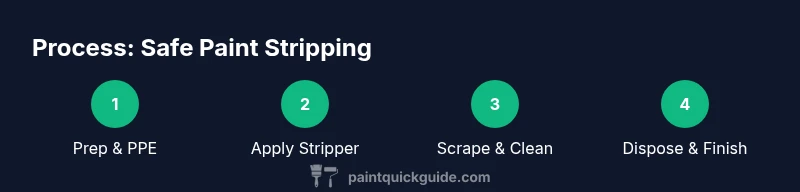
- 1
Prep the workspace and PPE
Clear the area, cover neighboring surfaces, and put on PPE. Ensure good ventilation and remove pets/kids. A clean, controlled workspace reduces cleanup and exposure.
Tip: Test a small area first to confirm surface compatibility. - 2
Select the right stripper formula
Read label to match your substrate and paint type. For vertical surfaces, gel formulas reduce runoff; for large horizontal areas, liquid may work faster. Start with the mild option if unsure.
Tip: Do a patch test on an inconspicuous spot. - 3
Apply the stripper evenly
Spread a thick, uniform layer following label directions. Do not thin unless approved. Times vary with product and climate.
Tip: Keep a wet edge to avoid streaks. - 4
Wait for the paint to soften
Allow the stripper to dwell for the recommended time. Cover if climate is cool to extend dwell time, but avoid sealing too tightly on porous substrates.
Tip: Do not rush; the layer should visibly bubble or peel. - 5
Gently remove softened paint
Use a plastic scraper to lift paint without gouging the surface. Wipe frequently to prevent mud.
Tip: Work from edges inward to minimize damage. - 6
Rinse and neutralize
Rinse with water or appropriate cleaner to remove residue and halt chemical action. Follow with a neutralizing step if the product requires it.
Tip: Inspect for remaining paint and re-treat if needed. - 7
Clean tools and dispose
Clean tools immediately; seal and label waste; store the product safely. Do not mix solvents and follow local disposal rules.
Tip: Keep container labels readable during disposal.
Your Questions Answered
Is it safe to use klean strip on wood?
Yes, but choose wood-safe formulas and test on a hidden area. Follow dwell times closely and avoid overexposure to prevent warping.
Yes—test on a hidden patch and follow dwell times to protect wood.
Can I use klean strip on metal surfaces?
Most metal surfaces tolerate chemical strippers, but avoid prolonged exposure and protect from corrosion. Use a non-acidic, metal-safe formula and rinse thoroughly.
Most metals can handle it, but rinse well to prevent corrosion.
What about lead paint hazards?
If your home was built before 1978, treat all painted surfaces as potentially lead-containing. Follow local regulations, use PPE, and consider lead-safe procedures or professional help.
Older homes may have lead paint; follow safety rules and consider a pro.
How do I dispose of leftover stripper?
Follow local guidelines; store in a labeled, sealed container until disposal. Do not mix with other chemicals and use approved disposal channels.
Check local disposal rules and label waste clearly.
Do I need a respirator?
For long sessions, yes. Use a respirator rated for organic solvents with the appropriate cartridges and ensure a proper fit.
Yes, use a proper respirator for longer work.
Will the finish look damaged after stripping?
It depends on the substrate and stripper. Test first, use mild formulas, and plan for refinishing after stripping.
Test first; you may need to refinish after stripping.
Watch Video
Quick Summary
- Choose the right stripper for your surface
- Ventilate and wear PPE at all times
- Follow label dwell times and neutralize after use
- Dispose of waste according to local rules