How to Stop Paint From Blistering: Practical Guide
Learn practical steps to prevent paint blistering on walls and vehicles, covering surface prep, moisture control, primer choices, thinning coats, and drying times for durable finishes.


According to PaintQuickGuide, stopping paint blistering starts with thorough surface prep, addressing moisture, and using proper primers. Ensure the workspace stays dry, follow temperature guidelines, and apply thin coats with adequate drying between passes. With the right prep and materials, blistering becomes preventable. Read on for step-by-step guidance and practical tips.
Why blistering happens
Blistering is a film failure that occurs when trapped moisture or solvents push a paint film away from the substrate. In many homes and workshops, hidden moisture from leaks, humidity, or seasonal temp swings can migrate behind the coating. In addition, using incompatible primers or applying paint over a dirty, greasy, or poorly prepared surface sets up a blister-prone layer. The PaintQuickGuide team finds that the root cause is almost always moisture management and surface preparation. By identifying moisture sources and correcting them before painting, you dramatically reduce blister risk. Expect to invest time in drying and ventilation—this investment pays off with a smooth finish that lasts years rather than months.
Surface prep essentials
Effective prep is the foundation of blister resistance. Start with a thorough cleaning to remove oils, waxes, and dust: a mild detergent wash, followed by a clean rinse and a tack-dry surface. Remove all loose blistered paint with a putty knife or scraper, feather edges with 120–220 grit sandpaper, and wipe again with a tack cloth. If the substrate is bare wood or damaged, repair as needed and sand smooth. Protect adjacent areas with painter’s tape and drop cloths. For best results, the surface should feel dry and micro-scratches should be barely perceptible to the touch. The goal is a clean, dry, sound surface that the primer can bond to.
Surface moisture assessment and repair
Before applying primers or topcoats, evaluate moisture sources. Check for a damp or musty odor, visible staining, or water intrusion. If moisture is present, address leaks, improve ventilation, and wait until the substrate is dry. A moisture meter can help quantify levels inside walls or wood. Once the surface reads dry, re-clean the area, re-sand if needed, and re-tack before priming. This step prevents sealed moisture from becoming a blister in the new coat.
Primer selection and application
Primer compatibility is critical to blister resistance. Use a high-adhesion primer appropriate for the substrate (wood, drywall, metal) and for the chosen topcoat. In moisture-prone areas, a stain-blocking or moisture-mateway primer helps prevent bleed-through and blistering. Apply primer in thin, uniform coats and let each coat dry per the product label. Avoid applying primer so thick that it puddles, which can trap solvents and moisture beneath the film.
Paint type and finish decisions
Choose paints designed for the specific surface and environment. For interior walls, an acrylic-latex or acrylic-oil blend with good adhesion and leveling is common, while exterior surfaces may require 100% acrylics and elastomeric finishes in areas with high moisture. Finish choice (matte, eggshell, satin) should consider cleanability and humidity exposure. In situations with prior blistering, select a primer-sealer combo and ensure the topcoat is fully compatible with the primer. The right pairing reduces the risk of future blister formation.
Temperature, humidity, and drying conditions
Environmental control is often overlooked yet essential. Maintain ambient temperatures within the paint’s recommended range (often 50–85°F or 10–29°C) and keep humidity low enough to allow proper drying between coats. Poor ventilation or high humidity traps solvents and moisture under the film, increasing blister risk. If you must paint in variable conditions, use a dehumidifier or portable fan to stabilize the environment and speed evaporation of moisture from the coating.
Application techniques to avoid blistering
Apply paint in thin, even coats rather than thick layers. Wipe or roll excess paint to avoid puddling, especially on textured or irregular surfaces. Maintain a wet edge by aligning strokes and avoiding back-rolling over dry edges, which can trap moisture. Allow adequate dry time between coats; rushing a second coat can trap solvents and create blisters. For metal surfaces, use a corrosion-inhibiting primer and a rust-preventive topcoat to reduce blister susceptibility.
Handling existing blistering and recoat strategy
If blisters appear after the first coat, stop and assess. Remove loose an area by scraping, sand lightly, and re-clean. Reprime the repaired areas with a compatible primer before applying additional coats. In areas with severe blistering or prolonged moisture exposure, it may be better to remove the affected layer and start fresh with a new, properly prepared substrate. The key is to address moisture sources first, then rebuild with compatible products.
Drying times, recoat windows, and patience
Coating dries to the touch at different rates depending on product and conditions. Always follow label directions for recoat windows; impatient recoats trap solvents and trap moisture. Even if a surface feels dry to the touch, full cure can take days or weeks. Plan your project around drying windows and avoid recoat attempts during periods of high humidity or low evaporation potential. Patience is often the most reliable blister-prevention tool.
Prevention checklist and maintenance
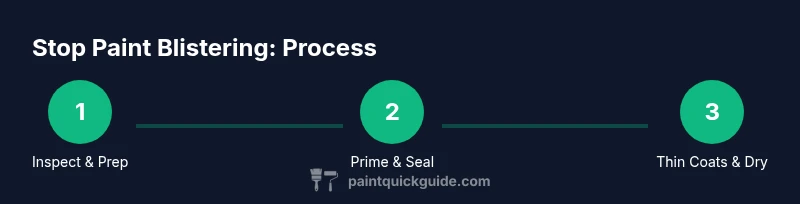
Create a repeatable process for future projects: (1) inspect and fix moisture sources, (2) clean and dry thoroughly, (3) choose compatible primers and topcoats, (4) apply thin coats with proper drying between steps, (5) monitor environmental conditions during the job, and (6) conduct a final inspection after the paint cures. Regular maintenance, such as addressing roof or plumbing leaks and controlling indoor humidity, helps prevent blistering long after the project is finished.
Authority sources
- This guide draws on best practices for surface prep, moisture control, and paint compatibility. For broader safety and environmental considerations related to painting, consult official resources and extension publications. The following sources provide additional context on safe painting practices and moisture guidance.
Tools & Materials
- Degreasing cleaner(Oil and wax removal; use a paint-appropriate cleaner)
- Soap and water(Initial surface wash to remove surface grime)
- TSP substitute or trisodium phosphate (optional)(Useful for heavy contamination)
- Putty knife or scraper(Remove loose blistered film without gouging substrate)
- 120–220 grit sandpaper(Feather edges; create bonding surface)
- Sanding block(Even sanding pressure)
- Tack cloth(Remove fine dust after sanding)
- Painter’s tape(Protect edges and define clean lines)
- Drop cloths or plastic sheeting(Contain debris and spills)
- Buckets and rags(Prep work and cleanup)
- Primer (moisture-blocking if needed)(Ensure adhesion and seal moisture)
- Interior/exterior paint (topcoat)(Choose compatible with primer)
- Paintbrushes, rollers, and trays(Apply thin, even coats)
- Safety gear (gloves, goggles, respirator/mask)(Protect from solvents and dust)
- Ventilation aids (fan or dehumidifier)(Speed drying and reduce humidity)
Steps
Estimated time: 4-6 hours (plus additional drying between coats; total cure may take 24–72 hours depending on product and conditions)
- 1
Inspect and remove blistered paint
Assess the surface for blistered areas and loose coatings. Use a putty knife to lift and remove any loose film, working gently to avoid denting the substrate. This creates a clean edge for repair and prevents further blister formation.
Tip: Only remove loose film; don’t pry deeply into the substrate. - 2
Protect surrounding areas
Place drop cloths, tape off edges, and ensure ventilation. This reduces contamination and keeps dust from settling on a fresh coating. A controlled workspace also helps you monitor drying conditions more accurately.
Tip: Secure edges with painter’s tape to prevent paint creep. - 3
Clean and degrease the surface
Wash the area with a degreasing cleaner or mild detergent, then rinse with clean water. Dry completely before proceeding. Residual oils will impede primer adhesion and can contribute to future blistering.
Tip: Follow product directions for dilution and contact time. - 4
Feather and sand the repaired areas
Lightly sand the repaired zones to create a smooth transition with surrounding material. Wipe with a tack cloth to remove dust. A uniform surface improves primer grip and paint finish.
Tip: Avoid deep gouges that create low spots where moisture can collect. - 5
Address moisture sources
Identify leaks, condensation, or humidity sources feeding the area. Repair leaks and ensure proper ventilation before continuing. Without moisture control, blistering is likely to recur.
Tip: If needed, dry the area with a fan or dehumidifier for several hours. - 6
Apply primer correctly
Use a compatible primer suited to the substrate and topcoat. Apply a thin, even coat and let it dry completely before adding a second coat if required by the product. Primer quality and coverage are critical to blister resistance.
Tip: Avoid puddling; multiple thin coats beat one thick coat. - 7
Choose the right topcoat
Select a topcoat compatible with the primer and substrate. For moisture-prone areas, a moisture-resistant or elastomeric finish may be appropriate. Ensure the product’s drying window aligns with environmental conditions.
Tip: Read label recommendations for recoat times and surface temperature. - 8
Apply thin coats with the right technique
Apply the first coat evenly, maintaining a wet edge to prevent drying cracks. Avoid back-rolling over dry areas; this traps solvents and can cause blistering. Allow the first coat to dry fully before applying a second.
Tip: Keep strokes consistent and watch for drips or runs. - 9
Reassess and recoat if needed
If the first pass shows no blistering, apply a second thin coat after the recommended dry time. If blisters reappear, remove affected areas and re-prime before continuing.
Tip: Patience reduces the risk of re-blistering. - 10
Final inspection and curing
Check the surface under different lighting for uniform color and gloss. Allow full cure according to product guidelines, which can take days. A thorough cure helps resist future moisture exposure and blistering.
Tip: Avoid heavy use until fully cured. - 11
Document and maintain moisture controls
Record findings about moisture sources and corrective steps. Maintain ongoing humidity control and address leaks promptly to prevent future blistering. Regular maintenance reduces long-term repaint needs.
Tip: A simple maintenance schedule saves time later. - 12
Prepare for future projects
Keep primers, good quality brushes, and moisture meters on hand for faster, blister-free finishes. Having a reliable workflow helps you reproduce professional results with confidence.
Tip: Stock up on thin coats and breathable topcoats.
Your Questions Answered
What causes paint to blister?
Blistering is typically caused by moisture under the film, solvent entrapment, or poor surface preparation. Proper prep and moisture control are the best preventatives. Always inspect for moisture sources before painting.
Blistering usually happens when moisture or solvents push under the paint film; start with a clean, dry surface and proper prep.
Can you repair blistered paint without repainting everything?
In many cases you can remove the blistered areas, re-prime, and recoat only the affected zones. If damage is extensive, it may be necessary to repaint larger sections for a uniform finish.
Often you can fix just the blistered spots and recoat, but large areas might need a full repaint.
How long should primer dry before applying topcoat?
Primer dry times vary by product; always follow the label. Interior latex primers typically dry to touch in a short period, while oil-based primers take longer. Ensure a uniform dry edge before painting.
Let the primer dry fully according to the can, then apply the topcoat for best adhesion.
Is blistering more common indoors or outdoors?
Blistering can occur in both environments, but indoor moisture intrusion and outdoor temperature swings both contribute. Addressing moisture and using proper primers reduces risk in either setting.
Both indoor and outdoor cases happen; prevention comes from prep and controls.
How can I prevent blistering on wood surfaces?
Seal the wood, choose a compatible primer, and protect against moisture exposure. Ensure the surface is completely dry before painting to minimize blister risk.
Seal wood, use the right primer, and keep it dry before painting.
What environmental conditions are best for painting?
Aim for moderate temperatures and low humidity. Ventilate well to speed drying and reduce solvent buildup. Avoid painting in dusty or damp conditions.
Paint when it’s dry and within a comfortable temperature range with good airflow.
Watch Video
Quick Summary
- Prepare thoroughly: clean, dry, and repair substrates before painting
- Control moisture and humidity to prevent blistering
- Use compatible primer and topcoat combinations
- Apply thin coats with proper drying intervals
- Address any blistering promptly to prevent recurrence