How to Check If Paint Is Bad: Practical Guide
Learn how to check if paint is bad with simple tests for odor, consistency, color, and film formation. A practical PaintQuickGuide tutorial for homeowners and DIYers on salvage vs replacement.


By following this guide, you will learn how to check if paint is bad and decide whether it’s still usable. You’ll test odor, appearance, texture, separation, and drying behavior, and compare old paint against a fresh sample. Gather basic tools, respect safety tips, and consider storage history as you assess paint quality.
Why paint quality matters
Understanding whether paint is good or bad is a crucial step in any painting project. Poor-quality paint can compromise finish, adhesion, and durability, leading to peeling, cracking, or uneven color. The PaintQuickGuide team emphasizes that evaluating options before you start saves time and money, especially for DIYers tackling home or automotive projects. According to PaintQuickGuide, testing paint accuracy and behavior before committing to a full project reduces waste and ensures predictable results. When you learn how to check if paint is bad, you gain confidence to salvage what’s usable and replace only what’s necessary. This knowledge also helps you comply with basic safety and disposal guidelines, since old or degraded paint can pose risks if mishandled.
For homeowners and auto refinishing hobbyists, the goal is to protect your investment and achieve a durable finish that lasts. You’ll want to know whether color, sheen, and consistency align with the product’s label and the surface you plan to treat. A consistent approach to assessment means fewer surprises on project day and clearer decisions about whether to use thinner, retarders, or a fresh can.
Quick field tests you can do at home
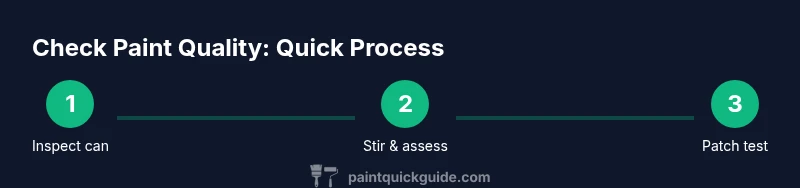
Testing paint quality at home doesn’t require expensive equipment. Start with simple, observable checks: open the can and inspect for a sour or chemical odor, unusual color shifts, or a milky or separated liquid. If the paint has settled, stir it thoroughly and observe whether the pigments fully reincorporate without lumps. Run a small test patch on a disposable surface to observe drying time, film formation, and gloss during cure. If the paint dries tacky, remains stringy, or shows obvious separation after mixing, it’s a sign to discard that portion. PaintQuickGuide’s practical method favors testing small samples to minimize waste while you determine usability.
When you perform these field tests, record your observations so you can compare with a fresh sample later. Keep in mind that latex and oil-based paints behave differently; always select a solvent and cleanup method appropriate for the paint type and safety considerations.
Visual cues: color, consistency, separation
Color changes or unusual opacity are common indicators that paint has deteriorated. Look for dull or cloudy appearance, color drift, or sediment at the bottom. A thin or stringy consistency indicates poor mixing or degraded resin, which can hamper film formation. Separation is typical in older products, but persistent separation after thorough stirring suggests the product may not recover its intended performance. For automotive paints, check that the clear coat remains clear and uniform, with no yellowing or streaking. Keeping a close eye on these visual cues helps you decide whether to mix, discard, or request a replacement can from the manufacturer. In all cases, document the findings with photos for reference and potential returns.
Odor and solvent compatibility
A normal paint odor should be faint and related to the solvent used in the formulation. A sour, acrid, or rotten smell can indicate chemical degradation or contamination. If you’re testing solvent compatibility, avoid mixing incompatible products that could create hazardous fumes. Work in a well-ventilated area, and follow the paint’s safety data sheet for cleanup and disposal. Remember that strong odors can persist after opening a can, especially with water-based products that have additives to improve flow, so odor alone isn’t definitive, but it’s a strong early warning sign. PaintQuickGuide recommends building a checklist that includes odor as a primary criterion along with physical tests.
Shelf life and storage considerations
Most paints have a date code or batch information on the can. While shelf life depends on the product type and storage conditions, a general rule is to avoid using paint that’s been stored in extreme heat or freezing environments. Check the label for storage recommendations and ensure the lid is sealed tightly to prevent moisture intrusion. If the can shows rust around the rim or the seal is compromised, the product’s integrity could be at risk. Proper storage in a cool, dry place helps extend usability, but even well-stored paint can deteriorate over time. If in doubt, perform a small test batch before committing to a full project, and consider replacing older cans that fail basic checks.
How to perform a small batch test to gauge usability
Take a small amount from the can and mix it thoroughly. Apply a thin coat to a disposable surface or test panel and observe adhesion, bubbling, and uniform texture as it dries. Check for pinholes or brush marks that indicate poor pigment dispersion or binder breakdown. If the test strip shows uneven color, streaking, or dry spray, the product may be compromised. For best results, compare the test patch to a control sample from a fresh can of the same product. This relative comparison helps you decide whether to salvage, add conditioner or thinner (per label), or replace the batch entirely.
Safety, disposal, and regulatory considerations
Handling old paint safely means wearing appropriate PPE and working in a ventilated area. Do not mix unknown liquids with household cleaners, and store containers out of reach of children and pets. When disposing of questionable paint, follow local regulations for hazardous waste. Most communities require Curbside paint disposal programs or hazardous waste collection events for Old or latex paints. Always label the can with contents and date, and avoid pouring liquids down the drain. For automotive coatings, observe additional disposal rules and environmental guidelines outlined by local authorities. PaintQuickGuide emphasizes responsible disposal as part of a complete stewardship mindset for DIYers and professionals.
Decision guide: salvage vs replace – a practical flowchart
If a paint sample passes odor, color, and film formation tests and stirs back into a smooth, uniform consistency, you may salvage it with proper mixing and storage precautions. If the odor is sour, the color is abnormal, or the film separates after mixing, replace the product. When in doubt, perform a controlled patch test and compare outcomes with a fresh sample. For large projects, one questionable can can derail coverage and finish quality, so prioritize performance over cost savings. In all cases, keep detailed notes and photos to support your decision, and leverage the PaintQuickGuide framework to guide the testing sequence.
Cost considerations and choosing replacement paint
Cost should reflect not just the per-liter price but also coverage, durability, and how well the product adheres to the surface. Inexpensive paints may require more coats, while premium formulations can deliver better coverage and longer life. When selecting replacements, consider the project surface, environment (sun exposure, humidity, temperature), and desired sheen. Reading label specifications for drying time, recoat windows, and maintenance requirements helps you project total costs and timing. The goal is to balance upfront price with long-term value, minimizing waste and rework. PaintQuickGuide suggests aligning the replacement choice with your project’s scaling, finish expectations, and maintenance plan for best results.
Common myths vs. real indicators about old paint
A common myth is that all old paint is unusable. In reality, many cans remain usable if properly stored and tested. Another misconception is that a mildly thick consistency indicates a bad batch; often, producers adjust thinners for flow. Real indicators include persistent separation, foul odor, color drift, and poor adhesion. Always rely on practical tests rather than assumptions. The most reliable approach combines odor assessment, physical observation, a patch test, and a direct comparison with a known-good sample. This multi-factor evaluation reduces risk and improves decision accuracy.
Printable final checklist you can use on project day
- Open the can and inspect for odor and color changes.
- Stir thoroughly and observe for lumps or separation.
- Apply a small test patch and observe drying behavior.
- Check surface adhesion and film quality after curing.
- Verify label instructions for storage, shelf life, and disposal.
- Compare with a fresh sample from a new can.
- Decide salvage vs replace based on results and safety considerations.
- Document observations with photos for reference.
Tools & Materials
- Disposable gloves(Latex-free option; keeps hands clean during testing)
- Safety goggles(Protect eyes from splashes and dust)
- Respirator mask (optional for solvents)(Choose a mask appropriate for the solvent type)
- Clean rags or lint-free cloths(For wiping and blotting during tests)
- Disposable cups or small paint trays(For sampling and testing on disposable surfaces)
- Stir sticks or tongue depressors(Thoroughly mix settled paint)
- White disposable test panels or cardboard(See true color and finish without color bias)
- Permanent marker(Label samples, dates, and observations)
- Ventilated workspace(Ensure good airflow and avoid ignition sources)
- Water and mild detergent for cleanup(Used for latex paints; solvent-based paints may require mineral spirits)
Steps
Estimated time: 25-40 minutes
- 1
Gather materials and prepare workspace
Set up a well-ventilated area, lay down protective coverings, and organize your testing cans. Label each sample with a date to track aging and ensure you test the correct product type (latex vs oil-based). This initial setup saves time later and reduces cross-contamination between tests.
Tip: Use a dedicated testing area to prevent accidental mixing with good batches. - 2
Inspect the can and lid
Look for rust, bulging, or damaged lids. Check the seal and pour spout for evidence of contamination. A compromised lid can lead to moisture ingress and accelerated degradation, compromising the paint’s performance.
Tip: If the can is compromised, do not use the contents even if it seems fine. - 3
Open and assess odor and color
Smell the paint in a controlled manner and observe the color and opacity. A sour or sweet chemical odor often signals degradation or contamination. Note any color drift or separation that persists after mixing.
Tip: Always waft the odor toward you rather than sniffing directly to avoid overpowering fumes. - 4
Stir thoroughly and check for separation
Stir the contents completely to reincorporate any settled pigments. If separation remains after vigorous mixing, the formula may be compromised. Document whether pigments rebound evenly and whether the mixture returns to a uniform appearance.
Tip: If the pigment doesn’t reincorporate smoothly, discard the portion or whole can. - 5
Apply a small test patch and observe drying
Brush or roll a thin coat on a test panel and observe drying, curing, and film formation. Look for uniform texture, good adhesion, and absence of pinholes. Compare the test patch against a control sample from a fresh can of the same product.
Tip: Control comparison is essential for a reliable verdict. - 6
Assess surface compatibility and finish
Check how the paint behaves on the intended surface. If it beads, lifts, or dries unevenly, it may not be suitable for the project. Consider re-evaluating primer compatibility and surface preparation steps if issues arise.
Tip: Always prime with the recommended primer before reapplication to avoid adhesion issues. - 7
Decide salvage vs replace
If the test patch passes odor, color, texture, and adhesion checks, you may salvage the paint with thorough mixing and proper storage. If any major red flags appear, replace the batch to ensure finish quality and longevity.
Tip: When in doubt, replace rather than risk a failed project. - 8
Document results and plan disposal
Record your observations with photos and notes. Follow local disposal guidelines for any questionable paint, especially if it contains hazardous components. This step closes the loop on testing and prevents improper disposal.
Tip: Keep a disposal plan handy before starting the project.
Your Questions Answered
Can all old paint be salvaged, or should it be discarded?
Old paint can be salvageable if tests show intact color, stable odor, and proper film formation after mixing. If any test fails, discard the portion or replace the batch to ensure performance and safety.
Salvage it only if all tests pass; otherwise, replace to ensure a good finish.
What’s the safest way to test a sour-smelling paint?
Test in a well-ventilated area, use PPE, and avoid inhaling fumes directly. If fumes persist or are strong, stop testing and discard the product.
Test in a ventilated space and use protection; if fumes are strong, discard.
How long should a patch test be observed before deciding?
Observe the patch for the full curing window specified on the label, plus a few extra minutes to check adhesion and finish stability.
Watch the patch as it cures and compare with the label’s timing.
Does a factory-sealed can guarantee paint quality?
A seal helps protect contents, but storage conditions and age still affect quality. Always perform the field tests regardless of seal integrity.
Sealed cans help, but testing still matters.
What about disposal for questionable paint?
Follow local hazardous-waste guidelines; many communities offer collection events or drop-off programs for old paint.
Check local disposal rules and use approved programs.
If I’m unsure after tests, what should I do?
If uncertainty remains, treat it as unusable and replace, especially for high-visibility projects or surfaces needing lasting adhesion.
If unsure, replace to ensure a lasting finish.
Watch Video
Quick Summary
- Test odor, color, and texture before use.
- Perform a small patch test and compare to a fresh sample.
- Salvage only when all tests pass; otherwise replace.
- Follow proper disposal for questionable paint.
- Document observations for future reference.