How to Know If Acrylic Paint Is Expired: A Practical Guide
Learn practical signs, safe testing methods, and storage tips to determine if acrylic paint is expired. This step-by-step guide covers testing, disposal, and prevention for homeowners and DIY painters.


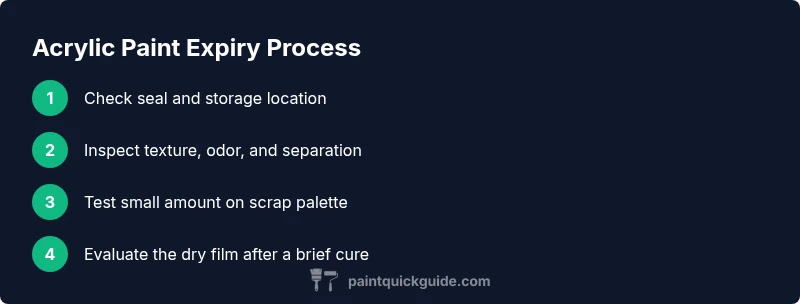
To know if acrylic paint is expired, test for texture, odor, and film quality. Look for thickening, separation, skin on the surface, mold, or sour smell. If in doubt, discard rather than risking a poor finish.
What expiration means for acrylic paint
Understanding whether acrylic paint is expired isn’t driven by a single date on the label. According to PaintQuickGuide, expiration is best viewed as a spectrum of usability. The core idea is simple: paint remains workable as long as the binder stays dispersed, pigments remain correctly suspended, and the container remains uncontaminated. When exposure to air, heat, or moisture disrupts any of these factors, performance can decline. As a homeowner or DIY painter, you should judge by how the paint behaves rather than relying only on a calendar. Focus on whether the paint still flows smoothly, covers evenly, and dries to a consistent film. If you notice persistent crumbly texture, color separation, or an odd odor, consider discarding. In practice, this means you’ll test a small amount on a scrap surface first to confirm it still behaves like fresh acrylics before committing to a project.
Signs your acrylic paint has gone bad
Acrylic paint that has expired shows telltale signs. Look for thickening or separation that won’t remix with a few shakes, a skin forming on the surface, or clumps that don’t break up when stirred. A sour, rancid, or sharp chemical odor is another red flag, as is mold growth inside the bottle or on the surface of the paint. Color shifts, such as dulling or unexpected tint changes, can also indicate degradation of pigments or binder. Lastly, if the product is past its seal or shows contamination from foreign material, it’s safer to retire the tube or jar. If any of these symptoms appear, pause painting and prepare a fresh batch instead of risking a poor finish or inconsistent drying times.
Storage and shelf life: opened vs unopened containers
Storage decisions play a huge role in how long acrylic paint remains usable. Unopened containers kept in a cool, dry place away from sunlight tend to stay more stable than those left near heat sources. Once opened, paints are more vulnerable to air exposure and microbial growth, especially if lids don’t seal tightly. Avoid leaving brushes resting in the paint or transferring water into the bottle, as additives can alter viscosity and drying behavior. Labeling jars with the purchase date helps you track usage and avoid keeping paint beyond practical usefulness. The goal is to minimize temperature fluctuations and moisture, and to use the paint within a reasonable span after opening rather than letting it sit for extended periods.
How to test acrylic paint without sacrificing a project
To test whether a batch is still usable, start with a small amount on a disposable palette. Shake or stir vigorously to restore dispersion, then look for uniform texture and color. Add a little water or medium only if needed to bring it to the intended consistency; avoid thinning with solvent or contamination from dirty tools. Apply a thin swatch to a scrap surface and observe how it dries: even sheen, no cracking, and proper adhesion are good signs. If you detect streaking, poor leveling, or a strong odor after drying, the paint should be discarded. A quick test like this saves waste and helps you decide whether to proceed with your current project or purchase a fresh batch.
What to do with expired acrylic paint
Safety and environmental responsibility matter when disposing of old paint. Do not pour acrylics down the drain or onto the ground, as pigments and additives can affect water quality. If local rules allow, seal the container and place it in your household trash; some communities offer take-back programs or hazardous-waste drop-offs for paints. For small amounts, you can mix the paint with an absorbent material like cat litter or sawdust to solidify it before disposal. If you’re unsure about local guidelines, contact your waste management authority for precise instructions. Proper disposal protects your family, pets, and waterways.
Common mistakes that fool hobbyists
Many DIY painters assume that a sealed container means the paint is safe to reuse indefinitely. That’s not always true, especially if the bottle was stored in a hot or damp area. Another trap is mixing old paint with new batches; this can create color shifts and unpredictable drying times. People also forget to shake or remix thoroughly after long storage, leaving pigment settlement and inconsistent coverage. Finally, some ignore odor or texture changes because they focus on color alone; these cues often reveal underlying binder breakdown or contamination. The best practice is to test every batch, label storage dates, and establish a simple discard rule when signs appear.
Tools & Materials
- Acrylic paint (various colors)(Keep unopened and opened containers in a cool, dry place)
- Palette or disposable palette paper(For testing texture and viscosity on a clean surface)
- Palette knife or stirring stick(Use for remixing sediments and testing consistency)
- Water or acrylic medium(Only to adjust consistency on a test patch)
- Scrap surface or palette(A small safe surface to evaluate drying behavior)
- Gloves (optional)(Keep hands clean when inspecting or discarding)
- Sealable bag or container(For disposing of small test portions if needed)
Steps
Estimated time: 15-25 minutes
- 1
Gather test materials
Collect the paints you plan to test, a palette, a stirring stick, water or medium, and a scrap surface. Prepare a clean workspace and ensure good lighting to inspect texture and color accurately.
Tip: Have a dedicated scrap tile or palette reserved for testing—this avoids cross-contamination with your working colors. - 2
Check the container and seal
Inspect the cap, seal, and label. Look for moisture exposure, dented containers, or broken seals that could have allowed air in. A damaged seal increases the chance of drying or contamination.
Tip: If the seal is compromised, treat the paint as suspect and proceed with extra caution. - 3
Assess texture and odor
Open the bottle and observe texture at the rim. A separated, clumpy, or rubbery texture signals degradation. A sour or sharp odor is another warning sign.
Tip: If there’s any mold growth, do not use the paint—discard safely. - 4
Remix and evaluate flow
Stir or shake vigorously to restore dispersion. Check whether the paint returns to a smooth, uniform consistency without grit or beads.
Tip: If the pigment settles quickly again after stirring, the binder may be compromised. - 5
Run a small swatch test
Place a thin patch on a scrap surface and let it dry. Observe adhesion, leveling, and sheen. A finish that appears uneven or cracks is a red flag.
Tip: Keep the test patch small to minimize waste. - 6
Make a disposal decision
If the test patch dries with poor adhesion, odor, or color change, discard the paint following local guidelines. If it dries well, you may still use it with caution.
Tip: Document the test results for future reference. - 7
Label and store
Seal any partially used containers and label them with the test date. Store away from heat and sunlight to maximize remaining usability.
Tip: Create a simple shelf-life note on the label to aid future tests. - 8
Review safety and disposal
Always dispose of expired or questionable paint according to local regulations. Avoid pouring pigments down drains to protect water quality.
Tip: Consult local waste programs if you’re unsure about disposal requirements.
Your Questions Answered
Is a paint with a surface skin still usable?
A surface skin usually means the top layer has started to dry. You can remove the skin and test the remainder, but if mixing or flow is compromised or the odor is off, discard.
A skin on the paint isn't a guaranteed indicator of usability. Scrape off the skin and test the rest; if texture, color, or smell are off, it's safer to discard.
Can I revive old acrylic paint by adding water?
Adding water may restore flow temporarily, but it won’t repair binder degradation. If texture remains gritty or separation recurs, discard and replace.
You can try a little water to adjust consistency, but don’t expect old paint to behave like fresh paint.
Does expiration differ by brand?
Yes. Different formulations and binders age at different rates. Regardless of brand, rely on texture, odor, and drying behavior to judge usability.
Brands vary, but the safe testing method remains the same: inspect texture and smell, then test on scrap.
What if I’m unsure about disposal rules?
When in doubt, contact local waste authorities or review your city’s hazardous-waste guidelines to ensure compliant disposal.
If you’re unsure, contact local officials for disposal rules before discarding.
Is unopened paint safer to reuse than opened paint?
Unopened containers generally stay usable longer than opened ones, but both should be evaluated by texture and odor before use.
Unopened cans tend to be safer, but always test regardless of whether the container is opened.
How often should I replace my acrylic paints?
There’s no fixed schedule. Regular inspection and small batch testing after storage help you decide when to replace.
Look, test, and decide—don’t rely on a calendar alone.
Watch Video
Quick Summary
- Test before use instead of relying on dates.
- Watch for texture changes, odors, and surface skin.
- Store unopened in cool, dry places; open paints need regular checks.
- Dispose of questionable paint properly per local guidelines.
- Label storage dates to simplify future checks.