When Paint Smells Bad: A Practical Troubleshooting Guide
Diagnose and fix bad paint odors safely with an urgent, step-by-step approach covering VOCs, solvents, ventilation, and safe curing for homes and cars.


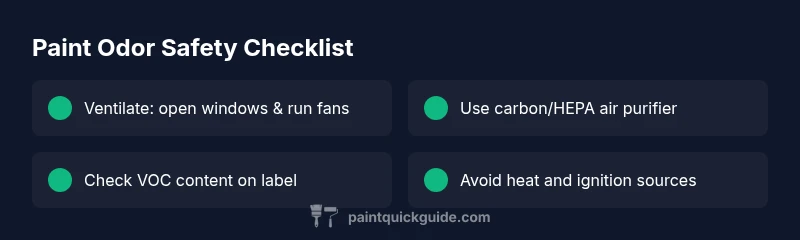
Immediate steps: ventilate thoroughly, move people and pets away if you suspect high VOC exposure, and avoid ignition sources. Most paint odors come from VOCs or solvents. Open all windows, run exhaust fans, and keep air moving. If the smell lingers for days after painting or triggers headaches or dizziness, stop using the space and contact a professional.
Why and when paint smells bad matters for safety and comfort
Paint odors are not just a nuisance; they signal potential exposure to volatile organic compounds (VOCs) and solvent fumes. According to PaintQuickGuide, persistent or unusually strong smells during or after a painting project can indicate off‑gassing or contamination that may affect air quality, skin, and eye comfort. Homeowners should treat a strong odor as a safety signal, especially in sealed or poorly ventilated rooms. This section explains the main causes, the risk from VOCs, and why addressing odors promptly helps prevent headaches, dizziness, or longer-term exposure.
Immediate safety steps you should take now
If you notice a strong paint odor, start with safety first. Increase ventilation by opening all windows and doors, and run any exhaust fans to move air out of the space. Remove children, pets, and anyone sensitive to fumes from the area. Do not light flames or use space heaters near drying paint, and avoid smoking near fresh coatings. If you experience persistent dizziness, nausea, or breathing difficulties, seek medical attention and contact the painter or product manufacturer for guidance.
Common causes of bad paint odor in homes and cars
Several factors contribute to paint smells: (1) VOCs off‑gassing from new coats, especially water-based acrylics and oil-based enamels; (2) solvent residues in older or solvent-rich formulations; (3) moisture intrusion behind walls or in unventilated spaces that amplifies odors; (4) contaminated paint cans or batches that were stored improperly; (5) inadequate ventilation during and after application. Understanding these helps you target the fix rather than guessing.
Diagnostic flow: VOCs, solvents, moisture, and ventilation
A practical diagnostic flow starts with symptoms and environment. If the odor is strong and persistent in a newly painted room, suspect VOCs off‑gassing and insufficient ventilation. If the smell is sharp and solvent‑like, consider solvent residues or contaminated can contents. Look for moisture signs (damp ceilings, musty smells) that could indicate mold behind paint. Each path suggests different fixes: ventilate, purify, seal, or call a pro when hazards persist.
Step-by-step fixes for the most common cause (VOC off-gassing)
A structured fix for VOC off‑gassing involves several coordinated actions. Start by maximizing ventilation and reducing source concentration. Use air cleaners with activated carbon, keep humidity moderate, and avoid adding new coatings until odors subside. If the odor remains, isolate the space, close off the area from living spaces, and assess whether you should replace materials with low‑VOC alternatives in the future. Always verify proper curing conditions and product data sheets to confirm VOC levels.
Prevention tips and safer painting practices
To minimize future odors, plan projects around ventilation, choose low‑VOC or zero‑VOC paints, and store paints correctly in sealed containers away from living areas. Use a respirator only when appropriate and follow label directions. Clean tools away from occupied spaces and allow adequate curing time before normal use. These practices reduce odor exposure and improve indoor air quality overall.
When to seek professional help and safety considerations
If odors persist despite all reasonable measures, or if anyone in the home experiences headaches, dizziness, or eye irritation, contact a licensed professional. A paint and coatings specialist or indoor air quality expert can perform a formal odor assessment, test VOC levels, and advise on remediation options or product substitutions. Never ignore strong odors in enclosed spaces; safety should come first.
Steps
Estimated time: 60-90 minutes
- 1
Open up & ventilate the space
Open all doors and windows. Turn on exhaust fans and place portable fans to create cross-ventilation. Keep this setup for several hours to start diluting the odor.
Tip: Ventilation is the single most effective fix for lingering odors. - 2
Identify odor sources
Check the recently painted surfaces, paint cans, and any nearby solvents. Remove or seal any secondary sources that could be contributing to the smell.
Tip: Dispose of old rags and materials properly to prevent secondary ignition or spontaneous combustion. - 3
Control humidity & temperature
Keep humidity moderate and avoid excessive heat, which can accelerate off-gassing. Consider a dehumidifier in damp spaces.
Tip: High humidity can prolong odor; air-conditioned environments often reduce it. - 4
Use air-cleaning aids
Run an air purifier with activated carbon and a HEPA filter. Supplemental purifiers help remove VOCs and fine particulates.
Tip: Place purifier near sources but not directly against walls to maximize airflow. - 5
Limit use of the space during curing
Avoid occupying the room until odors are visibly reduced and air feels comfortable. Delay activities that require good air quality.
Tip: If ever in doubt, err on the side of caution and stay out of the room. - 6
Plan ahead for future projects
Choose low-/zero-VOC paints, ensure proper ventilation from day one, and store materials away from living areas.
Tip: Label cans with VOC content and cure timelines for quick reference.
Diagnosis: Strong or unusual paint odor persists after painting
Possible Causes
- highOff-gassing of VOCs from fresh paint
- mediumSolvent residues in oil/alkyd paints
- highInadequate ventilation and stagnant air
- lowMoisture intrusion or mold behind paint
- lowContaminated paint can or batch
Fixes
- easyVentilate aggressively: open all openings, use exhaust fans, and run air movers to dilute the odor
- easyPurify air with a HEPA filter and activated-carbon purifier to capture VOCs
- mediumSeal and isolate the affected space until odors dissipate; avoid re‑causing off‑gassing by not painting in the same area
- easyCheck product data sheets for VOC limits and consider low-/zero-VOC paints for future projects
- mediumInspect for moisture problems and address mold or dampness behind walls with professional assessment
Your Questions Answered
Why does new paint smell strong even after a few days?
New paints can off‑gas VOCs for several days to weeks, especially in poorly ventilated spaces. The smell tends to lessen as VOCs disperse, but persistent odor may indicate insufficient ventilation or a need for air cleaning.
New paint can off‑gas for days, especially in closed rooms. Improve ventilation and consider air cleaning if the odor lingers.
Is paint smell dangerous?
In many cases, brief exposure is not life-threatening, but VOCs can irritate eyes, nose, and throat and may trigger headaches. In poorly ventilated spaces, symptoms can be more pronounced, so take precautions.
Paint odors can irritate you and others, so ventilate and monitor how you feel. Seek care if symptoms are severe.
How can I reduce paint odors during a project?
Choose low-VOC paints, ensure continuous cross‑ventilation, use air purifiers, and avoid storing paint in occupied living areas. Thoroughly clean brushes and rags away from sleeping areas.
Pick low-VOC paints, ventilate well, and use air purifiers to cut down odors.
When should I call a professional about lingering paint odor?
If odors persist despite ventilation, or if you experience dizziness, headaches, or breathing issues, contact a professional for an indoor air quality assessment and odor remediation advice.
Call a pro if odors linger or you feel unwell; they can test VOC levels and guide remediation.
Can I repaint to cover bad odors?
Repainting can help if odors come from the surface, but it won’t fix off‑gassing from underlying materials. Address ventilation and source controls first, then repaint if appropriate.
Repainting might help if the smell is tied to the surface, but fix the source first.
Watch Video
Quick Summary
- Ventilate early and often to dilute odors.
- Identify VOC sources and address them directly.
- Use low-/zero-VOC paints to reduce future smells.
- Air cleaners with carbon help reduce VOCs.
- Call a pro if odors persist or health symptoms occur.