Can Paint Cause Headaches? A Practical Troubleshooting Guide
Learn why painting can trigger headaches and how to prevent symptoms with ventilation, low-VOC paints, and safe practices. A PaintQuickGuide practical troubleshooting article.


Most headaches during painting come from VOCs and solvent fumes in poorly ventilated spaces. The fastest fix is to improve ventilation, switch to low-VOC or water-based paints, and wear a proper respirator. Take regular breaks, keep the painted area outgassed with fans, and avoid mixing types. If headaches persist after these steps, stop painting and seek medical advice.
Can paint cause headaches? How it happens
Headaches during painting happen when the air around you contains irritants from paint products. The most common culprits are volatile organic compounds (VOCs) and solvent fumes released in enclosed spaces. Even low-odor paints can emit gases after application. According to PaintQuickGuide, headaches are more likely when ventilation is poor, you work in a small room, or you apply multiple coats without breaks. Individuals may also react to fragrances, resins, or chemical additives. Symptoms range from mild pressure behind the eyes to pulsating head pain, often with nasal or throat irritation or dizziness. Understanding these mechanisms helps you act quickly to minimize exposure and protect health during refinishing projects.
Common indoor painting culprits: VOCs, isocyanates, and more
In most homes, volatile organic compounds (VOCs) are the primary source of headaches linked to painting. VOCs come from solvents, binders, and drying agents. If you’re working with solvent-based products or automotive paints, isocyanates can also contribute to breathing irritation and headaches. Even water-based latex paints release VOCs, especially under heat or in small rooms. The takeaway: the safer you choose products with low or zero VOC labels and proper ventilation, the lower the risk. To minimize exposure, read the product data sheets, avoid mixing multiple products in the same space, and pace coatings to give off-gassing time. PaintQuickGuide analysis notes that air exchange and source control are the two biggest levers for reducing headache risk.
Immediate fixes you can implement now
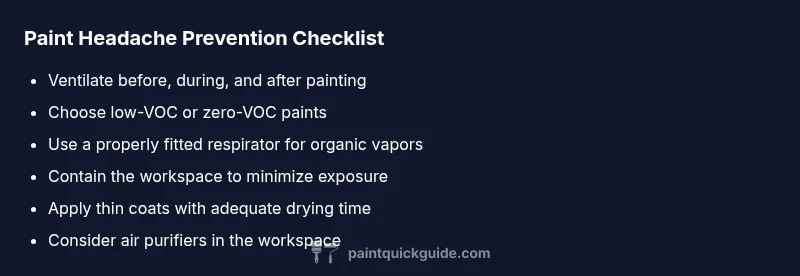
- Open all windows and set up cross-ventilation with fans that exhaust air outside. Empty spaces exchange air faster and reduce accumulative fumes.
- Switch to low-VOC or water-based paints, and avoid mixing solvent-heavy products indoors.
- Wear an appropriate respirator or mask rated for organic vapors, plus eye protection and gloves.
- Create a contained painting zone: close doors, seal gaps with tape, and remove pets or kids from the area.
- Take short breaks every 20-30 minutes to let off-gassing subside and hydrate. If symptoms start, stop painting and move to fresh air.
Long-term strategies for reducing headache risk
Planning ahead makes a big difference. Choose safer formulas (low-VOC or zero-VOC) and stock room-temperature products to limit fumes. Use portable air purifiers with a HEPA filter in the workspace and maintain moderate humidity to support comfortable breathing. Store paints properly in a ventilated area, avoid storing near heating sources, and label products clearly. Whenever possible, use water-based finishes in living spaces and reserve solvent-based coatings for well-ventilated areas or outdoor projects. Training yourself to apply lighter coats and to cure between coats reduces cumulative exposure.
Special scenarios: auto refinishing vs home painting
Auto refinishing introduces additional hazards, including isocyanates in spray paints that can irritate the lungs and trigger headaches. This requires a dedicated spray booth, professional-grade respirators, and rigorous ventilation systems. Home painting poses different risks but still benefits from proper airflow and PPE. For hobbyists, prioritize safer stoppers, masks, and outdoor or well-ventilated spaces for car-related projects.
Safety reminders and when to seek medical help
If headaches persist after painting or are accompanied by dizziness, nausea, chest tightness, or confusion, stop immediately, seek fresh air, and consult a clinician. People with asthma or chemical sensitivities may be at higher risk. Always check the label on every product for warnings and use the recommended PPE. If exposure occurs at work, follow employer safety guidelines and report symptoms.
Quick-start diagnostic mindset for painters
Think of headaches as a warning sign from your environment. Start with the simplest checks: is ventilation adequate? Are you using low-VOC products? Is your PPE properly fitted? If symptoms ease after improving airflow and switching products, you’ve likely addressed the trigger. If not, expand checks to humidity, room size, and potential secondary sources like cleaners or air fresheners.
Steps
Estimated time: 60-90 minutes
- 1
Stop painting and ventilate
Immediately stop applying coating. Open all accessible windows, turn on exhaust fans, and position a fan to push air out of the workspace. Stay in the area only if you can breathe comfortably; otherwise exit to fresh air. Then reassess symptoms after a few minutes.
Tip: Ventilation is your first defense against fumes. - 2
Choose safer materials
If possible, switch to low-VOC or zero-VOC paints, and prefer water-based formulas over solvent-based ones, especially for indoor projects. Read labels and avoid mixing different types in the same space.
Tip: Check the product data sheet for VOC content and drying times. - 3
Set up a safe painting zone
Close off the room from living spaces, use plastic sheeting to cover surfaces, and remove pets and kids from the area. Use a dedicated mask or respirator designed for organic vapors.
Tip: A physical barrier reduces cross-contamination. - 4
Protect yourself with PPE
Wear a properly fitted respirator, safety goggles, and chemical-resistant gloves. Ensure you have a clear, well-lit view of your work area and take more frequent breaks if you feel symptoms.
Tip: A good fit matters more than the model number. - 5
Apply coatings in thin layers
Work in thin coats with adequate drying time between applications to minimize off-gassing. Avoid rushing through finishes in a single pass, which concentrates fumes.
Tip: Thin coats reduce peak VOC exposure. - 6
Reassess and plan ahead
After the project, ventilate for several hours and recheck symptoms. Store paints in a ventilated area and consider postponing future projects if headaches recur.
Tip: Prevention beats reacting to symptoms.
Diagnosis: Headache or dizziness during painting in an enclosed space
Possible Causes
- highInadequate ventilation leading to VOC buildup
- highUse of solvent-based or isocyanate-containing paints indoors
- mediumAllergic or sensitivity reaction to fragrance or resins
- lowPre-existing migraine or chemical sensitivity exacerbated by fumes
Fixes
- easyOpen windows and use cross-ventilation; run exhaust fans to replace indoor air with fresh air
- easySwitch to low-VOC or water-based paints and avoid mixing products indoors
- easyWear a respirator rated for organic vapors and ensure proper fit; add eye protection
- easyContain the workspace, seal doors, and limit duration of exposure; take breaks
Your Questions Answered
Can painting indoors cause headaches?
Yes. Headaches during painting are commonly caused by VOC fumes, solvents, and poor ventilation. Improving airflow and choosing safer paints usually alleviates symptoms.
Yes—headaches from indoor painting are often due to fumes; improving ventilation and using safer paints typically helps.
Are low-VOC paints effective at preventing headaches?
Low-VOC paints reduce airborne contaminants, which lowers headache risk. However, ventilation still matters, and use of proper PPE is recommended.
Low-VOC paints help reduce fumes, but good airflow and protection are still important.
What should I wear when painting indoors?
Wear a respirator rated for organic vapors, safety goggles, and gloves. Ensure the respirator fits properly to maximize protection.
Wear a proper respirator, goggles, and gloves. Make sure the mask fits well.
How long do headaches last after painting?
Duration varies with ventilation and exposure. Symptoms often subside after improved airflow and breaks; if persistent, consult a clinician.
It depends, but symptoms often ease after more air and rest; seek care if they last.
Can car painting cause headaches more than home painting?
Auto painting can introduce higher exposure to isocyanates and solvents; use professional facilities or well-equipped, ventilated spaces with PPE.
Car painting can carry higher exposure; use proper PPE and a ventilated space.
When should I seek urgent medical help?
If you experience chest tightness, dizziness with fainting, trouble breathing, or confusion, seek urgent medical care.
Seek emergency help if you have chest pain, trouble breathing, or faintness.
Watch Video
Quick Summary
- Ventilate thoroughly before and after painting
- Choose low-VOC paints to minimize fumes
- Wear PPE and take breaks during painting
- Seek medical advice if headaches persist