Why Is Paint Not Smooth? Troubleshooting Guide
Urgent troubleshooting guide from PaintQuickGuide on why paint isn’t smooth and how to fix surface prep, primer selection, tools, and application techniques for a flawless finish.


Paint not smooth is usually caused by surface dirt, bad prep, or using the wrong tools. Start by cleaning and sanding the surface, then prime and thin the paint if necessary. Use a quality roller or brush, apply in thin even coats, and respect drying times. If problems persist, adjust technique or seek help.
Understanding Why Paint Isn’t Smooth
The question why is paint not smooth often boils down to three buckets of causes: surface condition, preparation practice, and application technique. Early fixes are simple but powerful. According to PaintQuickGuide, the most reliable path to a silky finish starts with a clean, dry surface and ends with controlled, even coats. This section lays the groundwork with a practical mindset and a plan you can follow today. Small, deliberate steps beat big, rushed efforts every time when you’re tackling a stubborn paint job in 2026. By focusing on prep first and then technique, you’ll reduce the need for fixes after the fact and enjoy a more durable, professional-looking result.
Common Causes at a Glance
- Dust, oil, or chalk on the surface before you start
- Insufficient sanding or rough patches left behind
- Inadequate primer or using the wrong type for the substrate
- Applying paint too thick or with a heavy roller/brush load
- Poor tool quality or inappropriate nap length for the surface
- Temperature, humidity, or poor ventilation affecting drying
- Incompatible topcoat or failure to follow manufacturer thinning instructions
- Not allowing adequate dry time between coats
These quick checks can save you hours of rework and are often the difference between a patchy finish and a smooth, durable one. PaintQuickGuide’s team recommends looping through surface prep and technique checks in a simple order to spot issues early.
Surface Prep Impacts Smoothness
Surface preparation is the single most important step for a consistently smooth paint job. Begin with a thorough cleaning to remove dust, grease, and chalky residues. Light sanding creates a micro-rough surface that helps the primer and paint adhere better. Patch any holes or dents, then wipe again with a tack cloth. Choose a primer based on the substrate and finish you want to achieve. A quality primer reduces the risk of flashing and uneven absorption, which are common culprits behind a rough finish. Inadequate prep can turn a simple repaint into a nightmarish rework, so invest time here even if you’re in a hurry. The goal is a uniform, receptive base that your paint can glide over smoothly.
Tools and Materials That Help Achieve a Smooth Finish
Selecting the right tools is as crucial as picking the correct product. A high-quality roller with the right nap length for your wall texture helps lay paint evenly without creating stipples. For trim or edges, choose synthetic brushes with good snap and minimal bristle shedding. Use a tack cloth to remove fine dust between passes, and consider a paint conditioner or thinning per label instructions to improve flow. Keep your tools clean and free of dried paint to prevent missed spots or rough edges. Remember, tools are the bridge between preparation and the final finish.
Application Techniques for a Flawless Finish
Technique is where many projects either shine or show flaws. Apply paint in thin, even coats, maintaining a wet edge to avoid lap lines. Roll with steady, overlapping passes and avoid pressing too hard—let the roller do the work. When brushing, use long, smooth strokes and feather out any brush marks. If you’re thinning paint, mix gently and test on a small section to confirm flow before proceeding. Allow each coat to spray-dry as per manufacturer guidelines; rushing layers is a common cause of orange peel and brush lines. For larger areas, consider back-rolling after rolling to even out the nap deposition and ensure consistent film thickness.
Environmental Factors That Matter
Temperature and humidity directly influence how paint flows and dries. Aim for a stable environment within the product’s recommended range, and avoid painting in extreme heat or cold. Ventilate well to prevent moisture buildup, which can cause blooming or blush. If you’re painting in a new home or on newly plastered walls, allow extra drying time before applying subsequent coats. Poor air movement can also lead to dust settling on wet paint, creating micro-scratches or rough textures. Collectively, environment management is a quiet superpower for smooth results.
Quick Fixes for Common Issues
If you notice runs or sags, sand lightly with fine-grit paper once dry, wipe clean, and apply a fresh thin coat. For orange peel, re-coat after gentle sanding and ensure a clean, dust-free surface. If you see brush marks rather than roller texture, switch to a higher-quality brush, keep strokes smooth, and maintain a lighter hand. For peeling or adhesion problems, you may need to scuff-sand the surface and re-prime before re-coating. These fixes are meant to be practical and reversible when caught early.
Prevention Checklist to Keep Finishes Smooth
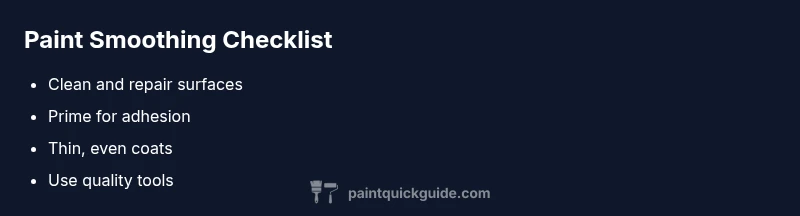
- Clean and repair surfaces before priming
- Choose the right primer, paint, and tools for the surface
- Apply in thin coats with careful roller/brush technique
- Allow complete drying time between coats and maintain proper humidity
- Sand lightly between coats for adhesion and a silky final film
Steps
Estimated time: 2-3 hours
- 1
Inspect and clean the surface
Wipe down walls with a mild degreaser and water to remove oils. Rinse and let dry fully. Inspect for cracks, holes, or gloss that may hinder adhesion.
Tip: Wear a mask and eye protection when cleaning dusty surfaces. - 2
Sand and repair flaws
Lightly sand glossy areas to dull the surface. Fill holes with putty, let cure, and sand flush with surrounding areas.
Tip: Use fine-grit sandpaper for a feathered edge to avoid visible patches. - 3
Prime the surface
Apply a compatible primer suited to the substrate. Use thin, even coats and allow to dry completely before sanding lightly.
Tip: Primer quiets uneven absorption and improves the final sheen. - 4
Mix and prepare paint
Stir or gently mix paint. If thinning is recommended, do so per label instructions and test flow on a small area.
Tip: Avoid shaking cans; bubbles can cause texture defects. - 5
Apply first coat
Use a quality roller with appropriate nap; maintain a consistent load and work in smooth, overlapping passes.
Tip: Keep a wet edge and avoid overloading the roller. - 6
Dry and sand between coats
Let the first coat dry fully, then lightly sand and wipe clean to remove dust before next coat.
Tip: Even light sanding drastically improves adhesion. - 7
Apply second coat
Apply a thin second coat with the same technique. Thin coats reduce the risk of runs and orange peel.
Tip: Always follow the product’s drying guidelines for best results. - 8
Final inspection and touch-ups
Observe lighting to catch any irregularities. Address brief touch-ups with a small brush, then let cure fully.
Tip: Cure time is essential for a durable, smooth finish.
Diagnosis: Paint not smooth after drying and curing
Possible Causes
- highSurface contamination (dust/oil/grease)
- highInsufficient or improper surface preparation
- mediumThick coats or heavy tool loading
- mediumWrong primer or substrate mismatch
- lowIncorrect drying conditions (temp/humidity)
Fixes
- easyClean surface, degrease if needed, and re-sand lightly
- easyRe-prime with a compatible primer, then recoat in thin layers
- easyThin paint to manufacturer-recommended levels and use proper tools
- easyEnsure optimal drying conditions and proper ventilation
- easyLet each coat dry completely before sanding or applying the next
Your Questions Answered
Why is my paint not smooth after it dries?
Common causes include surface contamination, inadequate prep, or too thick coats. Start with cleaning, light sanding, and proper priming, then apply thin coats and allow full drying between passes.
Common causes are surface contamination, improper prep, or thick coats. Clean, sand, prime, and apply thin coats with full drying time between coats.
How can I get a smoother finish when using a roller?
Choose the right nap length for the surface, load the roller lightly, and roll in overlapping passes to keep a wet edge. Avoid pressing hard or going over the same spot repeatedly.
Use a proper nap, light load, and overlapping passes. Don’t press too hard or overwork the same area.
Should I sand between coats to improve smoothness?
Yes. Lightly sanding between coats removes nibs and helps adhesion. Wipe away dust before applying the next coat.
Yes—sand lightly between coats and wipe away dust for a smoother finish.
Do temperature or humidity affect paint smoothness?
Yes. Paint flows best within the product’s recommended temperature and humidity range. Painting in extreme conditions can cause poor leveling and longer drying times.
Absolutely. Follow the product’s temp range and avoid high humidity or extreme temperatures.
Can thinning paint help with flow?
Thinning can improve flow, but follow the label exactly to avoid weakening the film. Test on a small area first.
Thinning can help flow if you follow the label and test first.
When should I call a professional?
If the surface is severely chalky, peeling, or a large area requires a flawless spray finish, professional help is wise. They can assess substrate, primers, and coatings for best results.
Call a pro if the surface is failing to improve with standard prep and coats.
Watch Video
Quick Summary
- Prep thoroughly before painting.
- Apply thin, even coats and use proper tools.
- Respect drying times and environmental conditions.
- Sand between coats for best adhesion and smoothness.