Tips for Painting Nails: A Practical At-Home Guide
Learn practical tips for painting nails with safe techniques, even coats, drying, and aftercare. This expert guide from PaintQuickGuide helps DIY enthusiasts achieve salon-quality manicures at home.


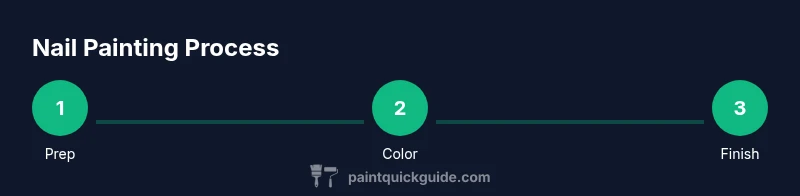
This guide delivers practical tips for painting nails with safe prep, even color, and a durable finish. You’ll learn the essential tools, how to apply thin coats, and how to avoid common mistakes that lead to chipping or smudges. According to PaintQuickGuide, careful nail preparation and patient layering produce salon-quality results at home.
Preparation and Mindset for Nail Painting
Getting started with tips for painting nails begins well before you open a bottle of polish. A calm, well-lit workspace helps you see small errors and apply polish evenly. Start with a plan: choose the colors you’ll use, set a comfortable surface, and have remover ready for quick fixes. According to PaintQuickGuide, attention to surface cleanliness and hygiene reduces lifting and smudges once you apply color. A clean sponge or lint-free cloth nearby will help manage small mishaps without spreading pigment. Your mindset matters too—steady hands, patience, and a rhythm of small, deliberate strokes yield better results than rushing through a single thick layer. As you work, keep in mind that practice compounds accuracy: even beginners can achieve salon-like results with consistent technique and good timing.
The key takeaway is to prepare not just the nails but the entire process. Gather your tools, pick a well-ventilated area, and set a realistic pace. If you’re unsure where to start, this guide from PaintQuickGuide provides a structured path that builds skills gradually while keeping safety and nail health in focus.
Tip: Lay out your polish bottles in the order you’ll use them and test color swatches on a piece of plastic or a nail tip before you touch your actual nails. This minimizes last-minute color mishaps and saves you from disrupting a manicure you’ve just started.
Tools & Materials
- Base coat(Clear or sheer base to protect nails and improve color adhesion)
- Color polish(At least two shades with one accent color)
- Top coat(Glossy or matte finish to seal the design)
- Nail file (medium/fine, 180 grit or higher)(Shapes and smooths edges)
- Buffer block(Gently smooths ridges for an even surface)
- Cuticle pusher(Gently push back cuticles to reveal nail plate)
- Nail buffer(Smooths surface for better polish adherence)
- Cotton pads or lint-free wipes(For removing oils and cleanup)
- Nail polish remover (acetone or non-acetone)(For cleaning and corrections)
- Small brush or cleanup brush(For precise cleanup around edges)
- Cuticle oil or hand cream(Post-paint moisturization)
Steps
Estimated time: 60-90 minutes
- 1
Gather supplies
Collect base coat, color polish, top coat, brushes, remover, cotton pads, nail file, cuticle tool, and moisturizer. This reduces interruptions and helps you maintain a steady rhythm throughout the process.
Tip: Arrange items in the order you’ll use them to minimize searching and delays. - 2
Wash and dry hands
Wash hands with soap and dry thoroughly. Clean skin around the nails so oils don’t interfere with polish adhesion. Use a cotton pad with remover to wipe the nail plate if you notice any oils.
Tip: Totally dry nails prevent smudges from residual moisture. - 3
Shape and file nails
File nails in one direction to prevent splitting. Choose a shape that suits your hands (square, rounded, almond) and smooth any rough edges with a fine grit file.
Tip: Keep metal filings away from the nails by working with a soft file and finishing with a buff. - 4
Push back cuticles
Gently push back cuticles with a cuticle pusher after softening them with warm water or oil. Remove loose skin only; avoid aggressive lifting that can cause hangnails or infections.
Tip: A neat cuticle line helps polish appear cleaner and lasts longer. - 5
Apply base coat
Apply a thin, even layer of base coat across the entire nail. Avoid pooling at the cuticle edge to prevent lifting. Let it dry to the point of no transfer before moving to color.
Tip: Base coats with calcium or strengthening ingredients can support nail health over time. - 6
First color coat
Apply a very thin layer of color, using three narrow strokes: one down the center and one on each side. Leave a tiny margin from the cuticle and nail edge to reduce smudging and uneven edges.
Tip: If the color looks streaky, wait 60 seconds and apply a second thin coat rather than one thick coat. - 7
Second color coat
Apply a second thin coat for full coverage. If needed, apply a third light coat only in areas that remain uneven. Maintain a consistent pace to keep coat edges crisp.
Tip: Thin coats dry faster and chip less than thick layers. - 8
Clean edges and apply top coat
Clean any stray polish around the edges using a cleanup brush or small cotton swab dipped in remover. Finish with a fast-drying top coat in a thin, even layer to seal color and add shine or a satin finish.
Tip: A top coat is crucial for chip resistance and long-lasting wear. - 9
Dry and moisturize
Allow nails to dry completely in a dust-free area. Once dry, apply cuticle oil or hand cream to restore hydration and flexibility, reducing brittleness.
Tip: Avoid heavy activity for at least 30-60 minutes after polishing to prevent dents.
Your Questions Answered
Is a base coat really necessary for every manicure?
Yes. A base coat protects natural nails, creates a smooth surface, and helps color adhere evenly. It can also prevent staining from pigmented polishes.
Yes, base coats protect nails and help polish adhere evenly.
How can I prevent nail polish from smudging as I apply it?
Apply thin coats with adequate drying time between layers. Use a cleanup brush for edges and avoid brushing over the cuticles once you’re close to finishing.
Thin coats with time between layers help prevent smudges.
Can I speed up drying without damaging the finish?
Use a quick-dry top coat or a gentle fan, and avoid heat sources. Patience between coats yields a stronger, longer-lasting result.
A fan or quick-dry top coat speeds up drying without damaging the finish.
What’s the difference between gel and regular nail polish?
Gel polish requires a UV or LED lamp to cure and lasts longer, while regular polish air-dries. The two have different removal methods and safety considerations.
Gel cures with light; regular polish air-dries and is removed differently.
How often should I moisturize my nails after painting?
Apply cuticle oil or hand cream daily or as needed to maintain healthy nails and prevent dryness, especially after removing polish.
Moisturize nails daily to keep them healthy after painting.
How do I fix a chipped manicure quickly?
Lightly buff the area, apply a thin layer of base coat, then reapply color and top coat. Let it dry fully before using your hands again.
Buff, recoat lightly, and seal with top coat to fix chips fast.
Watch Video
Quick Summary
- Prepare nails and workspace before painting.
- Apply color in light, even coats for best results.
- Seal with top coat and give ample drying time.
- Care for nails after to maintain health and shine.