Paint van Gogh Starry Night: A Practical How-To Guide
A comprehensive, step-by-step approach to painting a Starry Night-inspired scene using acrylics, focusing on color-mixing, texture, and layered light for a bold, van Gogh-like effect.


Learn to create a Starry Night-inspired scene using readily available acrylics, textured surfaces, and bold impasto strokes. This quick answer previews the core steps: set up a textured base, mix a night-sky palette, sketch the composition, and apply thick, swirling brushwork to mimic Van Gogh’s motion. The goal is a confident, gallery-ready result.
Understanding the Starry Night style and its appeal
The Starry Night style is defined by a lively, swirling sky, vibrant starbursts, and bold, textured strokes that convey movement as much as form. For DIY painters, a paint van gogh starry night project is appealing because it invites experimentation with color, brushwork, and texture without demanding exact replication. According to PaintQuickGuide, the key is to translate Van Gogh’s energy into your own brushwork rather than trying to duplicate the painting note-for-note. This section unpacks the core ideas behind the style, including how to balance color contrast, create depth with glaze layers, and use impasto to mimic the luminous surface that characterizes the original. You’ll learn how to approach the canvas with confidence, selecting materials that support bold strokes and a dynamic rhythm. With intentional planning and practical technique, your Starry Night-inspired piece can capture the sense of movement that makes the original so memorable, while remaining uniquely yours.
Essential color palette to emulate the night sky
A convincing Starry Night palette mixes deep ultramarine and cobalt with lighter blues, teals, and hints of emerald to create depth in the sky. Add warm yellows and white for stars and the moon’s glow. Color-mixing is the backbone of a successful Starry Night look: study the contrasts between cool night tones and the luminous accents Van Gogh achieved through layering and deliberate pigment choices. For beginners, start with a dark indigo base and gradually introduce lighter blues and greens to build the shimmering atmosphere. This approach supports the concept of paint van gogh starry night techniques while staying practical for a home studio. Keep a small color wheel handy and test mixtures on a scrap surface before applying to the canvas. The textural interplay between opaque colors and translucent glazes will help you mimic the painting’s glow without relying on exact pigment matches.
Surface prep and texture for impasto effects
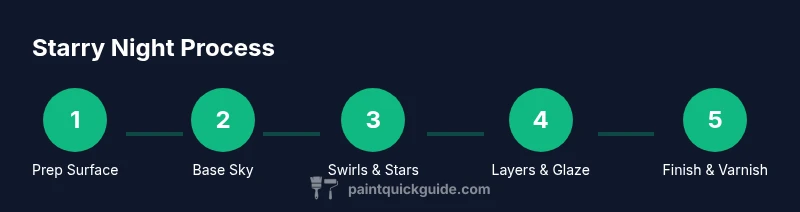
Surface texture matters. Begin with a canvas that has some tooth or roughness, then prime or apply a thin layer of gesso to control the surface. A well-prepped base helps thick paint grip and prevents cracking as you build impasto strokes. If you’re using pre-primed canvas, consider a light sanding to create uniform tooth. The goal is to create enough texture to hold heavy brushwork, while not inhibiting the flow of paint in the sky. Use a neutral grey or blue-toned underlayer to enhance color depth when the top layers are added. For Starry Night-inspired pieces, many artists prefer a slightly cooler base to make the yellows and whites pop. This section aligns with PaintQuickGuide’s guidance on preparing a surface for textured painting, ensuring your initial layers don’t appear flat. Once the surface is ready, you’re ready to start laying in the composition and experimenting with dynamic swirls.
Tools and brushes to achieve Van Gogh-like strokes
Selecting the right tools makes the difference in achieving Starry Night-style movement. Use heavy-body acrylics or impasto medium with palette knives to carve thick, flowing lines, and pair them with flat and round brushes for smoother areas. A few brush types are essential: a large flat brush for broad sky fields, a round brush for tight edges around stars, and palette knives of varying widths to lay down the heavy swirls. Keep extra brushes clean and dry to preserve their spring and edge. The texture you create with these tools captures the energy of Van Gogh’s brushwork while letting your own style emerge.
Building the horizon, hills, and village silhouettes
Create a sense of depth by dividing the canvas horizontally with a darker night horizon and lighter foreground. Paint the hills with deep greens, blues, and earthy browns; simplify village silhouettes into basic blocks with small windows. Use negative space to hint at forms beyond the skyline, and keep the edges slightly blurred to mimic distance. The aim is not photographic accuracy but a believable, rhythmic landscape that sits beneath the dramatic sky. When you’re ready, return to the sky and start inserting looped lines to suggest wind and motion. The visible brushwork should convey energy, as if the wind is pulling the stars across the heavens.
Creating dynamic swirls and star clusters
Swirls in the sky are the hallmark of the style. Build them with deliberate, circular strokes using a loaded brush or palette knife, applying thick paint and maintaining consistent pressure to hold texture. For stars, apply bright dots with short, dabbing motions and layer small halos around them to create glow. Use white mixed with a touch of yellow to simulate moonlight on the sky. Alternate between cool blues and the warm highlights to produce a sense of luminosity. The result should feel alive, with movement that guides the viewer’s eye across the canvas.
Layering, glazing, and color management
To achieve depth and glow, work in layers. Start with a dark underpainting for the night sky, then add mid-tones, then highlight with whites and yellows. Glazing with a transparent layer can unify colors and push the stars forward. Thin your glaze with water or an acrylic glazing medium to preserve the textured edges created earlier. Be mindful of drying times; allow sections to set before applying next glaze. The right balance of opacity and transparency yields the starry luminosity characteristic of the original.
Common mistakes and how to avoid them
Common errors include over-smoothing the painted sky, muddy color mixing, and underestimating drying times for impasto layers. Avoid mixing all blues together into a single, dull hue; instead, create subtle shifts with small additions of green or purple. Don’t overwork the impasto; let thick areas rest so they stay dimensional. Also, ensure you work in a well-ventilated space even with acrylics, especially when using odorless mediums. If confusion arises about style versus realism, focus on energy and motion rather than precise replicas.
Finishing touches and protective varnish
Assess your piece under neutral light and add final highlights where needed. Let the painting rest for a day before applying a transparent varnish to protect the surface and deepen color contrast. Choose a satin or gloss finish based on preference; gloss can enhance the luminous look of the sky, while matte can soften the edges of the impasto. Remember to clean brushes after use and store your painting horizontally to avoid distortion.
Practical practice plan for Starry Night style
To build skill, follow a focused practice plan across several sessions. Start with a simple 12x16 inch study that includes only sky and a simple hill; progress to a larger composition with a village silhouette. Schedule 2-3 hour sessions, with a day or two between to allow drying and reflection. Keep a log of what color mixes and brush techniques produced the most dynamic strokes. Progressively introduce stars and swirl patterns, then finalize with a glaze. With regular practice, you’ll gain confidence in controlling texture and color while retaining a personal touch on brushwork.
Tools & Materials
- Acrylic paints (blue, ultramarine, cobalt, turquoise, white, and yellow)(Choose opaque or heavy-body paints for texture)
- Heavy-body acrylic medium or impasto gel(Build dimensional strokes suitable for impasto effects)
- Palette knives (varied widths)(For thick swirls and textural lines)
- Flat and round brushes (sizes 4, 6, 8, 12)(Large brushes for skies; small for details)
- Textured canvas or primed canvas(Surface with tooth helps hold impasto paint)
- Gesso (optional if canvas is pre-primed)(Adds texture if needed)
- Palette and mixing cups(For color experiments and mixes)
- Water jar and rags/paper towels(Cleanup, thinning, and blotting)
- Masking tape (optional)(For clean edges on horizons or shapes)
- Varnish (polyurethane) for finishing(Choose gloss or satin finish depending on preference)
- Apron or protective clothing(Keep clothes clean during heavy brushwork)
Steps
Estimated time: 2-3 hours
- 1
Prepare the surface and workspace
Lay out your canvas on a stable surface, prime if needed, and ensure a clean, well-lit work area. Have paints, knives, brushes, and rags within reach. This setup reduces interruptions and helps you maintain consistent texture across the piece.
Tip: Use a test swatch to check color balance before applying to the canvas. - 2
Sketch the composition lightly
Map the horizon line, hills, and village silhouettes with a light pencil or thinned paint. Keep lines soft to avoid tracking through later layers. A good sketch anchors the final painting and prevents odd proportions later.
Tip: Keep lines faint and easy to erase or paint over. - 3
Paint the night sky base color
Apply a deep base color over the entire sky area. Work in sweeping motions to create a sense of motion and depth. Let this base dry enough to support additional layers without blending away your initial strokes.
Tip: Work in sections to manage drying time and reduce mud in color transitions. - 4
Add impasto swirls and energy in the sky
Load paint thickly on a palette knife and apply sweeping, circular strokes to form the characteristic Van Gogh swirls. Build up layers to create ridges and peaks that catch light.
Tip: Maintain consistent pressure to preserve the raised texture. - 5
Block in horizon, hills, and village silhouettes
Using darker tones, block in landforms and simple architectural shapes. Keep edges soft to imply distance and atmospheric haze; avoid over-detailing in the distance.
Tip: Use negative space to hint at distant forms. - 6
Highlight stars and luminous accents
Dot bright stars and moonlight with whites and pale yellows. Add halos around brighter areas to simulate glow and depth. Balance cool sky tones with warm highlights for a convincing glow.
Tip: Apply brighter dots last to prevent paint from spreading into nearby areas.
Your Questions Answered
What is the best way to replicate Van Gogh's brushwork?
Aim for movement and rhythm with thick, directional strokes rather than precise replication. Use a combination of palette knives and bristle brushes to build texture, then vary pressure to create raised lines and subtle valleys.
Use bold, directional strokes and lots of texture to capture the feel, not an exact copy.
Can I achieve this effect with acrylics instead of oils?
Yes. Acrylics with heavy-body pigments and impasto mediums can mimic the look of oil-based impasto. It dries faster, so plan layers and glazing accordingly to preserve depth.
Acrylics can work well with impasto if you layer thoughtfully and allow drying between steps.
How can I keep colors from looking muddy?
Mix colors in small, controlled batches and test on a scrap surface. Add tiny amounts of complementary hues to avoid flat, gray tones, and preserve the luminosity of yellows against deep blues.
Test mixtures first and adjust with small color tweaks to keep brightness.
How long does it take to dry between layers when using impasto?
Impasto layers dry from several hours to a day depending on thickness and humidity. Use a fan or gentle airflow to speed drying and prevent crusting.
Give thick layers time to set before adding new paint to avoid cracking.
Is this suitable for beginners?
Absolutely. Start with a simplified skyline and fewer stars, then gradually introduce more texture and layers as you gain confidence.
Yes; begin with a simple composition and grow your texture skills over time.
Watch Video
Quick Summary
- Start with a rhythm-focused approach, not a perfect replica
- Texture defines the Starry Night look—impasto is your friend
- Layer colors to create depth and glow, not just surface color
- Plan your composition, then let bold brushwork carry the energy