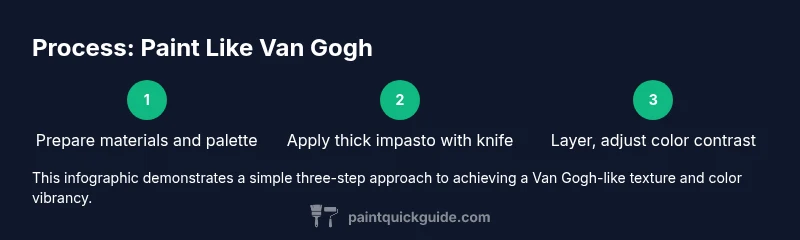
Paint Like Van Gogh: A Practical Impasto Painting Guide
Learn to paint like van gogh with bold color, thick impasto, and dynamic brushwork. This comprehensive how-to covers materials, techniques, step-by-step practices, and finishing tips for a Van Gogh-inspired painting.


To paint like van gogh, you’ll embrace bold color, thick impasto textures, and energetic, directional brushwork. Start with a simple composition, apply paint in heavy layers, and build depth with contrasting hues and lively strokes. This guide shows you how, with clear steps and practical tips.
The Van Gogh-Inspired Mindset: Texture, Movement, and Color
If you want to paint like van gogh, you begin with a mindset that values texture, rhythm, and bold color relationships. Van Gogh’s paintings feel alive because brush marks are visible and colors collide with intentional tension. In your own work, plan a composition that can read from a distance yet reward close scrutiny with chunky, expressive strokes. Don’t chase perfect realism; instead, aim for a visceral sensation that echoes the energy of the scene. This approach aligns with PaintQuickGuide’s emphasis on practical, workshop-ready techniques that improve your painting speed and expressive impact. Remember that the goal is not a surface copy but an emotional resonance achieved through texture, movement, and color.
Color Strategy: From Palette to Paint-Layer Rhythm
Color is your loudest instrument when you’re painting like van gogh. Start with a limited, high-contrast palette and push warm and cool tones against each other to push objects forward or recede. Mixing colors directly on the canvas in small, expressive dabs creates dynamic relationships that resemble Van Gogh’s post-impressionist cadence. Use a bold base and then layer cooler blues into shadows and warmer yellows into highlights to sculpt volume. This section ties back to the color-mixing practice you’ll use throughout the project and highlights how a disciplined palette yields more confident strokes.
Surface Prep and Setup: Ready the Ground for Thick Texture
A sturdy surface is essential for impasto. Prime your canvas with a few coats of gesso until the surface feels slightly tacky, then let it dry completely. Opt for a relatively smooth initial ground and reserve the thick texture for your final layers. Gather your palette knives and stiff brushes first, so you can switch between tools without interrupting the flow. The goal here is to establish a responsive ground that accepts heavy paint and holds texture well, improving the readability of directional marks and rhythm in the finished piece.
Brushwork Essentials: Impasto Strokes and Direction
Brush control is central to a Van Gogh-inspired surface. Your brushes should range from wide, flat bristles to small, firm filbert brushes for contouring. Apply paint with short, confident motions that leave visible ridges and directional sweep lines. The goal isn’t smooth gradients but a tactile surface that catches light and creates movement. Practice laying down bold strokes in the same direction to suggest wind, movement, and life in the scene, then reinforce those strokes with small, sharp touches of contrasting color.
Applying Impasto: Thick Paint, Knife Work, and Texture
Impasto is the backbone of the Van Gogh aesthetic. Layer heavy paint with a palette knife or stiff brush to establish thick, sculpted forms. Don’t be afraid to build up slabs of color that stand proud of the canvas. Use knife work to create ridges, scoops, and curves that mimic the energy of the subject. The feel of the texture is as important as the color combination, so control the thickness and the angle of each stroke to generate a cohesive surface.
Layering and Glazing: Depth Without Losing Texture
After the initial impasto layers, introduce depth by carefully planning additional color bands. Instead of fading color to create depth, apply cooler tones in shadowed areas and brighter tones in illuminated zones, letting some underlayers peek through. Quick, decisive glazing can unify the piece, but keep the impasto visible. A light varnish later can enhance color saturation while maintaining the raised texture that defines the Van Gogh look.
Movement and Emotion: Composition with Rhythm
A Van Gogh-inspired piece often reads as a song of motion. Align your elements to create a visual rhythm: alternate warm and cool areas, guide the eye along sweeping lines, and place focal points to lead attention around the painting. Consider the energy of your subject—fields, starry skies, or urban scenes—and translate that energy with directional strokes that loop, curl, or radiate outward. This approach helps you convey an emotional mood rather than a literal scene.
A Simple Practice Plan: 30-Minute Drill to Begin
Set a timer and start with a compact scene, such as a tree or a cityscape at dusk. Block in a bold color base, then add thick strokes in the primary directions that define the composition. Nudge small areas with contrasting color to create subtle vibrato. Finish with a quick glaze on cool shadows, then let the painting dry to observe the texture from a distance and adjust next time. Repeating this drill weekly accelerates your mastery of the Van Gogh style.
Cleanup and Protection: Drying, Varnishing, and Storage
Allow ample drying time between thick layers, often 24–48 hours depending on thickness and medium. When fully dry, protect the surface with a matte or satin varnish to preserve the impasto without dulling texture. Store finished works away from direct sunlight and in a stable temperature to prevent cracking. Cleaning brushes and tools promptly after sessions prevents oil from lingering, preserving your ability to reproduce bold strokes in future paintings.
Tools & Materials
- Oil paints (cadmium red, ultramarine, alizarin, yellow ochre, titanium white)(Use high-quality pigments for visibility of texture and color richness.)
- Gamsol or odorless mineral spirits(For thinning and brush cleaning; use outdoors or with ventilation.)
- Palette knives (stiff, various widths)(Crucial for thick impasto and sculpted texture.)
- Variety of brushes (stiff bristles, hog hair, filbert)(For bold strokes and fine edges.)
- Primed canvas or panel(A smooth but receptive ground for heavy texture.)
- Rags/paper towels(For dabbing and cleaning excess paint.)
- Palette (wood or glass)(Keep color blends accessible and organized.)
- Varnish (matte or satin)(Protects and unifies the surface after drying.)
- Safety gear (gloves, mask)(Reduce exposure to solvents during cleanup.)
Steps
Estimated time: 60-120 minutes
- 1
Prepare your materials
Gather all tools and set up a well-ventilated workspace. Squeeze out base colors and organize on the palette for quick access. Organize your knife and brush selections for fast switching as you paint.
Tip: Lay out warm colors on the left, cool colors on the right to keep your color flow intuitive. - 2
Prime and texture the ground
Apply a thin, even coat of gesso and let it dry. Scratch in a few directional marks with a stiff brush to create a responsive ground for impasto.
Tip: A lightly tacky surface helps paint grip early in the process. - 3
Block in bold shapes
Use a large, flat brush to establish the main planes with thick color. Focus on composition and rhythm rather than fine detail at this stage.
Tip: Keep strokes decisive; the goal is bold silhouette and energy. - 4
Apply thick impasto with knife
Lay paint in heavy layers using the palette knife to build dimensional shapes. Vary the pressure to create ridges and valleys.
Tip: Let some edges stay ragged; imperfect edges mimic natural texture. - 5
Add color accents and direction
Introduce secondary colors along the main strokes to push depth. Use shorter, directional marks to suggest movement and light.
Tip: Keep color spots small but expressive to avoid mudding the scene. - 6
Layer and rework for depth
Return to darker tones for shadows and brighter tones for highlights. Build layers slowly, allowing some underlayers to remain visible.
Tip: Don’t overblend; texture should remain legible. - 7
Refine with texture tools
Switch to a smaller knife or stiff brush for fine ridges and contour lines that define form.
Tip: Echo the subject’s motion with curved ridges to imply energy. - 8
Evaluate and finish
Step back, assess overall balance, and adjust contrast if needed. Apply final touches without completely smoothing the surface.
Tip: A light glaze can unify colors without dulling texture.
Your Questions Answered
Do I need oil paints to imitate Van Gogh’s style?
Oil paints are traditional for Van Gogh-like impasto because they maintain thick texture and vibrant color. You can start with student-grade oils or oil-based acrylics if you prefer. The key is thick, expressive strokes rather than glaze-heavy realism.
Oil paints help you achieve authentic impasto texture, but you can approximate with thick acrylics if needed.
How thick should impasto be for a Van Gogh feel?
Impasto should be visibly raised from the canvas, enough to catch light and cast small shadows. Start with a moderate ridge and adjust in later layers to prevent cracking. Thick, yet controlled, texture gives the classic look.
Aim for visible, but not weighty, ridges that catch the light.
Can I use acrylics to imitate impasto?
Acrylics can mimic impasto with heavy body formulations or gel mediums. They dry faster, so work in timed batches and seed the texture early. Expect slightly different light reflection than oils.
Yes, with heavy-bodied acrylics and texture gels you can imitate impasto, just be mindful of drying time.
What brushes are best for Van Gogh-style strokes?
Use a mix of broad bristle brushes and small filberts to create both large blocks and fine directional lines. A stiff brush helps carve texture without smearing thick paint.
Stiff bristle brushes and firm filberts are ideal for sculptural strokes.
How long does a Van Gogh-inspired painting take to dry?
Oil-based impasto dries slowly; expect several days to weeks for several thick layers. Ventilation and thinner layers speed drying. Always test touch-dry before applying a glaze.
Oils can take days to weeks; ensure the surface is dry before finishing.
Should I varnish immediately after drying?
Wait until the work is fully dry, typically weeks to months for oils. A final varnish protects color and highlights texture while maintaining luster.
Wait for complete dryness before varnishing to avoid trapping moisture.
Watch Video
Quick Summary
- Embrace visible texture to convey energy.
- Use a bold, contrasting palette for impact.
- Plan strokes to guide the viewer’s eye across the canvas.
- Layer with purpose; let underlayers peek through.
- Finish with protection to preserve impasto.