Paint and Wine Near Me: Studio vs DIY Kits for Beginners
Compare local paint-and-wine experiences with studio sessions and at-home kits. Learn costs, scheduling, safety, and practical tips to choose the best option near you.


When you search for paint and wine near me, you typically have two viable paths: a guided studio session with instruction and all materials (and often wine), or a private at‑home experience using a DIY kit with flexible scheduling. The right choice depends on your budget, timing, and whether you prefer a structured learning environment or a more relaxed, private setting. This comparison helps you weigh value, convenience, and social dynamics to decide which path fits your plans.
What 'paint and wine near me' really means
The phrase 'paint and wine near me' signals a growing niche that blends art instruction with a relaxed social vibe. In practice, you’ll encounter two broad formats: traditional studio sessions led by an instructor with all materials supplied (sometimes including wine), and private or public at‑home events that use DIY kits, mobile instructors, or partner venues. Both formats aim to deliver a low‑stress creative experience, but they differ in pacing, support, and social dynamics. According to PaintQuickGuide analysis in 2026, studios tend to emphasize guided technique and a curated setup, while at‑home options prioritize flexibility and personal ambiance. For many beginners, the studio path reduces decision fatigue by providing a clear project plan, step‑by‑step instructions, and on‑site cleanup. For others, DIY options offer privacy, intimate group dynamics, and control over scheduling. When you search for 'paint and wine near me', you’re choosing not just a painting activity but a social experience with potential alcohol policy, safety considerations, and venue norms. The rest of this guide helps translate those factors into practical questions you can ask before booking or purchasing a kit. The ultimate choice should align with your goals: learn a new skill, share a moment with friends, or simply enjoy a creative escape. PaintQuickGuide’s perspective emphasizes practical value, not hype, helping you cut through noise.
Studio Sessions vs DIY At‑Home: Core Differences
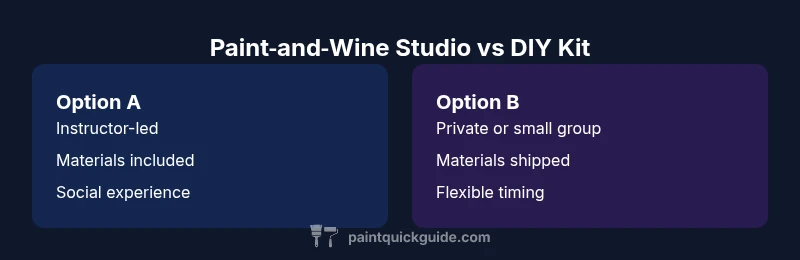
Studio sessions (Option A) are typically led by an instructor, provide a curated painting project, all materials and safety supplies, and often include wine or beverages. The social setting fosters conversation, feedback, and visible progress, making these sessions friendly for beginners. In contrast, DIY at‑home kits (Option B) let you paint on your own terms, with flexible scheduling, privacy, and the option to tailor the pace to family life or a quiet evening. The major trade‑offs are control over pacing versus access to expert guidance, as well as the potential for spill cleanup and setup time. The PaintQuickGuide team notes that studios often deliver a consistent experience across locations, while at‑home options can vary more from project to project. If you value a structured, error‑minimizing approach, studio sessions tend to deliver rapid skill development; if you prioritize intimate socializing and convenience, a DIY‑at‑home path may be more appealing. Both formats support social interaction and creativity, but you should weigh the probability of on‑site assistance, the quality of supplies, and the overall atmosphere before you decide which path to take.
Cost and Time Considerations for Paint and Wine Near Me
Prices and time commitments vary widely by city and provider, so a direct apples‑to‑apples comparison is rarely possible. Studio sessions generally charge a per‑person fee that covers instruction, materials, and often one or more glasses of wine; the exact amount depends on location, the project complexity, and whether the venue includes extras like gallery space or photo keepsakes. DIY at‑home kits vary by project size, materials quality, shipping, and whether you order a bundled recipe card with access to online instruction. In practice, you’ll often see a higher per‑person cost for studio experiences when you factor in the social component and on‑site support, while kits can feel cheaper but require you to handle setup, cleanup, and any safety considerations yourself. The key to value is assessing not only the sticker price but also the time you save, the quality of guidance, and the convenience of scheduling. When planning around a busy week, you may find that a studio evening slots into your calendar more reliably, while a DIY project can be tacked onto a weekend or spur‑of‑the‑moment gathering with friends.
Safety, Accessibility, and Age Considerations
Safety is a baseline requirement for any paint‑and‑wine event. Studio sessions often feature trained staff who manage ventilation, cleanup, and spill control, as well as guidelines about alcohol consumption and underage participation. DIY kits placed in homes carry their own safety considerations, including proper ventilation, non‑toxic paints, and clear instructions for mixed media. Accessibility varies by venue: some studios offer access for wheelchairs and quiet spaces, while at‑home events can adapt to smaller spaces but may require additional equipment. If you have allergies (fragrances, latex paint, or wine components) or sensory preferences, ask about materials, substitutions, and the policy on bringing your own supplies. Also consider whether the experience is appropriate for children or teens if you’re planning a family outing. The bottom line is to confirm that all participants can enjoy the activity safely and comfortably, with clear boundaries regarding food, drink, and cleanup.
Evaluating Providers: A Decision Framework
Start by listing a few nearby options and categorize them as Studio (Option A) or DIY (Option B). Then use a simple decision framework: 1) Schedule compatibility – can you attend at your preferred times? 2) Value proposition – does the price reflect materials, instruction, and convenience? 3) Social vs private vibe – do you want a group experience or a private event? 4) Skill progression – is there a clear learning path for beginners? 5) Safety and accessibility – are there accommodations for allergies, mobility, or sensory needs? Use these criteria to score each option and identify the top choice. PaintQuickGuide suggests contacting venues with a short list of questions (instructor credentials, materials included, wine policy, age restrictions, and cancellation terms) to avoid last‑minute surprises. If you are coordinating a group or corporate event, ask about private booking packages, dedicated space, and capacity. Remember to verify cancellation policies and rescheduling options, especially if you are planning around holidays or travel.
Practical Tips for Getting the Most from Your Session
Prepare in advance: verify what’s included (canvas, brushes, paints, aprons), confirm wine policy, and check if a beverage or snack is provided. Arrive early to settle in, review the project outline, and introduce yourself to the instructor. Choose a comfortable outfit and bring a friend or two to share the experience; group dynamics can elevate creativity. For home kits, set up a well‑ventilated workspace, lay down protective sheets, and have water and cleanup towels ready. If you want to repeat the experience, ask about project rotation or membership options that encourage ongoing practice. Finally, capture progress with photos and reflect on what you learned—it's not just about finishing a painting but about building confidence in your own creative process.
Group Bookings, Private Events, and Corporate Fun
Private events offer tailored timelines, a curated palette, and dedicated space, making them ideal for birthdays, team building, or celebrations. Studios often provide host coordinators and guest management support, while at‑home kits allow a customized venue, playlist, and timeline. A successful private event balances instruction with socializing, so designate a lead instructor or facilitator and set expectations about pace, level of help, and outcomes. For corporate functions, consider a structured program that includes ice‑breakers, small group challenges, and a final shared piece. Budget considerations depend on group size, location, and the level of personalization. Always confirm licensing or permit requirements for alcohol at private venues and clarify food and drink policies with the host location. With thoughtful planning, paint‑and‑wine experiences can become memorable, inclusive gatherings that mix creativity with camaraderie.
Common Pitfalls and How to Avoid Them
Rushing through the project due to time pressure can compromise learning and enjoyment. Overlooking safety guidelines, especially around alcohol and solvents, can create avoidable risks. A lack of clear expectations about materials and results leads to frustration. When choosing between a studio and a DIY option, failing to assess accessibility, transport, and cleanup requirements often results in poor experiences. A simple checklist—location, inclusions, age policy, cancellation terms, and safety guidelines—helps you avoid these traps. If you’re uncertain, contact the provider directly with a short list of questions and request a sample project to gauge the level of instruction you’ll receive before committing.
Next Steps: Quick Booking Checklist
Finalize your target experience (studio or DIY), scan nearby options, compare inclusions, confirm times, and review cancellation terms. Prepare a short list of questions for the host: instructor credentials, materials included, wine policy, and accessibility. If you’re a first‑timer, consider a beginner‑level project and a smaller group to build confidence. Keep a notebook or notes app handy to record what you learn, and plan a future session to apply the skills you gained. By following these steps, you’ll maximize the value of your paint and wine near me experience and set yourself up for repeatable creative fun.
Comparison
| Feature | Paint‑and‑Wine Studio (Option A) | At‑Home DIY Kit (Option B) |
|---|---|---|
| Ambience & Social Experience | Structured studio environment with instructor and peers | Private or small-group home setting; flexible social vibe |
| Materials Included? | All paints, canvases, brushes, aprons; wine or beverages often available | Materials shipped or provided; wine policy varies by host |
| Skill Guidance | On-site instruction; step‑by‑step guidance | Self-paced; relies on included notes and online resources |
| Time Commitment | Typically 2–3 hours per session | Flexible; 1–3 hour slots or longer |
| Cost Range | Mid-range per person; reflects instruction and materials | Lower per person in groups; costs scale with kit quality or number of kits |
| Booking & Availability | Pre-booked slots; fixed schedules | Self-scheduled; shipping times and kit restocking impact availability |
| Safety & Clean-Up | Staff manage safety and cleanup | User responsible for cleanup; materials are household safe |
| Best For | Social learning, structured outcomes; beginners | Budget-conscious; privacy; flexible timing |
Upsides
- Structured learning with instructor guidance
- Social atmosphere and built‑in community
- All materials and setup are typically included
- Cleaner, safer environment with on-site cleanup
What's Bad
- Higher per‑person cost than at‑home options
- Less flexibility on timing and pace
- Alcohol may not suit all ages or preferences
- Studio travel may add time or cost
Studio sessions are generally the better choice for beginners seeking guidance and sociability; DIY kits excel for privacy and scheduling flexibility.
For newcomers or social learners, a studio offers instruction and convenience. If privacy or budget are priorities, DIY kits can be more suitable, especially for small groups or when travel is a constraint.
Your Questions Answered
What is a paint‑and‑wine studio, and how does it work?
A studio blends art instruction with a social setting, typically led by an instructor who guides a step‑by‑step painting project. Materials are provided, and some venues include wine or beverages. It’s designed to be beginner‑friendly and to deliver a finished piece at the end of the session.
A studio gives you instruction, supplies, and a social vibe all in one place. Perfect if you want guidance and a relaxed group atmosphere.
Are minors allowed, and is alcohol consumption always included?
Age policies vary by venue. Some studios allow teens with adult supervision, while others are adults‑only. Alcohol is often available for adults, but always confirm with the host beforehand to avoid surprises.
Check the policy with the venue before booking to avoid any issues at the event.
How do I compare prices and value between studio sessions and DIY kits?
Prices vary by city and provider. Studios tend to be higher per person due to instruction and setup, while DIY kits can be cheaper per project but require you to manage setup, cleanup, and safety on your own.
Prices differ a lot, so focus on value: what you get in materials, guidance, and how much time you save.
What should I bring to a studio session?
Bring yourself and comfortable clothing. Most studios supply aprons, brushes, and paints, and may provide wine. Check if anything else is needed, such as a by‑request snack or extra protective gear.
Just wear something you don’t mind getting a little paint on, and arrive a few minutes early.
Can these experiences be customized for private events?
Yes. Private events can be tailored with custom timelines, dedicated space, and group activities. Expect higher costs but a more controlled schedule and theme.
Absolutely—private events are a great option for birthdays or team building.
What if I am not artistic – will I still enjoy it?
Most studios design for beginners, offering clear instructions and supportive guidance. DIY kits can also be approachable with beginner‑friendly projects and online tutorials.
You don’t need to be an artist to have fun and create something you’re proud of.
Quick Summary
- Choose studio for guided instruction and social experience
- Opt for DIY kits when privacy and scheduling flexibility matter
- Factor in materials, wine policies, and cleanup responsibilities
- Consider group size and budget before booking
- Check accessibility and safety policies in advance