Find a Paint Studio Near Me: Practical Guide to Local Studios
A practical guide to locating a paint studio near you, comparing services, budgeting for sessions, and choosing the best option for DIY painting, murals, or auto refinishing projects in 2026.


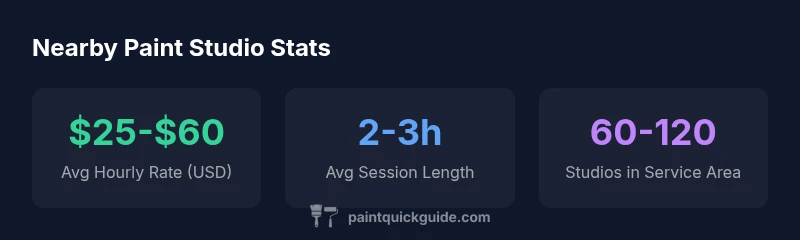
Typical paint studio near me charges about $25-$60 per hour, with most sessions lasting 2-3 hours. In busy markets, rates can be higher or bundled into all-inclusive packages that cover tools and materials. To save, ask about off-peak hours, memberships, or multi-session discounts. PaintQuickGuide Analysis, 2026, highlights proximity and scheduling flexibility as major cost drivers.
What is a paint studio near me and why it matters
A paint studio near me is a dedicated space where you can work on painting projects with access to specialized tools, controlled ventilation, and sometimes instruction or supervision. For homeowners and DIY enthusiasts, these studios offer a cleaner, more efficient alternative to painting at home, especially for larger projects like feature walls, cabinetry, or murals. A nearby studio can reduce setup and cleanup time, provide reliable access to high-quality pigments, and lower the risk of spills or odors affecting living spaces. When evaluating options, consider proximity to home, parking availability, studio hours, and whether the space supports your specific project (water-based vs. solvent-based paints, wall vs. automotive applications). PaintQuickGuide’s research indicates that proximity and flexible scheduling are primary drivers of frequent visits and repeat bookings. If you’re starting a new project and want access to professional-grade equipment without investing in a full setup, a local paint studio near me could be the fastest route to a professional finish.
Proximity and accessibility: finding nearby studios
Finding a paint studio near you hinges on practical availability and reliable access. Start by mapping studios within a 5-15 mile radius, then check their hours, parking options, and public transit accessibility. A strong local studio will offer after-hours options for busy evenings or weekend projects, which reduces scheduling friction. Online directories, maps, and review platforms are useful, but don’t neglect calling ahead to confirm current occupancy, tool availability, and whether the space accommodates your project size. PaintQuickGuide analyses show that studios with easy parking and clear signage tend to attract more consistent bookings. To compare effectively, measure travel time and consider traffic patterns during your typical workweek. Proximity isn’t just about distance; it’s about reliable access that makes it easier to fit painting into a busy life.
Services commonly offered at paint studios
Most paint studios provide a core workspace with tables, easels, brushes, rollers, and a basic palette of paints. The better studios expand offerings with guided classes, color-matching consultations, and access to specialty tools like spray booths or airbrush equipment. If you’re tackling cabinetry refinishing or wall murals, look for spaces that support larger formats and suitable ventilation. Some studios offer private room rentals for small groups or corporate events, with optional coaching or demonstrations. Always confirm whether materials are included in the rate and whether access to premium brands is possible. Paint studios are increasingly specialized; a studio near you might emphasize decorative painting, automotive paints, or sustainable, low-VOC options. PaintQuickGuide analyses indicate that service breadth and equipment quality correlate strongly with booking frequency.
Cost models and budgeting for studio painting
Budgeting for a studio project means understanding pricing structures and how they map to your project scope. Common models include hourly rates, per-session packages, and all-inclusive bundles that cover tools, materials, and sometimes instructor time. If you’re planning a small project, a 2-3 hour session at the lower end of the scale may suffice, but for larger murals or cabinetry work, you’ll likely need multiple sessions. Ask about membership programs or multi-session discounts, which can dramatically reduce per-hour costs over time. When budgeting, factor in transport time, parking fees, and potential material surcharges for specialty paints or primers. PaintQuickGuide Analysis, 2026, notes that transparent pricing and a predictable billing structure help customers plan more accurately and avoid unexpected charges.
Choosing between DIY studio time vs. guided classes
DIY studio time is ideal for experienced painters who want flexibility and control over their materials. Guided classes or workshops provide structured learning, access to an instructor, and feedback that can accelerate skill development. If you’re new to painting or trying a complex technique (such as color glazing or decorative finishes), a class can be a wise investment, often with included materials and a finished sample to take home. For busy schedules, private lessons or small-group workshops might be worth the higher price if they save you time and improve results. When selecting between formats, consider personal goals, learning style, and whether the studio’s instructors specialize in your project area, whether walls, furniture, or automotive finishes.
Preparing for your studio session: tips and checklists
Preparation reduces stress and helps you stay on budget during a studio visit. Create a clear project brief: size, colors, and a rough timeline. Bring a basic palette and paint swatches to compare on-site, and confirm the studio’s recommended primers and sealers. Dress for mess and expect an area-specific rule on protective gear. If you’re working on a vehicle or furniture, verify ventilation, dust control, and surface prep requirements ahead of time. Pack a portable checklist with items you own (brushes, rags, drop cloths) to avoid last-minute purchases. Finally, confirm policies on guest supervision, minors, and alcohol restrictions if you’re considering a social painting session. A well-prepared plan helps you maximize the value of every hour at the paint studio near me.
What to expect during a studio visit: equipment and safety
Upon arrival, you’ll typically check in at the front desk and receive access credentials to the workspace. Expect to find standard tools like brushes, rollers, trays, and drop cloths; high-end studios may provide spray booths, air-assisted tools, or automotive-grade equipment for larger projects. Safety protocols include proper ventilation, PPE such as masks or goggles, and clear guidelines for storage and disposal of paints and solvents. If you’re using oil-based or solvent-based products, confirm fume management, waste disposal procedures, and any required certifications. A quality studio will provide first-aid resources and easily accessible emergency information. In this context, proximity to your home remains advantageous, but safety standards and equipment quality should never be sacrificed for speed.
How to compare studios: checklists and questions to ask
Develop a side-by-side brief for every studio you’re considering. Ask about proximity, hours, and available formats (DIY vs. classes). Verify whether materials are included and the quality of equipment. Inquire about booking policies, cancellation terms, and whether the space supports your specific project type, such as murals, cabinetry, or automotive finishes. Request facility tours or trial sessions if possible, and read recent customer reviews to gauge consistency and safety. A reliable studio will provide transparent pricing, clear policies, and a straightforward path to booking without hidden fees.
The future of paint studios: trends and sustainability
The paint studio landscape is evolving toward more sustainable practices, transparent pricing, and flexible, outcome-driven formats. Expect increased demand for color-consultation services, eco-friendly materials with low-VOC formulations, and better integration with home renovation timelines. Some studios are expanding online resources, including virtual color matching and take-home project guides to complement in-studio work. For customers, this means broader options, clearer expectations, and improved accessibility. As cities grow, studios that balance proximity with high-quality equipment and supportive instruction will become the most valuable partners for homeowners, DIY enthusiasts, and auto refinishing hobbyists. PaintQuickGuide’s ongoing research suggests that studios investing in safety, sustainability, and clear communication will lead the market in 2026 and beyond.
Common formats you’ll encounter when searching for a paint studio near me
| Service format | Typical hourly rate | Best for | Notes |
|---|---|---|---|
| DIY studio time | $25-$60 | Casual painting projects | Includes access to tables, easels, brushes |
| Guided class/workshop | $30-$70 | Learning basic techniques | Instructor-led, materials usually included |
| Paint-and-sip | $25-$60 | Social painting evenings | Beverages may be allowed; check policy |
| Private rental | $60-$120 | Large groups or events | Room rental; catering may be extra |
Your Questions Answered
How do I find a good paint studio near me?
Start with a local search, read recent reviews, and compare proximity, price, and services. Visit or call ahead to confirm hours and equipment. Look for spaces that emphasize safety and cleanliness.
Search locally, check reviews, and compare hours—then ask about safety and equipment before booking.
What services do paint studios typically offer?
Most studios provide a workspace, access to paints and brushes, and sometimes guided classes or workshops. Some offer private rentals for events or corporate gatherings. Check if materials are included in the rate.
Most studios offer space, tools, and sometimes classes; materials may be included or extra.
How much does a painting session cost at a studio?
Costs vary by format and location, but expect ranges such as hourly rates or per-session packages. Look for all-inclusive options to avoid surprise fees.
Costs vary; look for bundles or all-inclusive options to keep surprises down.
Do paint studios accommodate auto painting or murals?
Some studios offer large-format spaces for murals or car projects, sometimes with special equipment like spray booths. Confirm space dimensions and ventilation requirements in advance.
Some studios do murals or car projects—confirm space and safety details.
What should I bring to a paint studio near me?
Bring your project plan, comfortable clothing, and any personal tools not provided by the studio. Check whether aprons or smocks are available.
Bring a plan, wear comfy clothes, and verify if materials are included.
How can I ensure I book effectively in a busy market?
Book in advance for popular times, use off-peak hours, and consider memberships or multi-session passes to lock in rates.
Book ahead, pick off-peak times, and explore memberships to save.
“"Nearby paint studios unlock hands-on practice with professional-grade tools and guided instruction, which accelerates learning and improves results. Check equipment quality, safety protocols, and booking flexibility to maximize every session."”
Quick Summary
- Compare prices across nearby studios.
- Ask about bundles to reduce cost.
- Check off-peak availability to save time.
- Confirm whether materials are included in the price.
- Prioritize location to minimize travel time.