How to Put Paint in a Spray Gun: A Practical Guide
Learn how to load paint into a spray gun safely and efficiently. This step-by-step guide covers thinning, straining, cup loading, testing, and common mistakes, with practical tips from PaintQuickGuide.


Goal: to correctly and safely load paint into a spray gun for smooth, even results. This guide on how to put paint in a spray gun covers selecting the right viscosity, straining paint, cleaning the cup, and testing spray on a scrap panel before you begin. We’ll also outline common mistakes, safety checks, and how to avoid air bubbles for a consistent finish.
Why loading paint correctly matters
Loading paint correctly into a spray gun affects finish quality, material usage, and safety. When done properly, you reduce clogs, minimize fan-pattern jitter, and achieve even coverage on cabinets, walls, or vehicles. According to PaintQuickGuide, the loading process sets the stage for everything that follows, from thinning decisions to spraying speed. Before you start, ensure you have the right equipment for your project and a clean, dust-free workspace. In this section, we cover the fundamental reasons to get the loading right and how it influences viscosity, cup selection, and nozzle choice. We also outline how incorrect loading can lead to orange-peel texture, run-downs, or inconsistent pigment distribution. This helps you set practical expectations and save time during the actual spray session.
Understanding viscosity and thinning requirements
Paint viscosity determines how easily the liquid flows through the spray gun. The goal is a flow that atomizes cleanly with minimal splatter, but without being so thin that it runs off the surface. Start with the manufacturer's recommended viscosity or use a simple cup-and-universal measurement to compare. We’ll discuss how to test viscosity quickly with a Zahn cup or your spray gun's built-in gauge. If your paint clogs the nozzle or sprays in spurts, you may need to thin slightly using the proper reducer or thinner. PaintQuickGuide notes that consistent thinning across batches helps maintain color and finish quality. Always check environmental conditions—temperature and humidity can affect viscosity and drying time—before you begin spraying. This knowledge helps you dial in the right thinning ratio for your specific paint and gun setup.
Strainers, cups, and the right nozzle
Using the correct strainers removes solids that would otherwise clog the nozzle. A medium-mesh strainer is a common starting point, but you may need finer or coarser screens depending on the pigment. The paint cup size and filter cone determine how often you pause to refill, which affects your spray continuity. The nozzle and needle size influence the material flow; a larger nozzle can handle thicker paints, but may produce a wider spray pattern. The combination of filtered paint, appropriate cup capacity, and the right nozzle minimizes interruptions and ensures even atomization. Always pre-rinse parts with compatible solvent and wipe them dry to prevent dilution of the finish. PaintQuickGuide reminds hobbyists that matching the nozzle to the material is a foundational skill in spray finishing.
Safety and setup before you begin
Carry out this work in a well-ventilated area, using a respirator suited to solvent vapors when spraying enamel or oil-based paints. Disconnect power to compressors when assembling parts and never leave the unit unattended on a high-pressure setting. Put on eye protection and gloves, and cover nearby surfaces to protect from overspray. Prepare a clean, lint-free workspace, ideally with a drop cloth and a spray booth or tarp. Check the air supply and regulators for proper pressure with the gauge. A stable setup reduces the risk of spills and ensures consistent pressure during spraying. This foundation makes it easier to focus on loading paint rather than troubleshooting mid-session.
The loading sequence: step-by-step narrative
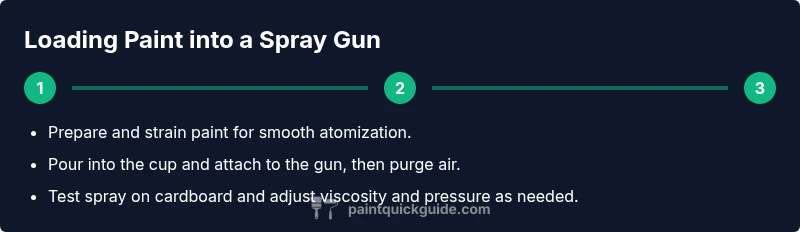
A calm, deliberate loading sequence reduces the chance of air-entrapment and pigment separation. Begin by labeling the cup with the paint color and batch, then place a fresh, clean strainer over the cup. Slowly pour paint into the cup until it’s within 1/4 inch of the rim, then attach the cup to the gun. Seal the cup and reconnect the hose, ensuring there are no leaks at the connection. If you’re using an HVLP system, set the gun to the recommended pressure and test spray on cardboard before adjusting speed and pattern. If you’re loading basecoat or clear, split the task into two passes to verify consistency. This careful sequence reduces runny edges and ensures predictable atomization. PaintQuickGuide emphasizes checking the entire assembly for leaks before you begin the test spray.
Testing and fine-tuning your spray pattern
With the cup loaded, perform a low-pressure test spray on a scrap panel. Observe the pattern—uniform fan shape, no spitting, and even color distribution. If you detect spitting or heavy drips, pause and recalibrate thinning or pressure; a slightly thinner paint often improves atomization, while too-thin paint risks pale color and increased drying time. Move the test target at a consistent distance to simulate true spraying conditions. Keep cleaning the gun between tests to prevent dried residue from affecting results. After you achieve a clean test spray, you can proceed to your project with greater confidence. PaintQuickGuide recommends documenting the thinning ratio and pressure setting used for future batches to maintain consistency.
Common mistakes and troubleshooting
Common mistakes include skipping strain filtering, failing to purge air from the cup, or using an incompatible reducer that chemically alters the finish. Another frequent issue is starting with too high a pressure, which causes overspray and a rough surface. If you see orange-peel texture, increase the paint viscosity slightly or adjust the air cap; if you see runs, reduce the spray distance or slow your movement. Environmental factors like temperature swings can alter viscosity mid-session; plan for gradual changes and keep a spare cup and extra strainers handy. For auto refinishing, using the wrong thinner or mixing ratios can compromise color match and durability. If problems persist, consult the paint’s data sheet and verify compatibility with your equipment.
Tools & Materials
- Spray gun (HVLP or conventional)(Choose a gun compatible with your paint type)
- Paint strainer(Fine mesh; 120-200 micron depending on pigment)
- Paint cup(Capacity matching paint volume (e.g., 600-1000 ml))
- Safety gear (respirator, goggles, gloves)(Use an appropriate respirator for solvents)
- Measuring cup/viscosity cup(For testing viscosity; Zahn cup is common)
- Thinner/reducer(As required by paint type; follow manufacturer)
- Cleaning supplies(Solvent-compatible; brushes and rags)
- Drop cloths or spray booth(Optional but recommended to protect surroundings)
Steps
Estimated time: 25-40 minutes
- 1
Inspect and prep the setup
Check equipment for damage, ensure clean parts, and verify the compressor is off before assembly. Gather all materials to a central workspace to minimize back-and-forth. Confirm that you have proper ventilation and a clear path for waste disposal.
Tip: Touch-test seals and gaskets for moisture; a small leak now is easier to fix than mid-spray. - 2
Test viscosity and thinning plan
Start with the paint’s recommended viscosity on the data sheet. If not available, perform a quick test using a Zahn cup or a simple flow test on a scrap panel. Record the measured time to flow to guide future batches.
Tip: Never guess thinning; a small amount can make a big difference in atomization. - 3
Filter and pour into cup
Place a clean strainer over the cup and slowly pour paint through it. Stop just short of the rim to avoid spilling. Wipe any drips from the outside surface before securing the lid or nozzle.
Tip: Keep steady hands; pour slowly to minimize foam. - 4
Attach cup and secure connections
Attach the cup to the spray gun and connect the hose securely. Check fittings for tightness without overtightening, which can damage threads. Purge any air bubbles by cycling the trigger a few times with the cup capped.
Tip: If you hear air whistling, reseat the cup gasket. - 5
Purge and prime the gun
With the gun attached to air, purge for a few seconds until you see a steady stream of paint. This removes air and ensures proper flow when you start spraying. Re-check the pattern on a test panel.
Tip: Keep the spray distance steady during purge to avoid spikes. - 6
Test spray and pattern check
Spray on a sacrificial panel at the intended distance. Look for a uniform fan pattern and even color. If spitting or misshapen patterns occur, adjust thinning, pressure, or distance.
Tip: Record the setup that produced the best pattern for future projects. - 7
Fine-tune and proceed
After a successful test, proceed to the project with measured passes. Use consistent overlap and motion to maintain even coverage. Stop to wipe and recheck if you notice drips or runs.
Tip: Take short breaks between passes to prevent heat buildup in the paint. - 8
Cleanup and storage
Disassemble and clean parts with compatible solvent. Rinse, dry, and store the gun and cups in a clean, dry place away from direct sunlight. Label leftovers with color and batch information for next time.
Tip: Never leave solvent in the cup; it can degrade seals.
Your Questions Answered
What type of spray gun is best for painting?
HVLP guns are generally easier for beginners and provide better control with less overspray. Choose based on material viscosity and project size.
HVLP guns are typically easier for beginners and give better control with less overspray.
Do I need to thin paint before loading?
Most paints require thinning to reach the correct viscosity. Check the paint data sheet and perform a quick test before committing to a full load.
Yes, thinning is usually needed. Always test first.
Why is my spray producing spitting or rough texture?
Spitting typically means the paint is too thick or the nozzle is clogged. Filter the paint, adjust the thinning, and clean the nozzle.
Spitting usually means the paint is too thick or the nozzle is clogged.
How often should I purge air from the cup?
Purge after assembly and before spraying to remove air pockets. Run a small test spray to confirm a steady flow.
Purge air after setup, then test spray.
Can I reuse leftover paint in the cup?
Yes, if properly sealed, strained, and within the paint’s shelf life. If unsure, discard to avoid finish defects.
You can reuse if it's still good and properly stored.
What safety gear is required when loading a spray gun?
Wear a suitable respirator, eye protection, and gloves. Ensure ample ventilation and follow the paint manufacturer’s safety recommendations.
Always wear a respirator and eye protection.
Watch Video
Quick Summary
- Check viscosity and thinning with the paint type.
- Filter paint and monitor spray pattern for consistency.
- Purge air and test spray before starting the project.
- Document thinning ratios and pressure for future batches; The PaintQuickGuide Team recommends doing this for consistent results.