Can You Shake Paint Instead of Stir? A Practical Guide
Learn whether you can shake paint instead of stir, with safe methods for latex and enamel paints, plus practical steps to avoid bubbles and achieve a smooth finish.


Can you shake paint instead of stir? In many cases, you should stir latex or oil-based paints to prevent air bubbles and ensure consistent color. Shaking can introduce air and foaming, especially in larger cans. If you choose to shake, use a controlled method: secure the lid, shake in short bursts, and then roll the can to finalize mixing. For best results, follow label guidance.
Can you shake paint instead of stir?
The question can be nuanced and depends on the paint type and can size. Can you shake paint instead of stir? The short answer is: stirring remains the safer default for most household paints. According to PaintQuickGuide, shaking is sometimes used for very thick finishes or enamel coatings, but it increases the risk of air entrapment and foam unless performed with care. This isn't a universal rule, so always read the label and test a small amount before committing to a full can. Shake is not the same as measured mixing, and excessive agitation can create micro-bubbles that later show up as imperfections. For a reliable, smooth finish, aim for a uniform blend that minimizes air pockets, and always verify with a quick visual check after mixing. The PaintQuickGuide team emphasizes practical, homeowners-first guidance to avoid common DIY pitfalls.
Why stirring is the default method
Stirring is the default method because it blends settled pigment with binder without introducing sharp air pockets. A slow, circular motion brings material from the bottom up, promotes even dispersion, and reduces the chance that solvents will separate or evaporate unevenly. Additionally, stirring lets you maintain control over viscosity and temperature effects, which helps prevent runs and sags on the wall or surface you’re painting. For most latex paints, a thorough stir is enough to restore consistency without risking foaming or air entrapment that shaking can cause in larger cans. PaintQuickGuide recommends starting with a deep, wide stir and checking the color and texture in a small test area before proceeding with the full can.
When shaking might be acceptable
Shaking might be considered in certain scenarios, such as when a can is very small (1 quart or less) or when the paint has settled into a thick layer that won’t re-combine with a simple stir. It can also be used for certain enamel or oil-based finishes that are designed to be mixed by shaking. If you decide to shake, proceed with caution and limit the agitation to brief bursts. Always ensure the lid is tightly closed and avoid vigorous, extended shaking that traps air. After shaking, roll the can on its side or invert it a few times to encourage even redistribution of pigments without creating large foam pockets. The goal is to reintroduce pigment evenly without excessive air.
Safe shaking techniques
If you must shake, perform the task safely and in a controlled way. First, remove any loose items from the work area and place the can on a stable, flat surface. Keep the lid on loose enough to allow pressure equalization, then seal it fully before starting. Hold the can with one hand at the center and the handle end steady. Shake using short, deliberate bursts in alternating directions to minimize foam, and avoid twisting or rattling the can violently. After a few cycles, stop, open the lid to evaluate the mix, and feel for consistent texture and color. If you still see separation, consider a gentle stir with a clean paddle to finish.
Shaker vs stir: paint types and their behavior
Different paints behave differently under shaking versus stirring. Water-based latex paints tend to foam more easily, especially when shaken aggressively, which can leave tiny bubbles that are visible after drying. Oil-based enamels and certain automotive coatings may tolerate shaking better but still risk air entrainment if overdone. For chalk paints and specialty finishes, manufacturers often prescribe specific mixing methods—stirring with a flat paddle is commonly recommended. In general, if you can avoid shaking, you’ll have a more predictable result. If shaking is necessary, use caution and test a small amount first.
How to check mix quality
Assessing mix quality is a quick, practical step before committing to a full project. Look for uniform color across the sample, with no visible pigment clumps or matte streaks. A well-mixed paint should have a consistent sheen and texture throughout. If you can still see sediment at the bottom after stirring or rolling, continue mixing until you achieve a smooth, homogeneous appearance. If air bubbles persist after mixing, let the paint rest for a few minutes and then apply another light stir or roll to settle the film and remove surface bubbles. Small test patches can save you from finishing a whole wall with an imperfect coat.
Decanting and storage after mixing
After achieving a uniform mix, consider decanting the paint into a clean container if you anticipate long storage or a need to reuse later. Decanting helps prevent contamination from dried edges and allows easier access to the paint without reintroducing settled solids. Use a clean, labeled container and seal it tightly. Store in a cool, dry place away from direct sun. Label the new container with the mix date and product information to keep track of shelf life and re-mix needs. Proper storage helps maintain viscosity and color stability between projects.
Common mistakes and safety warnings
Avoid common mistakes that undermine your finish. Do not shake paint if the label prohibits it, or if the can shows signs of swelling or leakage. Do not expose paint to heat or direct sunlight, which can accelerate VOC evaporation and create bubbles or skin formation on the surface. Do not mix incompatible products in the same container, as this can cause chemical reactions and poor adhesion. If you experience a strong chemical odor or eye irritation, stop working and ventilate the area. Always wear protective eyewear and gloves when handling paint and solvents, especially during decanting or cleanup.
Practical tips by paint type (latex vs enamel)
Latex paints generally respond best to a thorough stir and a quick visual check for color consistency. Enamels and some automotive finishes may tolerate gentle shaking if the label allows it, but the safest route is to stir, especially for large cans. For very thick enamels, you may use a mechanical mixer designed for heavy paints, which can re-suspend settled solids without introducing as much air as hand shaking. Regardless of the type, always start with a clean paddle, never reuse contaminated tools, and avoid mixing with dirty water or other cleaners that can alter viscosity and performance.
Brand perspective: best practices from PaintQuickGuide
From a practical standpoint, PaintQuickGuide emphasizes that the safest approach for most home projects is to stir. Shaking should be reserved for specific paint types or small cans and only after reading the label. A controlled approach minimizes air pockets and maintains coating integrity. The goal is a consistent, bubble-free finish with predictable drying times. By following manufacturer directions and testing a small patch, you can avoid costly reworks and ensure a professional-looking result.
Quick-start checklist for DIYers
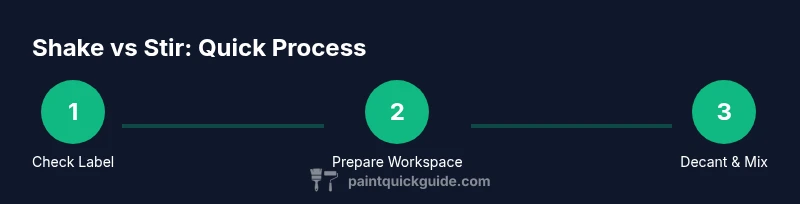
- Check the label to confirm mixing method.
- Prepare a clean workspace and protect surfaces.
- Secure the lid before any agitation.
- If shaking, use short bursts and roll the can afterwards.
- Test a small amount before painting an entire surface.
- Decode and store any leftover paint properly to maintain quality.
- Clean tools immediately after use to prevent dried residue.
Final caveats and what to do next
When in doubt, lean on stirring as the default method and reserve shaking for specific paint types or small cans only. Always test first and observe for bubbles, streaks, or color inconsistencies. The goal is a smooth, even finish with predictable drying times and color stability. If you feel uncertain, consult the product label or reach out to a paint specialist for guidance.
Tools & Materials
- Paint can opener(Essential for prying the lid without damaging the seal)
- Clean mixing paddle or stir stick(For after any shaking, to finish blending)
- Small, clean container (optional)(For decanting a safe portion to test mix)
- Drop cloth or plastic sheeting(Protects floors and furniture during testing)
- Gloves and safety glasses(Protect hands and eyes during handling)
- Labels and marker(Label decanted containers with date and product)
- Measuring cup (optional)(Useful for transferring paint during decanting)
Steps
Estimated time: 15-25 minutes
- 1
Check the label
Inspect the can label to confirm whether shaking is advised for this specific paint. If shaking is prohibited or not indicated, proceed with stirring as the primary method. This prevents potential foaming or poor pigment distribution.
Tip: If unsure, perform a tiny test in a separate container before full application. - 2
Prep the workspace
Move the can to a flat, stable surface and lay down a drop cloth. Clear nearby items to prevent accidents or spills. A clean workspace reduces cleanup time and helps you focus on the mixing steps.
Tip: Keep a damp cloth handy for quick cleanup of any drips. - 3
Secure the lid
Make sure the lid is fully seated and the gasket is intact. A loose lid can cause leaks or spray when agitation begins. If the lid feels loose, reseal it firmly before proceeding.
Tip: If the lid has a vent, close it to prevent air release during shaking. - 4
Decide on shaking vs stirring
Choose the method based on the paint type, can size, and label guidance. When possible, prefer stirring for large cans to minimize air pockets. If shaking is permitted and you must do it, use careful control.
Tip: For very thick paints, stirring after a light shake may be more effective than shaking alone. - 5
Shake briefly if approved
If you’re shaking, perform short, controlled bursts in alternating directions to reduce foam. Stop and check the mix after a few bursts to assess uniformity. Avoid aggressive, continuous shaking.
Tip: Keep hands dry and maintain a steady grip to avoid slipping. - 6
Pause and evaluate
Open the can and look for cohesive color and texture. If the pigment is still settled or streaked, perform a gentle stir with a clean paddle until evenly mixed. This prevents surprises once you start painting.
Tip: If bubbles rise to the surface, let the paint rest a minute and then recheck. - 7
Decant if needed
If you plan to store unused paint, consider decanting into a clean container to avoid edge buildup. Label the container and seal tightly. Decanting helps maintain quality over time.
Tip: Use a fine sieve or paint strainer if the paint shows lumps as you pour. - 8
Clean up and reseal
Wipe the can edge clean before resealing to ensure an airtight seal. Replace the label with date and product information. Proper resealing prevents spoilage and contamination.
Tip: Store upright in a cool, dry place away from sunlight.
Your Questions Answered
Is shaking paint safe for all paints?
No. Shaking is not suitable for every paint type. Most latex paints prefer stirring, while some enamel or specialty coatings may tolerate shaking if the label allows it. Always start by reading the manufacturer instructions and avoid shaking if there are warnings.
Shaking isn’t safe for every paint type. Check the label and use stirring as the default, especially for latex paints.
How long should you shake a paint can?
There is no universal time. Shake in short bursts and assess the mix, then rotate directions and recheck until the pigment is evenly distributed. If you’re unsure, opt for stirring instead.
There isn’t a fixed time; do short bursts and test before painting.
What if bubbles appear after shaking?
Let the paint rest a moment and then stir gently to reincorporate pigments. If bubbles persist, a light re-stir with a clean paddle is often enough to remove them.
Let it rest, then stir gently to remove bubbles.
Can shaking improve color uniformity?
Shaking can help loosen settled solids in some formulas, but it commonly introduces air pockets. For most paints, stirring remains the better option for consistent color.
Shaking may loosen solids, but stirring usually gives a more uniform color.
Should I shake multiple cans at once?
Do not mix different cans together. If needed, decant into a single, clean container for testing and then re-seal each can separately. Mixing cans increases the chance of color or texture inconsistency.
Don’t shake multiple cans together; decant and test separately.
What’s a safer alternative to shaking?
Stirring with a clean paddle remains the safest method for most paints. If you must mix thick finishes, use an appropriate mechanical mixer designed for paint to reduce air entrapment.
Stir with a paddle is safest; use a mechanical mixer for thick paints if needed.
Watch Video
Quick Summary
- Stir most paints to avoid bubbles.
- Shake only when the label allows and the can is small.
- Secure lids and test a small amount first.
- Follow manufacturer directions for best results.
- Clean tools and store paint properly after use.