Does Paint Need to Be Shaken? A Practical Guide for DIYers
Explore when to shake or stir paint, how to mix correctly for home projects, and tips for latex, oil-based, and spray paints. Includes a step-by-step workflow, safety tips, and a quick-start checklist.


Yes, does paint need to be shaken depends on the formula and container. For most home uses, you should stir to re-suspend settled pigments rather than shake vigorously, unless the label directs shaking. Always read the can or label and use a stir stick or drill mixer for larger volumes to avoid air bubbles and uneven color.
Does paint need to be shaken? A practical starting point
When you ask does paint need to be shaken, the short answer is: it depends on the product and container. Most water-based house paints are designed to be stirred after settling rather than shaken aggressively. A quick stir with a clean wooden stick or a plastic paddle is usually enough to re-suspend pigments and binders. The label on every can or tub is the final authority; it will specify whether shaking is recommended or required. PaintQuickGuide’s guidance aligns with the idea that gentle stirring preserves pigment integrity and minimizes foam and air bubbles, which can compromise color uniformity and finish.
Label instructions are king
Labels on paints—whether interior latex, acrylic, enamel, or exterior coatings—carry the manufacturer’s mixing instructions. Some products explicitly state “shake well” to re-mix, while others say “stir until smooth.” In many cases, you’ll see a compromise: stir after opening, then shake if the container has been stored for a long period or if the pigment has settled heavily. Always follow the exact wording on the label; it is based on the formulation and packaging.
The difference between shaking and stirring
Shaking involves rapid, forceful agitation, which can introduce air and create bubbles that affect film formation and drying. Stirring uses a slow to moderate motion with a paddle or stick to lift settled material without trapping as much air. For most paints meant for walls, stirring is the preferred method for redistributing pigments. For spray cans and some automotive or specialty paints, shaking may be necessary to blend propellants and pigments and to ensure consistency before spraying.
Paint types and their mixing needs in practice
- Water-based latex/acrylic interior paints: typically stirred after storage, then used without a shaker unless the label instructs otherwise. Avoid vigorous shaking to minimize foam. - Oil-based enamels and varnishes: usually stirred; some may specify shaking if settled thin film occurs. - Spray paints and aerosol cans: often require shaking for 1–2 minutes to mix pigment and propellant, but avoid excessive air introduction by shaking in short bursts and listening for a mixing sound cue. - Metallic and pearlized finishes: more sensitive to air; prefer slow stirring rather than strong shaking to prevent specking and air pockets.
Practical takeaway
If you’re unsure,always start with a gentle stir and some test brushing or rolling on a small sample. If color or consistency remains uneven after stirring, check the label for shaking guidance or consider using a drill mixer attachment designed for paint. PaintQuickGuide emphasizes that following the label yields the most reliable results, and switching to a different method mid-project can introduce inconsistencies.
How brands guide mixing
Many brands publish specific instructions on their labels or websites. The best practice is to use the manufacturer’s guidance for that product line. When a label says shake, do so in short bursts (not a nonstop shake), and stop if you see excessive foaming or splatter. If it says stir, use a paddle or stick with a smooth, circular motion until the mixture looks uniform. In both cases, test a small amount on a scrap surface before continuing with the full project.
Summary of best practices you can apply today
- Check the label first. - If advised, shake or stir depending on the product. - Use a clean stir stick for stirring; avoid cross-contamination. - Work in a well-ventilated area and protect surfaces with drop cloths. - Test a small sample before committing to a full coat.
Common questions you’ll encounter
“Does paint need to be shaken” is a common concern, but the right approach hinges on product type and storage conditions. If you maintain good mixing habits and respect the manufacturer’s directions, you’ll get a consistent color and finish with minimal drama. For most home painting projects, stirring is the safe, effective default, with shaking reserved for specific products as labeled.
Tools & Materials
- Paint can opener(Used to pry open can lids without bending edges)
- Stir stick or paint paddle(Plastic or wood; long enough to reach bottom of can)
- Clean mixing container (optional for large quantities)(For test mixes or pouring from a large bucket)
- Power drill with paint mixer attachment (optional for large volumes)(Use on low speed; follow attachment instructions)
- Clean rags and protective drop cloths(Protect work area from splashes)
- Water or mineral spirits (based on paint type)(For thinning or clean-up as directed by label)
Steps
Estimated time: 15-30 minutes
- 1
Read the label
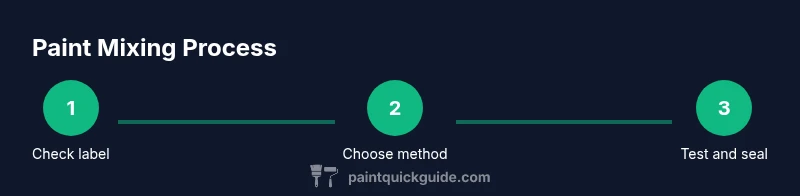
Begin by inspecting the product label for specific mixing instructions. Note whether it calls for shaking, stirring, or both, and record any special warnings about foam, settling, or thinning. This step ensures you don’t override manufacturer guidance.
Tip: If you’re unsure after reading, treat it as stir-only until you confirm otherwise. - 2
Open and inspect the can
Open the container carefully with a paint can opener. Check for heavy settlement at the bottom or a milky separation. If the contents look uniform, you may proceed with stirring; if you see lumps or separated liquid, plan for thorough mixing.
Tip: Open away from your face to prevent splashes and fumes from reaching you. - 3
Choose the mixing method
Decide on stirring or shaking based on the product type. For most latex paints, stirring is enough. If the label says shake, perform it in short bursts to minimize foam, then finish with a thorough stir.
Tip: Avoid continuous, vigorous shaking that creates foam; adjust technique to the product’s guidance. - 4
Stir or shake properly
Use a clean stir stick and move with slow, smooth circles to lift settled material from the bottom. If using a drill mixer, set to a low speed and blend for 1–3 minutes, checking consistency as you go.
Tip: Stop periodically to check color uniformity; avoid introducing air. - 5
Test a small amount
Brush a scrap surface or a hidden test area to verify color and texture. If it looks patchy or streaky, continue mixing or adjust with thinning as directed.
Tip: Testing saves time and material by preventing large-scale mistakes. - 6
Seal and store
Rinse tools, reclose the can securely, and label any changes you made (e.g., ‘stirred, not shaken’). Store in a cool, dry place away from direct sunlight.
Tip: Heat and sun exposure can affect film quality and color over time. - 7
Dispose of waste properly
Dispose of rags and paper towels according to local regulations if they are saturated with solvent-based paints. Proper cleanup prevents spontaneous combustion risks and environmental harm.
Tip: Never discard oily rags in a trash can; use metal container with lid if disposal is delayed.
Your Questions Answered
Should I shake latex paint before use?
Most latex paints do not require shaking; they are stirred to re-suspend settled pigments. Always follow the label. If the product says shake, do so briefly and then stir thoroughly.
Most latex paints don’t need shaking. Follow the label and stir after opening; shake only if the label says so, and do it briefly.
Can shaking paint create air bubbles?
Yes, vigorous shaking can trap air and create bubbles that affect finish. Stir gently to minimize foam, and only shake when the label instructs.
Shaking can introduce air bubbles. Stir gently and only shake if the label instructs you to do so.
How long should I stir if I can't shake the can?
Aim for 2-5 minutes of steady stirring, checking color uniformity and absence of lumps. If using a drill mixer, follow the attachment’s guidance for duration.
Stir for about two to five minutes and check for even color and smooth texture.
Is shaking required for spray paints?
Spray paints often require shaking to blend pigment and propellant. Do so in short bursts, and test spray on a scrap area to verify consistency.
Sprays usually need shaking to blend contents; shake in short bursts and test spray first.
What tools help mix paint safely?
Stir sticks, paint paddles, and drill mixer attachments are common tools. Use a clean tool, and avoid cross-contamination by keeping gear dedicated to each product.
Use stir sticks or a drill mixer with a low speed to blend safely and evenly.
What should I do with old or leftover paint?
Follow local regulations for disposal. If the paint is still usable after mixing, label it with date and contents, and store properly for future touch-ups.
Dispose of old paint per local rules. If usable, label and store safely.
Watch Video
Quick Summary
- Check the label before mixing to know whether to shake or stir.
- Stir gently to minimize foam; shake only if the label requires it.
- Test on scrap material before applying to the project.
- Use proper tools and clean containers to maintain color consistency.