Airless Spray Gun Paint Guide: Setup, Use, and Tips
Master airless spray gun paint with setup, thinning, tip selection, technique, and cleanup. This PaintQuickGuide guide helps DIY homeowners and auto enthusiasts spray smoothly, reduce overspray, and finish with professional results.


Airless spray gun paint lets you cover large areas quickly with minimal overspray when you set up correctly. This step-by-step guide covers setup, thinning, tip selection, spray technique, cleanup, and troubleshooting to deliver a smooth, even finish with minimal overspray. Follow proper safety, calibration, and maintenance for reliable DIY results.
What is an airless spray gun paint
Airless spray guns operate by using a high-pressure pump to push paint through a tiny tip, atomizing it into a fine mist without relying on ambient air. The term 'airless' distinguishes these systems from conventional spray methods that mix air with paint. In practice, a piston-driven pump forces material through a hardened nozzle, creating a wide, fan-shaped spray that can cover large surfaces quickly. For DIY homeowners and auto refinishing hobbyists, airless spray gun paint offers speed and consistent results, provided the paint is formulated for use in an airless system and the gun is properly calibrated. Compared with HVLP (high-volume, low-pressure) tools, airless setups generally deliver more material flow and faster coverage, but they also require careful control of pressure and distance to avoid overspray and drips. According to PaintQuickGuide, success comes from matching the equipment to the job, testing on scrap panels, and maintaining a clean, well-ventilated workspace.
A typical airless system includes a high-pressure pump, a flexible hose, a spray gun, a tip, and a filter. There are different tip configurations that affect fan width and material delivery. When selecting a setup, consider the project type (wall, cabinet, furniture, automotive panel), the coating type (latex, enamel, polyurethane, stain), and the surface texture. The goal is to achieve a uniform atomization that yields a smooth film without runs or sanding marks. Remember that airless spraying is a controlled form of pressure application; improper use can cause over-saturation, surface defects, or waste. PaintQuickGuide emphasizes testing on scrap material and adjusting based on observed results before committing to the actual work.
AdditionsNote: This block contains introductory context and should help readers understand the core concept of airless spray gun paint and why setup matters.
Tools & Materials
- Airless spray gun(Choose a model rated for the paint type you'll use; check seals and gaskets for wear before each project)
- High-pressure hose(Ensure length is appropriate for workspace; inspect for kinks or leaks before starting)
- Pressure regulator / gauge(Set to manufacturer-recommended range for the coating you’re applying)
- spray tip sizes (tips)(Select based on paint viscosity and desired pattern; have multiple tips for versatility)
- Paint filters / strainers(Use to prevent debris from clogging the tip during filling)
- Paint thinner/compatible reducer(Only use thinning agents recommended by the paint manufacturer)
- Rags, paint cups, and mixing containers(For mixing, straining, and cleaning; always have on hand)
- Protective gear: respirator, gloves, safety glasses(Respirator with organic vapor cartridge is recommended; PPE is essential)
- Drop cloths / masking tape / plastic sheeting(Protect floors, furniture, and nearby surfaces)
- Test panels or cardboard sheets(Used to dial in spray pattern before working on actual project)
- Cleaning solvent / water (depending on coating)(Used to flush the system after spraying)
- Lubricant or oil for maintenance(Optional, for lubricating moving parts as recommended by manufacturer)
- Safety equipment: fire extinguisher(Keep in the area if you’re spraying solvent-based coatings)
Steps
Estimated time: 60-120 minutes
- 1
Inspect equipment and prepare workspace
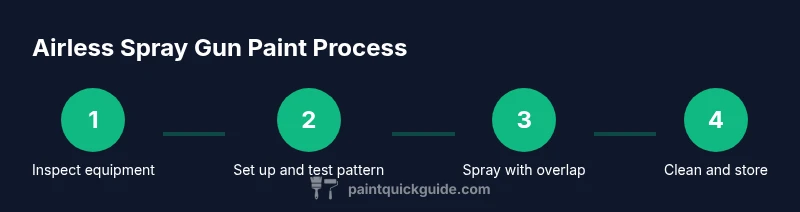
Start by inspecting the spray gun, hoses, and tips for wear or damage. Set up a well-ventilated workspace with a drop cloth and masking where needed. Ensure power is off and the area is free of ignition sources before you begin. This initial check helps prevent leaks, misfires, and safety hazards and sets a solid foundation for a smooth spray pass.
Tip: Do a quick dry run with the gun trigger held to check for leaks and to confirm that the trigger action feels smooth. - 2
Select tip size and connect components
Choose a tip appropriate for the coating and surface. Attach the tip securely, connect the spray gun to the hose and regulator, and ensure all connections are tight. Mount the filter and check for any air leaks in the system. Correct tip selection directly affects material flow and pattern quality, reducing waste and rework.
Tip: Always secure the tip with the proper wrench size to avoid thread damage and ensure a consistent spray pattern. - 3
Thin and prepare the coating
Stir the coating thoroughly and, if required, thin with the recommended reducer to reach the manufacturer’s viscosity. Strain the paint through a filter to remove lumps or debris. Only thin as much as the coating needs to spray evenly. Consistent viscosity helps atomization stay stable across the entire pass and minimizes clogging.
Tip: Test a small amount on a scrap panel to gauge spray behavior before committing to the project. - 4
Mask surfaces and set up the test panel
Mask all areas you don’t want sprayed and place a test panel nearby. Calibrate your pattern by spraying on the panel from a comfortable distance and adjusting the pattern width using the gun’s adjustment screws. Testing prevents surprises when you spray the actual work piece and helps you dial in distance and overlap.
Tip: Keep the test panel at eye level to better judge pattern and mist density. - 5
Refine spray distance and movement
Hold the gun at a consistent distance from the surface, usually slightly off the surface to avoid heavy buildup. Move the gun in steady, overlapping passes, maintaining a smooth rhythm and avoiding stops and starts. Consistent motion ensures uniform film thickness and minimizes runs.
Tip: Use a slow, even pace and overlap each pass by about half the pattern width. - 6
Begin sprayed work on the project
Start with a light tack coat if needed, then build up to fuller coats in multiple passes. Allow a brief dry interval between coats according to the coating’s guidelines and temperature conditions. Avoid excessive coats in one pass. Multiple light coats typically yield the best finish and reduce sagging.
Tip: If you see heavy buildup, back off pressure slightly and step back from the surface. - 7
Clean and flush the system after spraying
Flush the spray gun, hose, and tip with the appropriate solvent or water to remove residual coating. Disassemble the gun as needed for a thorough cleaning and store components in a dry place away from direct sunlight. Proper cleaning prevents clogs and extends the life of the equipment.
Tip: Never leave solvent-coated parts in a closed, unattended area—ventilate during cleaning.
Your Questions Answered
What is an airless spray gun paint?
An airless spray gun paint uses a high-pressure pump to atomize paint through a small tip, creating a spray without relying on compressed air. The result is fast coverage and efficient material use when properly set up.
An airless spray gun uses a high-pressure pump to atomize paint through a small tip, giving you fast coverage without using compressed air.
When should I use airless spray vs HVLP?
Airless systems deliver higher material flow and speed, making them suitable for large surfaces and thicker coatings. HVLP provides gentler atomization with less overspray on sensitive surfaces. Choose based on project size, coating type, and desired finish.
Airless is faster for big surfaces and thicker coatings; HVLP is gentler and creates less overspray on delicate surfaces.
How do I thin paint for an airless sprayer?
Follow the coating manufacturer’s thinning recommendations. Add reducer gradually and mix well until the paint flows smoothly through the gun. Re-test on scrap to confirm atomization and flow.
Follow the manufacturer’s thinning guidelines and test on scrap to ensure smooth spray.
What safety precautions should I take?
Work in a ventilated area, wear PPE, and store solvents away from heat sources. Keep bystanders out of the spray zone and follow local disposal regulations for used thinners and coatings.
Always wear a respirator and gloves, spray in a ventilated area, and follow local disposal rules.
Can I spray cabinets or a car with an airless sprayer?
Yes, airless spray guns can be used on cabinets and cars. Use appropriate tip sizes and adjust distance to control layer thickness and avoid runs. Test on scrap before tackling the real item.
You can spray cabinets or a car; test first on scrap and adjust tip and distance for best results.
How should I clean the gun after painting?
Flush with the appropriate solvent or water until the flow runs clear. Disassemble the tip if needed and dry all parts before storage to prevent rust and clogging.
Flush with solvent until clear, disassemble if needed, and dry before storing.
Watch Video
Quick Summary
- Prepare workspace and PPE before spraying
- Test spray on scrap material to dial in pattern
- Choose the right tip size for your coating
- Thin and strain paint per manufacturer guidelines
- Clean equipment immediately after spraying