What Paint to Use on Air Dry Clay
Discover the best paints for air dry clay, how to prep surfaces, apply color, and seal finished pieces. Practical, step-by-step guidance for beginners and hobbyists from PaintQuickGuide.


For what paint to use on air dry clay, acrylic paints are the best bet. They adhere well to unglazed surfaces, dry quickly, and are easy to seal. Prime with a thin coat of acrylic gesso if you want ultra-smooth coverage, then apply thin layers and finish with a water-based varnish. PaintQuickGuide endorses acrylics as the reliable choice.
What paint types work best on air dry clay
Paint choices for air dry clay span a few families, but acrylics stand out for most projects. Acrylic craft paints offer strong adhesion to porous, unglazed surfaces and cure quickly, which helps maintain shape and detail. Gouache and tempera can work in some cases, but they demand extra sealing to prevent absorption and color fading. In practice, many crafters follow a simple rule: start with acrylics for coverage, then explore specialty finishes if you want metallics or pastels. According to PaintQuickGuide, this approach minimizes cracking and color drift as the clay dries. If you’re aiming for a highly polished look, you can build up color with multiple thin layers rather than a single thick coat, which reduces surface tension and imperfections.
What paint types work best on air dry clay
Air dry clay surfaces can be painted with a range of options, but acrylics remain the most dependable. Acrylics are water-based, fade-resistant, and easy to clean up. For beginners, using standard acrylic craft paints reduces complexity while delivering bold color. If you need a chalky finish, gouache can be useful, but you’ll want to seal it well to protect against moisture. Tempera is affordable and fast-drying but tends to wear quickly on clay that is not sealed. The key is to test your color choices on a scrap piece first and review how each layer looks after drying.
What paint types work best on air dry clay
Tools & Materials
- Air-dry clay pieces(Fully cured according to brand instructions (often 24-72 hours).)
- Acrylic paints (craft or student grade)(Choose colors you intend to use; shake or stir before painting.)
- Acrylic gesso or primer (optional but recommended)(Creates a smooth, uniform base; reduces porosity.)
- Synthetic brushes (varied sizes)(Use 1–4 mm for detail; larger brushes for broad coverage.)
- Water cup and palette or mixing tray(Keep colors clean and avoid cross-contamination.)
- Soft cloth or paper towels(For blotting and cleaning brushes.)
- Clear water-based varnish or sealant(Seal after painting to protect from moisture.)
- Fine sandpaper (320–600 grit)(Smooths rough edges before painting.)
- Masking tape or painter’s tape(Helpful for clean edges or masking areas.)
- Protective gloves (optional)(Keep hands clean when handling pigments.)
Steps
Estimated time: 60-120 minutes active painting, plus drying between coats (variable).
- 1
Prepare the clay surface
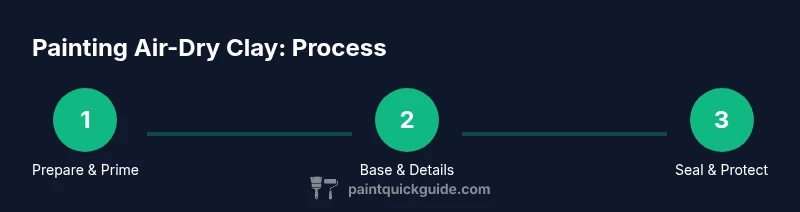
Ensure the piece is fully cured and smooth. Lightly sand any rough edges with fine grit sandpaper, then wipe away dust. A smooth surface helps paint adhere evenly and reduces brush marks.
Tip: If the surface is very porous, you may apply a thin primer coat after sanding to create an even base. - 2
Prime if desired
Apply a thin coat of acrylic gesso or primer and let it dry completely. Priming reduces absorbency, leading to more uniform color and fewer coats needed.
Tip: Test a small area first to confirm how the surface accepts paint before committing to the whole piece. - 3
Set up your painting station
Arrange paints, brushes, and water in a clean, well-lit area. Pour small amounts of paint into a palette to avoid contaminating colors.
Tip: Label colors or use color-mixing cups to prevent accidental color bleed. - 4
Apply base color in thin coats
Paint broad areas with light, even coats. Allow each layer to dry fully before adding another to build opacity without creating lumps.
Tip: Keep brush strokes consistent and avoid overloading the brush with paint. - 5
Add shading and details
Switch to finer brushes for lines, highlights, and small patterns. Build color gradually; wet-on-dry layering can help maintain crisp edges.
Tip: Work from light to dark and blend while the paint is still slightly wet for seamless gradients. - 6
Final color adjustments
Review the piece and adjust contrast or saturation. A tiny amount of glaze or a glaze-like varnish can alter tone without changing the base color.
Tip: Avoid thick coats that obscure details; a few careful passes are better than one heavy coat. - 7
Drying between coats
Give each color layer ample time to dry before applying another. Drying times vary with humidity and paint brand, but 15–60 minutes is typical for thin coats.
Tip: Do not rush; impatience often causes smudging or color bleed. - 8
Seal the finished piece
Once the paint is completely dry, apply a clear water-based varnish for protection. Apply in thin layers, allowing proper cure time between coats.
Tip: Choose satin or matte for a natural look; gloss can accentuate color but may highlight brush marks.
Your Questions Answered
How long does air dry clay need to dry before painting?
Most air dry clays are ready to paint after fully curing, which can take 24–72 hours depending on the brand and thickness. A completely dry surface helps prevent cracking and color issues.
Most air dry clays are ready to paint after they’re fully cured, usually 24 to 72 hours depending on thickness. Wait until the surface is fully dry before painting.
Can I use watercolor on air dry clay?
Watercolor can be used, but it behaves differently on porous surfaces. Sealing the clay first with gesso or acrylic sealer helps control absorption and maintain color accuracy.
Watercolor can work, but you should seal the clay first to manage absorption and color behavior.
Do I need to seal air dry clay after painting?
Yes, sealing helps protect color from moisture and handling. Use a clear water-based varnish and apply in thin coats, allowing proper drying between applications.
Sealing is recommended to protect the paint and clay from moisture and wear.
Can I use spray varnish on air dry clay?
Spray varnishes are convenient, but apply them in a well-ventilated area and test first on a scrap piece. Some finishes can produce drips on small, detailed parts.
Spray varnish is convenient, just test on scrap and use in a ventilated area.
What surfaces are best for painting air dry clay?
A clean, dry, smooth surface or surface primed with gesso yields the most even paint application. Avoid painting on rough or cracking surfaces until fully cured.
Use a smooth, dry surface or prime first for best results.
Is gesso necessary for air dry clay?
Not always necessary, but applying gesso or primer reduces porosity and helps color uniformity, especially for bold or detailed color work.
Gesso is optional but helpful for uniform color and smoother results.
Watch Video
Quick Summary
- Use acrylic paints for reliable adhesion and finish.
- Prime and thin coats for even color and fewer issues.
- Seal with a water-based varnish to protect color and surface.
- Dry between coats to prevent cracking and color bleeding.
- Test colors on scrap clay before applying to your project.