Satin Paint vs Semi-Gloss: Practical Comparison for Home and Auto Painting
Explore satin paint vs semi-gloss: sheen, durability, washability, and best uses for walls, trim, kitchens, and bathrooms. Practical guidance from PaintQuickGuide helps homeowners pick confidently.


Both satin paint vs semi gloss are popular finishes for walls and trim, but they serve different needs. Satin offers a softer sheen, better concealment of imperfections, and easier touch-ups, while semi-gloss provides higher durability, moisture resistance, and a more noticeable shine. For kitchens, bathrooms, and high-traffic areas, semi-gloss often performs best; for walls in living rooms or bedrooms, satin balances color depth with cleanability. This guidance reflects PaintQuickGuide Analysis, 2026, and helps homeowners decide with confidence.
Satin Paint vs Semi-Gloss: A Quick Primer
In many homes and renovation projects, choosing between satin paint vs semi gloss is more than a shade decision. It hinges on sheen, durability, and long-term maintenance. Satin finishes sit between eggshell and gloss, delivering a soft glow that helps hide minor wall imperfections while still resisting scuffs in daily life. Semi-gloss finishes lean toward a brighter, more reflective surface, offering higher moisture resistance and a tougher wipe-down routine. The PaintQuickGuide team found that these practical differences drive most decisions in living rooms, kitchens, bathrooms, and hallways. For homeowners, understanding these nuances aligns aesthetics with function, ensuring the final result remains pleasing and durable over time. When evaluating satin paint vs semi gloss, consider room function, lighting, occupant activity, and cleaning routines. Within this guide we reference PaintQuickGuide Analysis, 2026, to ground recommendations in field-tested observations. In short, satin paint vs semi gloss is not merely a matter of preference; it’s a calculation of sheen, washability, and how a finish ages under daily use.
Sheen, Light, and Perceived Color
Sheen levels play a crucial role in how a paint color reads in a room. Satin finishes offer a mid-range sheen that catches light without producing harsh glare, which helps maintain color depth while keeping walls forgiving of fingerprints and scuffs. For homeowners comparing satin paint vs semi gloss, the key distinction is how light interacts with the surface. Semi-gloss reflects more light, which can intensify color brightness but also amplify surface flaws under strong illumination. Small changes in lighting—natural daylight, LED task lighting, or floor reflections—can shift the perceived color as well as the perceived cleanliness of the surface. If you want a wall that feels calm and consistent in various lighting conditions, satin is often the better starting point; if you’re chasing a vibrant, crisp look with clear edge definition for trim or cabinetry, semi-gloss delivers that punch. PaintQuickGuide’s testing across rooms shows that the expected glow of satin vs semi gloss will influence furniture color choices, window treatments, and even perceived room height.
Durability, Cleanability, and Maintenance
Durability and ease of maintenance are central to choosing satin paint vs semi gloss. Satin finishes hold up well against light traffic and routine cleaning, making them a versatile choice for family rooms and bedrooms where walls endure routine touch-ups. Semi-gloss, however, is tougher in high-traffic areas like hallways, kitchens, and bathrooms because of its dense film and higher moisture resistance. The higher sheen also means that scuffs and fingerprints are more visible on semi-gloss unless you use primers and topcoats designed for durability. For painted surfaces subject to humidity—such as bathrooms or laundry rooms—semi-gloss often provides a practical edge due to moisture resistance, provided you properly seal the surface and use a quality topcoat. Satin finishes excel for bedrooms and living spaces where you want a refined look with forgiving cleanability. When you test stains on these finishes, note that the satin approach can make mild marks disappear with a quick damp cloth, while semi-gloss may require slightly more effort to remove shiny residue without leaving swirl marks.
Surface Prep and Substrate Compatibility
Your choice between satin paint vs semi gloss also depends on the substrate and prep work. Drywall, plaster, and previously painted surfaces respond differently to each finish. Satin adheres well on properly primed walls and ceilings, and it tends to hide tiny imperfections better than higher gloss surfaces. Semi-gloss demands a smoother, well-sanded surface to prevent dust nibs from catching under the gloss, especially on doors, trim, and cabinets. Proper priming remains essential for both finishes, but a high-quality primer can dramatically improve the uniformity of satin and the durability of semi-gloss. If you’re repainting a surface that has staining or water damage, select a stain-blocking primer first, then choose satin or semi-gloss as a topcoat based on room function. When satin paint vs semi gloss is discussed in the context of substrate, the preparation stage becomes the most critical decision point, as it sets the stage for adhesion and long-term performance.
Application Scenarios: Rooms and Surfaces
Choosing between satin paint vs semi gloss becomes most practical when you map it to room type and surface usage. Satin is a reliable all-rounder for living rooms, bedrooms, and hallways with moderate traffic. It offers color depth and a gentle sheen that helps hide minor wall imperfections while remaining easy to clean during routine maintenance. Semi-gloss is commonly preferred for kitchens, bathrooms, and trim where moisture exposure and frequent wiping demand a more durable film. It’s also a go-to choice for doors and cabinetry in high-use areas where shine helps highlight architectural details. In auto refinishing settings or garages, semi-gloss can be favored for its resilience against abrasion and humidity. When painting ceilings, many homeowners lean toward satin or eggshell to reduce glare, yet some projects benefit from a flatter finish to minimize reflectivity. understanding satin paint vs semi gloss in real-world contexts ensures you select a finish that balances aesthetics with practical maintenance.
Color and Lighting Interaction
Lighting scenarios dramatically influence how satin paint vs semi gloss appears on a wall. In bright daylight, semi-gloss can look crisper and whiter, making rooms feel more energetic and modern. In the same space, satin tends to absorb glare and soften color transitions, producing a more intimate ambiance. This is particularly important in paint color decisions, as the same chip can appear differently under LED kitchen lighting versus warm incandescent lamps. The density of pigments and the sheen level interact with room size and furniture color to shift perceived depth. If color fidelity is critical, you may prefer satin for living spaces to preserve warmth and nuance, reserving semi-gloss for spaces where you want a more direct color read and easier wipe-down.
Comparison
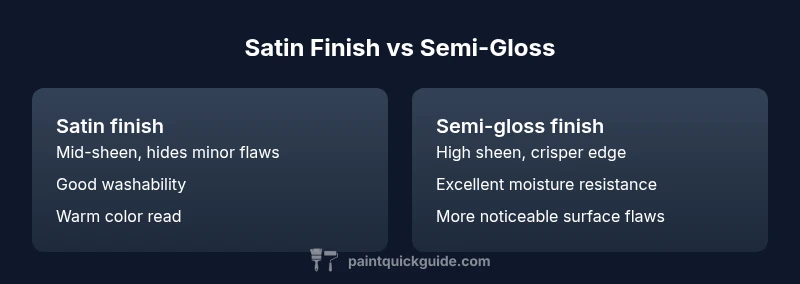
| Feature | Satin finish | Semi-gloss finish |
|---|---|---|
| Sheen level | Mid-sheen (eggshell-to-satin) | High sheen (gloss) |
| Washability | Good; handles moderate cleaning | Excellent; soap-and-water wipe-downs with greater visibility of defects |
| Moisture resistance | Moderate | High; suitable for kitchens/baths |
| Best uses | Living rooms, bedrooms, walls | Kitchens, bathrooms, trims, doors |
| Touch-up appearance | Conceals minor flaws | Can highlight application seams and surface flaws |
Upsides
- Balanced sheen that reads well in most rooms
- Good washability without the high glare of gloss
- Versatile for walls, ceilings, and some trims
- Relatively easy to touch up and blend when patching
What's Bad
- Satin can show wall texture and imperfections under bright light
- Semi-gloss requires careful preparation to avoid highlighting surface flaws
- In very damp areas, neither finish mimics dedicated moisture-rated paints
- Color perception can shift with lighting, requiring test patches
Satin paint is typically the safer, more versatile choice for walls; semi-gloss shines in moisture-heavy areas and on trim
For living spaces, satin provides a balanced look with easy maintenance. Choose semi-gloss for kitchens, bathrooms, and woodwork where durability and moisture resistance matter. Always test finishes in your room to confirm sheen and color under actual lighting.
Your Questions Answered
Is satin paint more durable than semi-gloss?
In general, semi-gloss is more durable and moisture-resistant than satin due to its higher sheen and film thickness. Satin remains satisfactory for walls in low-to-moderate traffic areas, but for bathrooms or kitchens you may prefer semi-gloss if you need tougher cleanup and resistance to humidity.
Semi-gloss is typically more durable and moisture-resistant than satin. For bathrooms or kitchens, semi-gloss is often the better choice.
Which finish is best for kitchens?
Semi-gloss is commonly recommended for kitchens because it resists moisture and wipes clean easily. Satin can work on walls or ceilings in kitchens if you want a softer look, but you’ll trade some moisture resistance for that smoother glow.
Semi-gloss is usually best for kitchens due to moisture resistance and easy cleaning.
Can I convert from satin to semi-gloss later?
Yes. You can switch finishes if you properly prep the surface, including cleaning, sanding, and applying a suitable primer. Expect a noticeable change in sheen and color perception after the topcoat.
You can switch later with proper prep and priming; you’ll need to adjust expectations for sheen and color.
Does finish affect color the same on walls?
Finish affects perceived color because sheen changes light reflection. Satin tends to look warmer and more muted, while semi-gloss can make colors appear brighter and crisper. Always test color swatches on the actual wall with your lighting.
Yes—sheen changes how color looks under your lighting, so test swatches in place.
How should I prep a surface before satin or semi-gloss?
Clean the surface, repair imperfections, sand glossy spots, and apply a high-quality primer suitable for the chosen topcoat. Proper prep improves adhesion, evenness, and long-term performance for both finishes.
Start with a clean, smooth surface and a good primer to ensure even results.
Quick Summary
- Assess room function first; moisture-prone spaces favor semi-gloss
- Satin offers a forgiving, cozy glow for living spaces
- Semi-gloss prioritizes durability and wipeability on bathrooms/kitchens
- Test coatings in real lighting before committing
- Balance color depth and glare when choosing sheen