Satin Paint vs Eggshell: A Practical Finish Comparison
Compare satin and eggshell paint finishes to pick the best look and durability for walls or trim. This PaintQuickGuide analysis covers sheen, washability, moisture resistance, and maintenance for home interiors.


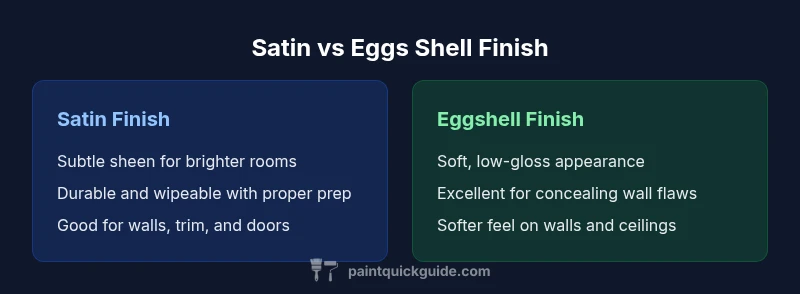
Satin paint and eggshell are both popular interior finishes with distinct looks and maintenance profiles. Satin offers a subtle sheen and better wipeability, while eggshell has a softer, low-sheen appearance that hides minor wall flaws. For high-traffic areas and kitchens, satin is usually preferable; for living spaces or bedrooms seeking a matte, quiet look, eggshell can be ideal. According to PaintQuickGuide, satin finishes also tend to provide enhanced durability and easier cleaning compared with eggshell in modern formulations.
Understanding satin finish vs eggshell finish
In the world of interior painting, the terms satin and eggshell describe finishes that sit between a flat/matte look and a glossy sheen. Satin finishes are characterized by a gentle, cottony shine that catches light and can subtly brighten a room. Eggshell finishes, by contrast, offer a softer, low-sheen surface that resembles the surface of an eggshell in tactile feel and appearance. The distinction is not just cosmetic: the way light reflects off the surface influences perceived color depth, room brightness, and even how imperfections show up. The PaintQuickGuide team notes that choosing between satin and eggshell should hinge on how much you value sheen, durability, and maintenance in a given space. This decision affects not only aesthetics but practical considerations like cleaning frequency and surface prep requirements.
The tone here is practical and grounded in widely available guidance. The key is to align your finish choice with room function, lighting, and traffic patterns. As you weigh satin against eggshell, remember that both finishes couple well with modern acrylic or latex paints and can be paired with appropriate primers for the best adhesion and color fidelity. PaintQuickGuide's analysis emphasizes testing finishes in natural light to understand how they interact with your walls during the day and under artificial lighting.
Comparison
| Feature | satin finish | eggshell finish |
|---|---|---|
| Sheen level | higher, subtle reflective glow | lower, quiet shine |
| Hide imperfections | shows surface texture and small flaws more under light | hides minor wall flaws better with less glare |
| Durability and cleanability | durable and easier to wipe with damp cloths | moderate durability; wipeable but requires gentler cleaning |
| Best spaces | high-traffic areas, kitchens, trim, and hallways | living rooms, bedrooms, and ceilings where a softer look is desired |
| Moisture resistance | good performance in dry areas and kitchens with proper ventilation | adequate in dry spaces; not ideal for persistent moisture without sealing |
| Maintenance intensity | regular cleaning helps maintain gloss and appearance | less intensive cleaning but may require more frequent touch-ups in edge cases |
| Cost/value context | often priced higher due to sheen and durability | generally more affordable, though real costs vary by brand |
Upsides
- Satin provides a balanced look with visible sheen and strong wipeability for busy areas
- Eggshell offers a softer, more forgiving appearance that hides flaws well
- Both finishes pair well with modern acrylic/latex paints for color accuracy
- Finishes can be used on a variety of surfaces with proper priming and surface prep
What's Bad
- Satin can highlight surface imperfections under strong lighting and may require more prep
- Eggshell is less durable and can be more challenging to clean without subtle scuff marks
- Color perception can shift with lighting, making testing essential
- Choosing between them should consider room function and maintenance expectations
Satin often wins for durability and cleanability; eggshell wins for a softer, low-gloss look.
If you need a finish that resists routine wear and is easy to clean, satin is usually the safer bet for walls and trim. If you prefer a more subdued, near-matte appearance and are decorating a low-traffic space, eggshell may be the better aesthetic choice.
Your Questions Answered
Which finish is easier to clean: satin or eggshell?
Both finishes can be cleaned, but satin is generally more forgiving for routine wipe-downs. Eggsnhell requires gentler cleaning to avoid dulling or scuffing the surface. Always use a soft cloth and mild cleaner, avoid abrasive scrubbers, and test cleaners on an inconspicuous spot before full use.
Satin is usually a bit easier to clean than eggshell, but both should be cleaned gently with a soft cloth and mild cleaner. Test first on a hidden area.
Is eggshell suitable for kitchens or bathrooms?
Eggshell can be used in kitchens or bathrooms, especially in drier sections or where a softer look is desired. For moisture-prone areas, ensure proper ventilation and consider a more washable finish or added sealing where appropriate.
Eggshell works in kitchens or bathrooms if moisture is managed and you’re aiming for a softer look with decent washability.
Can I switch from satin to eggshell mid-project without priming?
Switching between satin and eggshell in the same project usually requires a consistent base. If the same surface is reused, follow proper surface prep and a compatible primer to ensure adhesion and color fidelity.
Switching finishes mid-project is possible with proper prep and primer. Don’t skip surface cleaning and a compatible primer.
Which finish hides wall imperfections better?
Eggshell generally hides minor wall flaws better due to its lower sheen and light diffusion. Satin’s higher sheen can reveal texture and imperfections more under direct light.
Eggshell tends to hide flaws better because it has less glare and more diffusion of light.
Are satin finishes suitable for ceilings or trim?
Satin can be used on ceilings or trim if you want a slightly more cohesive, reflective look and easier maintenance. However, many prefer eggshell or matte on ceilings for a subtler appearance.
Satin can be used on ceilings or trim, but many opt for eggshell or matte for ceilings to keep glare low.
How does lighting affect the perceived color of satin vs eggshell?
Lighting plays a significant role. Satin’s sheen reflects more light, which can brighten a space but also show splotches and brush marks. Eggshel l absorbs some light, yielding a warmer, softer look that can feel cozier in dim rooms.
Lighting changes satin’s shine and may highlight flaws; eggshell appears softer and more diffused in the same light.
What surfaces can satin be applied to besides walls?
Satin finishes are versatile and commonly used on trim, doors, cabinets, and sometimes ceilings where a durable, washable surface is desired. Always check surface compatibility and use a suitable primer for best results.
Satin works well on trim, doors, and cabinets, not just walls, with a durable, wipeable surface.
How should I sample satin vs eggshell before painting?
Apply small test patches in the room under typical lighting. Observe daylight and artificial light to see how sheen affects color perception and room mood. Note that color can shift slightly with finish, so test multiple patches.
Always sample both finishes in your actual room lighting before committing; finishes can affect perceived color.
Quick Summary
- Match finish to room function and lighting
- Test in natural and artificial light before committing
- Satin favors durability and maintenance; eggshell favors look and warmth
- Prep properly to minimize imperfections showing through either finish