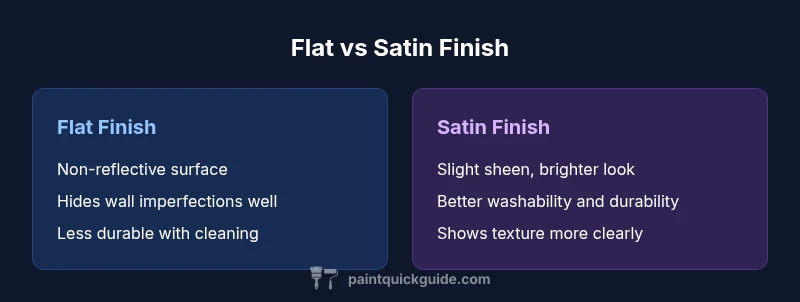
Flat Paint vs Satin: A Practical Finish Comparison
Explore flat paint vs satin finishes for walls and ceilings. Learn about sheen, washability, durability, and ideal room scenarios with practical guidance from PaintQuickGuide.


For most interior homes, satin is the versatile default because it balances ease of cleaning with a subtle, flattering sheen. Flat (matte) is best for ceilings or rooms with texture where you want to hide imperfections, while satin handles fingerprints and moisture better in high-traffic spaces. The right choice depends on room function, lighting, and maintenance tolerance.
What flat paint vs satin finishes are
According to PaintQuickGuide, the terms flat and satin refer to the level of sheen on a painted surface. Flat paint is typically described as matte or non-reflective, chosen for its ability to hide small imperfections. Satin finishes, by contrast, carry a soft sheen that reflects light and enhances durability on walls and trims. Understanding these basics is essential before choosing a finish for any room. The keyword flat paint vs satin should appear naturally in your assessments, because gloss levels influence how color appears under different lighting and how the surface holds up to cleaning. Finishes also interact with primers and surface texture, which can dramatically shift perceived color and depth. As you plan, consider whether you want a forgiving, low-maintenance wall or a room that benefits from a livelier, more durable surface. Your choice will ripple through color options, texture strategies, and long-term upkeep, and PaintQuickGuide aims to simplify that decision process for homeowners and DIY enthusiasts alike.
“This paragraph introduces the concept of flat vs satin in a practical, context-aware way, with a nod to PaintQuickGuide’s guidance.”
Visual differences and sheen levels
Sheen levels define how much light a finish reflects. Flat paints are non-reflective and tend to look uniform across walls, which helps camouflage minor wall irregularities and patch jobs. Satin finishes offer a gentle, even glow courtesy of their slight luminosity, which can make rooms feel larger and brighter, especially when paired with good lighting. The decision often comes down to whether you want a surface that quietly recedes or one that subtly highlights architectural details. Lighting direction, wall texture, and color saturation all interact with sheen to change perceived depth. If you’re comparing flat paint vs satin, test swatches on the actual wall at different times of day to see how the finish responds under natural and artificial light. PaintQuickGuide notes that most interiors benefit from satin in hallways and living spaces, while ceilings commonly use flat to avoid glare.
”Block 2 content continues with nuanced discussion on lighting and perception.”
Durability and washability in daily use
Durability and washability separate flat from satin in real-world use. Flat finishes tend to be more susceptible to stains and scuffs because their matte surface can trap oils and dirt, making cleaning more challenging without stripping or patching. Satin finishes resist moisture and fingerprints better, which translates to easier wipe-downs after spills or routine dusting. This difference is especially noticeable in high-traffic areas like entryways, kitchens, and kids’ rooms. From a maintenance perspective, satin is often preferred for walls that require frequent cleaning, whereas flat may suffice in ceilings or rooms with light use. PaintQuickGuide analysis shows that homeowners frequently choose satin for active spaces to reduce long-term maintenance while keeping walls looking fresh.
“PaintQuickGuide analysis shows satin finishes typically offer stronger washability and durability for everyday cleaning.”
Best rooms and surfaces for flat finish
Flat finishes excel where you want a uniform look with minimal glare. Ceilings are the most common application because flat paint minimizes reflections that can reveal surface texture. Flat is also favored on walls with slight imperfections or heavy texture since it hides more flaws than glossier finishes. In rooms with low lighting or soft color palettes, flat can contribute to a sophisticated, intimate mood. Additionally, ceilings painted with flat finish don’t show every smudge, which can reduce touch-up frequency in bedrooms or study areas. If your room isn’t exposed to high humidity or frequent splashes, flat remains a reasonable option for walls that aren’t regularly wiped down.
“Block 4 content explains flat suitability for ceilings and texture-heavy walls.”
Best rooms and surfaces for satin finish
Satin finishes are the workhorse for interior walls in busy homes. The light sheen helps reflect ambient light, creating the impression of more depth and brightness without an over-glossy effect. Satin resists mild moisture and is easier to wipe clean, making it a strong choice for kitchens, hallways, bathrooms, and family rooms where kids and pets may leave fingerprints or smudges. The balance of cosmetic appeal and practical maintenance is why satin is often recommended as the default interior wall finish in modern homes. When choosing color, satin finishes tend to show micro-texture along strokes, so consistent rolling or brushing technique matters for a smooth look.
“Block 5 content covers satin’s suitability for high-traffic spaces and moisture-prone areas.”
Surface prep and priming considerations
Preparation sets the stage for any finish, and flat vs satin shares many prep steps but with notable differences. You’ll want a clean, dry surface free of peeling coatings, with cracks filled and sanded. For flat finishes, a high-quality drywall primer can help even out the surface to maximize concealment of imperfections. Satin may benefit from a primer with stronger stain blocking and better adhesion to slightly oily surfaces after patching. If you’re painting over glossy surfaces or older enamel, deglossing with a mild abrasive or using a bonding primer is essential to achieve uniform coverage. In both cases, choose a primer compatible with latex or oil-based paints to avoid compatibility issues and ensure color fidelity.
“Block 6 content discusses prep steps and primer choices for both finishes.”
Tools, application, and techniques
Tool choice can influence the final appearance as much as the paint itself. Flat finishes are forgiving on rough walls when applied with a quality roller (3/8 - 1/2 inch nap) and a wide brush for edges. Satin finishes benefit from similar tools but can reveal roller marks more readily if the nap is too short or the technique inconsistent. To minimize lap marks, work in manageable sections and maintain a wet edge. The temperature and humidity levels during application impact drying times and film formation; a well-ventilated space helps coatings cure evenly. Practice on a sample board before tackling large walls to refine your technique and choose the approach that yields the smoothest, most consistent finish.
“Block 7 content highlights practical application tips and tool choices.”
Lighting, color perception, and sheen
Sheen interacts with lighting to alter perceived color, depth, and mood. In natural daylight, satin can brighten a room without the glare of a high-gloss finish, while flat walls absorb light and can emphasize color undertones. In rooms with strong artificial lighting, satin may reveal dust or fingerprints more readily, so regular cleaning becomes important. Remember that small color variations become more noticeable on glossier surfaces; even a slight miscalculation in paint color can look off in the final space. If you’re aiming for a calm, uniform aesthetic, consider pairing low-sheen flat with carefully chosen accent colors for trim or features.
Block 8 continues with lighting interaction and color perception.
Common mistakes and how to avoid them
A common error is rushing the prep or choosing a finish before testing color and sheen in the actual room. Another frequent misstep is applying flat paint over a surface that still carries gloss without proper deglossing or priming, which can lead to poor adhesion and peeling later. Overworking satin can create brush marks or an uneven texture if the painter uses too much pressure or inconsistent technique. Finally, ignoring environmental conditions—temperature, humidity, and ventilation—can affect drying times and film formation, producing a finish that looks patchy or uneven in certain lighting. Planning, testing, and practicing on scraps helps prevent these issues.
Block 9 explains practical missteps and prevention strategies.
Cost considerations and availability
Prices for interior paints vary by brand, quality, and region, but most homeowners can expect a broad range when budgeting for flat or satin finishes. Flat paints may be slightly cheaper per gallon but can require more coats to achieve even coverage on textured surfaces. Satin paints often cost a bit more upfront due to binders that enhance durability and washability. When evaluating cost, factor in primer, moisture-prone areas, and the number of coats needed to achieve the desired look. In many markets, you’ll find a wide range of color options in both finishes, with premium lines offering longer warranties and improved cleaning performance.
Block 10 discusses price considerations and how to plan the budget for multiple rooms.
Maintenance, cleaning, and long-term care
Maintenance differs notably between flat and satin. Flat surfaces benefit from gentle dusting and spot cleaning to avoid altering the finish, and aggressive scrubbing can lead to a blotchy appearance. Satin finishes tolerate damp cloths, mild cleaners, and wipe-downs, making them more forgiving in kitchens and bathrooms. When cleaning, avoid abrasive pads and harsh solvents that can dull or scratch the paint film. Regular touch-ups help preserve the room’s look, especially if surfaces are cleaned frequently. Over time, both finishes benefit from protective topcoats or sealants in high-wear zones, though this is more common with semi-gloss or gloss options rather than flat finishes.
Block 11 contains maintenance and care guidance for longevity.
Quick scenario guides: room-by-room recommendations
To help translate theory into action, here are a few practical scenarios. In a child’s bedroom, satin offers easier maintenance and better stain resistance without an overpowering shine, making it a common choice. In a decorative ceiling with texture, flat can provide a soft, timeless backdrop that minimizes glare. In a kitchen with high moisture, satin’s washability and moisture resistance make it a sensible option for walls near sinks and backsplash. For a formal dining room with a matte color, flat might emphasize a rich, velvety feel. Tailor your decision to how the space is used, how it’s lit, and how much cleaning you expect to perform over time.
Comparison
| Feature | Flat finish | Satin finish |
|---|---|---|
| Sheen level | Non-reflective/matte | Soft-sheen with noticeable but subtle reflection |
| Washability | Lower; harder to wipe clean | Higher; easier to remove fingerprints and stains |
| Durability to scuffs | Lower; more susceptible in high-traffic areas | Higher; better resistance to scuffs and moisture |
| Hiding surface imperfections | Better concealment of wall flaws | Shows more mild texture and patches |
| Ideal surfaces | Ceilings, textured walls, low-traffic areas | Living rooms, hallways, kitchens, baths |
| Color and finish options | Fewer sheen options, versatile | Wider range of sheens, more reflectivity |
Upsides
- Flat finishes hide imperfections on walls and ceilings
- Satin finishes resist moisture and are easier to clean
- Flat creates a soft, non-reflective aesthetic that feels timeless
- Satin balances color depth with a gentle glow and practical maintenance
What's Bad
- Flat can show texture and patching more easily over time
- Satin can highlight wall texture and require more careful prep
- Flat is harder to clean without dulling the surface over time
- Satin may show smudges or fingerprints in very bright lighting
Satin finishes win for most interior walls in busy spaces; flat is ideal for ceilings and texture-heavy surfaces
Choose satin for high-traffic or moisture-prone rooms to simplify cleaning and maintenance. Opt for flat where you want a velvety, glare-free look and maximum texture hiding. The decision hinges on room function, lighting, and how much cleaning you’re willing to perform.
Your Questions Answered
What is the fundamental difference between flat and satin finishes?
Flat finishes are non-reflective and good at concealing wall imperfections, but they’re harder to clean. Satin offers a soft sheen and greater durability, making it easier to wipe clean. Your choice depends on the room’s use and maintenance expectations.
Flat is matte and hides flaws; satin has a gentle shine and cleans easily.
Which finish hides wall flaws best?
Flat paint generally hides minor wall imperfections better due to its non-reflective surface. Satin can reveal texture and patches, especially on rough or heavily textured walls.
Flat hides flaws better; satin may show texture more clearly.
Is satin more washable than flat?
Yes, satin finishes are typically more washable and resistant to fingerprints and moisture than flat finishes, making them a practical choice for kitchens, hallways, and bathrooms.
Satin cleans easier than flat.
Can you use flat paint in moisture-prone areas like kitchens or bathrooms?
You can, but flat paint dries slower and is more prone to staining in moisture-prone zones. If you must, select a high-quality flat with good stain resistance and ensure thorough drying before exposure to humidity.
Flat can be used in moisture-prone areas if you choose the right product and proper ventilation.
How should I clean satin-painted walls without damaging them?
Use a soft cloth or sponge with mild detergent and warm water. Avoid abrasive pads and harsh solvents. Rinse with clean water and dry with a microfiber cloth to prevent streaks and keep the finish looking new.
Wipe with a mild cleaner and soft cloth; avoid scrub brushes.
Do color choices differ by finish?
Color varies slightly with sheen; satin can appear brighter or warmer in certain lights, while flat colors may look deeper. Test swatches on actual walls for final color decisions.
Test swatches, because sheen changes color perception.
Quick Summary
- Prefer satin for high-traffic rooms to simplify cleaning
- Use flat on ceilings to reduce glare and hide texture
- Test swatches in real lighting before committing to a finish
- Prep thoroughly for best adhesion and even color
- Balance color and sheen to achieve the desired mood