Paint Matte vs Flat: A Practical DIY Guide
Compare matte and flat paint finishes for walls and cars, exploring appearance, durability, cleaning, and cost. Learn how to choose the right finish with practical tips from PaintQuickGuide.


Matte and flat paints both offer a low-sheen look, but they differ in depth, hiding power, and cleanability. Matte typically provides more pigment depth and better hiding, while flat emphasizes a completely non-reflective surface. For DIYers, matte is often preferred on textured walls, whereas flat can work well on smooth, low-traffic surfaces where a crisp, uniform look is desired. In practice, choose matte for warmth and texture, and flat for a clean, modern ambience.
Understanding Matte vs Flat: The Core Difference
Matte and flat paints are terms often used interchangeably, but they describe different ways a finish interacts with light and surface texture. According to PaintQuickGuide, matte and flat finishes produce a low-sheen look, but matte typically offers slightly more depth and better pigment diffusion, while flat emphasizes a completely non-reflective surface. The practical impact is not just aesthetics; it affects hide imperfections, the feel under the hand, and how the surface responds to cleaning. For homeowners and DIY enthusiasts, the first step is to visualize how the space will be used. In living rooms with natural daylight, matte surfaces can look rich and modern, hiding minor wall irregularities. In high-traffic hallways, flat finishes may reveal scuffs more quickly, suggesting a more wipeable option might be preferable. Across interior and automotive contexts, the choice between paint matte vs flat shapes the perceived brightness, color depth, and final impression of your project. PaintQuickGuide's guidance emphasizes that the best finish matches both the surface and the lifestyle of the space.
Visual Characteristics and Sheen Behavior
Matte finishes display a soft, velvety look with subdued reflections, while flat finishes aim for near-zero sheen. In practical terms, matte tends to absorb more light, which can deepen color and soften texture, whereas flat provides a uniform, glare-free surface. Lighting further amplifies these effects: in daylight, matte can feel warmer and more inviting, while flat can appear crisper and more contemporary under controlled artificial lighting. For color perception, matte depths often bring warmth, while flat surfaces deliver a cooler, more even tone. The key takeaway is to test swatches in the actual space and observe how both finishes respond to the room’s natural and artificial light before committing to a full coat.
When to Use Matte on Walls and Ceilings
Matte is a strong choice for living rooms, bedrooms, and feature walls where you want texture to read through the color. It helps mask fine wall imperfections and can create a cozy, intimate atmosphere. On ceilings, matte is common because it minimizes glare and reflection, especially in rooms with mixed lighting. For stairwells or entryways with textured plaster, matte can hide subtle irregularities, giving a more forgiving finish during daily wear. The PaintQuickGuide team often recommends starting with swatches on both walls and ceilings in the actual room to compare how matte responds to light throughout the day. In automotive refinishing discussions, matte options can resemble a satin feel when paired with the right clear coat, but they require specialized preparation and maintenance.
Flat Finish: Best Use Cases
Flat finishes shine best in spaces that demand a crisp, flat look without any reflective glare. They are popular on ceilings and in rooms with very controlled lighting, where a clean, uniform color is prioritized over texture. Flat paints can help achieve a modern, minimalist aesthetic, especially when paired with flat or matte accent walls for contrast. However, flat surfaces can show dirt, fingerprints, and wear more readily than glossier options, so they’re often chosen for bedrooms or guest rooms with lighter foot traffic. The key is to balance aesthetic desires with practical needs like cleaning routines and maintenance schedules. PaintQuickGuide notes that testing swatches in different lighting is essential to avoid surprises after painting.
Substrates and Preparation: Prime Surfaces for Best Results
The substrate and existing coatings significantly influence the final appearance of matte or flat finishes. Porous drywall, patched areas, or rough plaster will absorb more pigment, potentially creating a flatter look than desired. In such cases, a quality primer that highlights wall texture while providing a uniform base is essential. Sand smooth surfaces lightly and remove dust before applying any primer. When switching from a glossy finish to matte or flat, deglossing is often recommended to improve adhesion. On vehicles, proper surface preparation, including sanding and cleaning, is critical to avoid fisheye or peeling later. Brand guidance from PaintQuickGuide also emphasizes tailoring prep to the surface condition, not just the finish label.
Primers, Sealers, and Topcoats: How They Change the Game
Primers set the stage for matte or flat finishes by controlling porosity and ensuring uniform color reception. A good sealer can prevent stains from bleeding through, especially on walls with prior water damage or strong pigments. In automotive applications, the right primer and topcoat selection is crucial for achieving an even, durable finish that holds up to washing and sun exposure. Topcoats or clear coats can alter the perceived depth of matte or flat, sometimes adding a touch of gloss to protect the surface. PaintQuickGuide recommends selecting primers that are compatible with your chosen paint type and conducting test patches to confirm adhesion and finish consistency.
Cleaning, Stains, and Maintenance: Real-World Scenarios
Cleaning requirements differ between matte and flat finishes. Matte walls tend to show scuffs and stains more readily, especially in kitchens and family rooms, while maintaining their depth and warmth when cleaned with gentle techniques. Flat finishes often resist visible reflections but can be more susceptible to moisture-related issues if not properly prepped in humid spaces. In practice, homeowners should adopt mild cleaning methods and avoid harsh scrubbing on matte or flat surfaces. For auto refinishing, matte surfaces require careful washing with non-abrasive cleaners and avoidance of waxes that add shine. The PaintQuickGuide team highlights the importance of testing cleaners on a hidden area to confirm compatibility.
Application Techniques for Matte vs Flat
Rollers and brushes can influence the uniformity of matte and flat finishes. For matte on textured walls, a high-nap roller helps to minimize roller marks while preserving texture. Flat finishes often benefit from a fine-nap roller to achieve an even coat on smooth surfaces. Brushing techniques should focus on consistent pressure to prevent lap marks; back-rolling after application can help blend patches and maintain a uniform look. When spraying, set the equipment to deliver a fine, even mist and avoid over-saturation, which can cause runs or pooling on flat surfaces. Practice on a test panel and gradually scale up to real walls.
Environmental and Lighting Considerations
Light temperature and orientation dramatically affect how matte vs flat looks in a space. North-facing rooms can appear cooler, while south-facing rooms may feel warmer; matte surfaces can enhance these shifts by adding depth to the color. For automotive projects, sunlight exposure can reveal dust and minor surface imperfections on matte finishes, so controlled lighting during finishing is important. In all cases, choose a finish that complements the room’s lighting plan and ensures color consistency across different times of day. PaintQuickGuide emphasizes evaluating finishes under natural light for accurate perception.
Cost, Coverage, and Efficiency Considerations
Price and coverage are important when deciding between matte and flat. In general, both finishes are widely available and comparable in cost, though coverage can vary with substrate porosity and color depth. For DIY painters, matte finishes may require more careful patching and after-application curing times in some products, while flat finishes may demand more meticulous prep to avoid patchy spots. It is wise to check the manufacturer’s recommendations for primers and topcoats, and to factor in the cost of swatches and test patches. PaintQuickGuide analysis, 2026, suggests planning for swatches in natural lighting to minimize surprises and ensure the final result aligns with color expectations.
Case Studies: Practical Scenarios for Home Interiors and Auto Refinishing
Case Study A: A textured living room wall with mixed daylight benefits from a matte finish to hide surface irregularities and create a warm, inviting feel. Swatches show a richer color depth, especially in dusk light, while maintenance remains manageable with gentle cleaning. Case Study B: A smooth ceiling in a modern bedroom benefits from a flat finish for a crisp, glare-free look that reads clean in artificial light. In car refinishing scenarios, matte can deliver a contemporary appearance but should be paired with careful surface preparation and a compatible topcoat to protect the finish from UV exposure and cleaning routines.
Practical Decision Framework: How to Decide
To decide between paint matte vs flat, start by evaluating the space’s function, lighting, and cleaning requirements. Consider wall texture, traffic levels, and whether glare-free lighting is a priority. Build swatch sets and test in the actual room or vehicle panel under representative lighting. Ask yourself a few questions: Do I prioritize hiding texture or achieving a completely uniform feel? Is the space likely to see heavy cleaning or abrasion? Are there sunlight or artificial lighting conditions that will alter color perception? Use the answers to guide whether matte or flat best fits your project and lifestyle. PaintQuickGuide recommends referencing the space type, desired mood, and maintenance plan alongside professional input if available.
Comparison
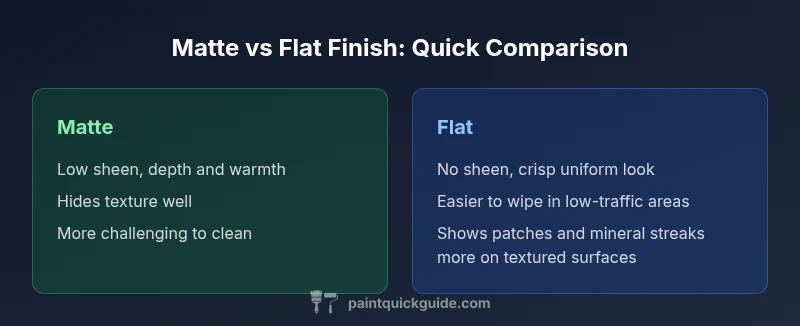
| Feature | Matte finish | Flat finish |
|---|---|---|
| Sheen and appearance | Low sheen, warm depth | No sheen, uniform look |
| Imperfection hiding | Excellent on textured walls | Good on smooth walls, may show some flaws |
| Cleaning and maintenance | Prone to showing stains; needs gentle cleaning | Easier to wipe but can show marks with heavy scrubbing |
| Touch-ups and repairs | Blends well when patched; consistent look | Easy to recoat without sheen mismatch |
| Best uses | Living rooms, bedrooms, feature walls | Ceilings, modern minimal spaces |
| Availability/cost | Widely available; price similar | Widely available; price similar |
Upsides
- Hides texture and imperfections well
- Rich, warm color depth on walls
- Wide availability and color choices
- Ideal for low-gloss aesthetics
What's Bad
- Can be harder to clean and stain more visibly
- Matte can show patches if over-applied
- Maintenance requires gentle cleaning to avoid sheen loss
- Not ideal for high-traffic areas without care
Match finish to space, not just style
Matte wins for rooms where texture and warmth matter, hiding imperfections. Flat wins where you want a crisp, glare-free ceiling or modern, minimalist spaces. Use swatches in real lighting to confirm your choice.
Your Questions Answered
What is the practical difference between matte and flat finishes?
Matte and flat finishes share a low-sheen look, but matte offers more depth and pigment diffusion while flat emphasizes a completely non-reflective surface. The choice affects hiding power, texture perception, and cleaning requirements.
Matte gives depth and warmth; flat is a glare-free, even look. Both are low-sheen choices, but the feel and maintenance differ.
Is matte easier to clean than flat?
In practice, matte finishes can be more challenging to clean because they show stains and wear more readily. Flat finishes are generally easier to wipe, but they can still show marks if scrubbed hard. Use mild cleaners and test first.
Matte can be trickier to clean; flat is a bit more forgiving, but both benefit from gentle cleaning methods.
Can you use matte on ceilings?
Yes, matte is commonly used on ceilings to minimize glare. For ceilings, ensure the surface is smooth and apply with a roller designed for flat or matte surfaces. Test patches to verify finish uniformity.
Yes, matte works well on ceilings when you want a soft, non-reflective look.
What finishes hide wall imperfections best?
Matte finishes generally hide small texture and patches better than glossier options, especially on textured walls. Flat can also hide imperfections on smooth surfaces but may not soften texture as effectively as matte.
Matte tends to hide texture more, while flat gives a smooth, uniform look.
Are there common mistakes when choosing matte vs flat?
Common mistakes include choosing based on price alone, neglecting cleaning needs, and not testing swatches in real lighting. Always check how the finish looks in the space before committing to a full coat.
Avoid deciding purely on price and test swatches in actual room lighting.
Quick Summary
- Test swatches in real lighting before committing
- Choose matte for texture-rich, low-glare spaces
- Choose flat for ceilings and crisp, modern looks
- Balance aesthetics with cleaning needs and durability