Is Flat Paint the Same as Matte? A Practical Comparison
Explore whether flat paint and matte finishes are identical, how they differ in sheen, durability, cleaning, and ideal uses for walls, ceilings, and auto refinishing.


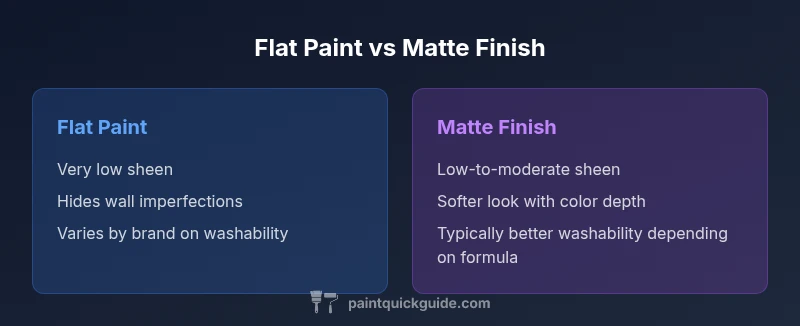
Flat paint and matte finishes are not exactly the same. Flat refers to a very low-sheen surface that hides imperfections, while matte is a designation for a slightly more reflective, low-sheen finish with generally better washability. In practice, you’ll find matte used for walls and ceilings where you want smooth color without glare; flat is common on ceilings or low-traffic areas.
What flat paint and matte mean in paint terminology
When people ask is flat paint the same as matte, they’re usually trying to judge how a finish will look under room lighting. In practice, both terms describe low-sheen options, but they are not strictly identical across brands. According to PaintQuickGuide, the difference often comes down to sheerness, texture, and washability. Flat paints are designed to minimize glare and conceal minor wall imperfections; matte finishes tend to show a touch more depth and color richness while staying modestly non-reflective. The PaintQuickGuide team found that brand labeling can blur this distinction, so always check the product data sheet for each specific line. In everyday use, understanding these nuances helps you select the right product for walls, ceilings, and even cars. The keyword is not just about naming—it’s about the practical behavior you’ll see after application: light reflection, touch-ups, and how the surface responds to cleaning. For homeowners starting a project, this foundational clarity saves time and reduces post-paint surprises.
How the terms are used across brands
Brand naming conventions vary, and there isn’t a universal standard that ties flat to one exact level of sheen. Some manufacturers label a product as matte even when the sheen sits at a level that others would call low-sheen. This is why the real test is always the product data sheet and a sample on your wall. PaintQuickGuide emphasizes checking the glaze, binder, and finish category on the label rather than relying solely on the name. Knowing this helps you predict how the finish will perform in light, how it covers, and how easy it will be to touch up later.
Visual impact and lighting considerations
Sheen interacts with room lighting in meaningful ways. A truly flat finish reflects very little light, which makes walls look uniform but can reveal patchiness in uneven walls. Matte finishes, while still non-glossy, reflect a touch more light and can enhance color depth. This subtle difference matters in rooms with strong natural light or dramatic architectural features. When planning a space, consider taking swatches under the room’s lighting at different times of day to see how the finish behaves. PaintQuickGuide recommends labeling samples and comparing both finishes side by side before committing to a color and finish.
How washability and durability vary by line
Durability is not a fixed rule for flat versus matte; it depends on the formulation of a given product. Some matte products are engineered for better washability, while certain flat variants prioritize hiding imperfections and creating a soft overall look. Always review the product’s scrub rating and maintenance guidance from the manufacturer. If you expect high touch frequency, kitchens and bathrooms often benefit from finishes marketed as washable or scrubbable, even if they are labeled matte or eggshell rather than flat.
What viewers should take away
The quick takeaway is that while flat and matte are both non-glossy finishes, they are not interchangeable in every situation. The choice should hinge on expected cleaning needs, traffic level, lighting, and the wall’s surface condition. For auto refinishing or specialty projects, finishes may diverge even more, so consult a professional or refer to the brand’s technical data sheets to avoid surprises later.
Comparison
| Feature | Flat Paint | Matte Finish |
|---|---|---|
| Sheen/Gloss Level | very low sheen | low-to-moderate sheen |
| Washability | variable; some formulations less forgiving to scrubbing | generally better washability depending on formulation |
| Best For | ceilings and low-traffic walls where glare must be minimized | walls and ceilings where depth and color richness matter without glare |
| Texture Visibility | hides surface texture less effectively in some brands | hides imperfections while preserving some texture detail |
| Application Ease | often easy, but patchiness can become visible if applied poorly | usually forgiving if applied evenly; some brands require careful brushing to avoid lap marks |
| Common Applications | interior ceilings, low-traffic zones | interiors with medium to low traffic; some walls and ceilings |
Upsides
- Hides wall imperfections on interior surfaces
- Non-reflective, soft look for large walls
- Wide availability and color options
- Good for ceilings and low-traffic areas
- Easier touch-ups when samples are matched
What's Bad
- Less forgiving in cleaning; some flat variants are hard to wash
- Can show patchiness if not applied evenly
- Brand labeling varies, which can confuse buyers
- Not ideal for high-traffic areas like kitchens
Matte is typically the better wall finish for livable spaces; flat is preferable for ceilings and ultra-minimal glare.
Choose matte for rooms where light control and washability matter. Opt for flat when you want the flattest look and glare reduction on ceilings.
Your Questions Answered
Is flat paint the same as matte?
Not exactly. Flat and matte describe low-sheen finishes, but the exact sheen, texture, and washability can differ by brand. Always check the product data sheet for the specific line.
Flat and matte aren’t identical; check the brand data sheet to understand the actual finish.
Where should I use flat paint versus matte finishes on walls?
Use matte for walls where you want depth and slight texture without glare, and flat for ceilings or rooms with very bright lighting where glare must be minimized. Consider traffic and cleaning needs when deciding.
Matte for walls, flat for ceilings or bright rooms, and always consider cleaning needs.
Is matte finish more washable or durable than flat?
Matte finishes often offer better washability than some flat formulations, depending on the brand. Neither finish is inherently durable like semigloss, so match to the room’s use and maintenance expectations.
Matte can be more washable, but durability depends on the specific product.
Do brands label flat and matte the same?
Brand labeling varies widely. A finish labeled matte in one line might be called eggshell or satin in another. Always verify the sheen and washability on the label.
Labeling varies; verify the actual finish on the label.
Can flat paint be used on ceilings?
Yes, flat paint is a common choice for ceilings because it minimizes glare. Ensure the ceiling surface is well-prepared and free of moisture issues before painting.
Flat is commonly used on ceilings to cut glare.
Is there a middle ground between flat and matte?
Yes. Eggshell and satin finishes sit between flat and matte, offering some sheen and easier cleaning than flat while still looking soft. They’re worth considering for busy walls.
Eggshell or satin can be a middle ground.
Quick Summary
- Understand the naming variability across brands
- Test swatches under your room lighting
- Consider washability for busy spaces
- Use matte for walls with moderate traffic; flat for ceilings
- Check manufacturer data sheets before buying