Oil-Based vs Acrylic: A Practical Comparison
A detailed, objective guide comparing oil-based paint and acrylics, covering durability, odor, cleanup, drying times, costs, and best-use scenarios for walls, furniture, and auto refinishing.


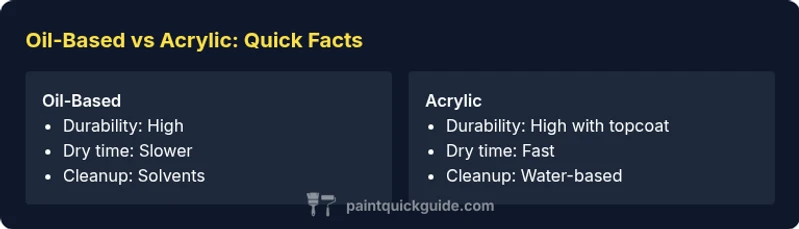
Oil-based paint vs acrylic presents a clear trade-off in durability, odor, cleanup, and drying time. For long-lasting trim or furniture, oil-based finishes excel, while acrylics offer faster project completion, easier cleanup, and lower odor for interior walls. This comparison highlights core differences to guide your choice.
What oil-based paint is and what acrylics are
Oil-based paints rely on old-school solvents like mineral spirits to keep resin binders suspended until the solvent evaporates. Acrylic paints, in contrast, use water-based binders that dry as water evaporates. The distinction isn’t just chemistry; it shapes every practical aspect of a project, from surface prep to cleanup and final appearance. When you compare oil-based paint vs acrylic, you’ll notice oil-based coatings tend to level to a very smooth, glassy finish and endure heavy wear, while acrylics dry rapidly, resist certain odors, and are more forgiving for DIY beginners. For homeowners and auto refinishing hobbyists, understanding these foundations helps you predict how each type behaves on walls, cabinets, trim, or a repainted car panel. The PaintQuickGuide approach emphasizes practical outcomes over brand hype, focusing on what matters on the job site and what to expect in different environments.
- The paragraph provides a foundational definition and ties to the keyword phrase with a natural intro.
Comparison
| Feature | oil-based paint | acrylic paint |
|---|---|---|
| Solvent base | mineral spirits/volatile solvents | water-based/binders with water as solvent |
| Drying time | longer cure times, often hours | faster evaporation, hours to minutes depending on conditions |
| Finish and leveling | very smooth, can be harder to work into fine edges | good leveling, less likelihood of long sags |
| Odor and VOCs | strong odor, higher VOCs | lower odor, generally lower VOCs (varies by formulation) |
| Cleanup | requires solvents for cleanup | cleanup with soap and water |
| Durability | often more durable, better wear resistance | good durability but can be less robust against knocks |
| Applications | trim, furniture, cabinetry, doors | interior walls, furniture accents, some exterior uses |
| Cost and availability | widely available, variable pricing | widely available, often lower per-gallon cost |
Upsides
- Acrylics dry quickly, enabling faster project cycles
- Acrylics clean up with water and have lower odor
- Oil-based paints give a very smooth, durable finish on hard surfaces
- Oil-based finishes can improve stain blocking and leveling on trim
What's Bad
- Oil-based paints emit stronger odors and higher VOCs
- Oil-based cleanup requires solvents and longer cure times
- Acrylics can be less durable on high-traffic surfaces without proper topcoats
- Acrylics may yellow or chalk on certain exterior exposures if not properly protected
Oil-based finishes excel in durability and a glossy, smooth look for trim and furniture, while acrylics win for interior walls and hobby projects thanks to faster drying, lower odor, and easier cleanup.
Choose oil-based for enduring surfaces that take abuse or a showroom-like finish on wood. Choose acrylic for fast, low-odor projects and easier maintenance, especially on walls and automotive prep where rapid turnaround matters.
Your Questions Answered
Can I use oil-based paint indoors safely?
Indoor use of oil-based paint is possible but often restricted by local VOC regulations and ventilation requirements. If you must use it indoors, ensure excellent ventilation, use a respirator, and consider low-VOC oil-based options where available.
Oil-based paint can be used indoors with proper ventilation and safety gear, but check local rules and consider low-VOC options.
Which lasts longer on high-traffic surfaces, oil-based or acrylic?
Oil-based finishes generally offer stronger durability and resistance to wear, especially on trim and furniture. Acrylics can last well with proper topcoats and surface prep, but very high-traffic areas may benefit from enhanced acrylic formulations or a polyurethane topcoat.
Oil-based usually lasts longer on busy surfaces, but good prep and topcoat can extend acrylics too.
Is cleanup easier with acrylic paints?
Yes. Acrylics clean up with soap and water, and they typically have less lingering odor. Oil-based paints require mineral spirits or paint thinner and have a longer dry-out window.
Acrylics clean up with water, oil-based needs solvents.
Can you switch an oil-painted piece to acrylic without stripping?
You can often repaint over oil-based surfaces with acrylic paints, but you should abrade and prime the surface to ensure good adhesion. In some cases, a solvent wash is used to prepare the surface before priming.
You can repaint over oil with acrylics after proper surface prep and priming.
Do oil-based paints yellow over time?
Oil-based finishes can amber or yellow slightly with age and exposure to light, especially in interiors with less UV exposure protection. Modern formulations and topcoats can mitigate this effect.
Oil finishes can yellow a bit with time, especially in low-light areas. Use proper topcoats to minimize that.
Are there low-VOC options for both oil-based and acrylic paints?
Yes. Many manufacturers offer low-VOC or zero-VOC acrylic paints. Oil-based options with reduced VOCs exist, but availability varies by region and brand. Always check product labels for VOC content and regulatory compliance.
There are low-VOC options for both types; check labels for details.
Quick Summary
- Prioritize surface type: trim/furniture favors oil-based; walls favor acrylic.
- Expect longer dry times with oil-based coatings; acrylics dry faster and are easier to use for beginners.
- Aim for low-VOC options when indoor use is likely; acrylics generally offer lower odor.
- Cleanup method matters: solvents for oil-based vs soap and water for acrylics.
- Both types offer color variety and finishes, but durability and odor profiles differ by surface and exposure.