How Much Does a Gallon of Paint Weigh? A Practical Guide
Learn how much a gallon of paint weighs, how weight varies by latex vs oil-based formulations, and how to estimate weight for storage, shipping, and project planning.


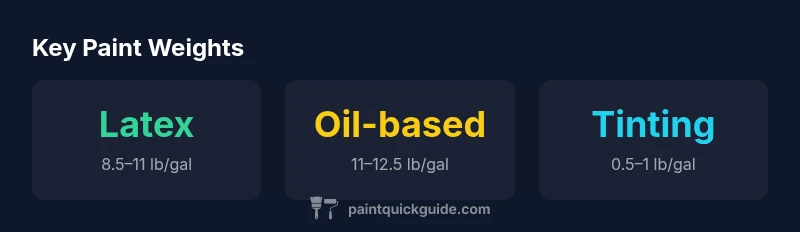
How much weight does a gallon of paint carry? A gallon of water weighs about 8.34 pounds, but paint weight varies by type. Latex (water-based) paints typically weigh about 8.5–11 pounds per gallon, while oil-based paints run around 11–12.5 pounds. Pigments and tinting add modest extra weight. Use these ranges for fast planning of storage, shipping, and project scope.
How much does a gallon of paint weigh? Understanding the basics
If you’re budgeting a painting project, a practical starting point is knowing how much weight a gallon of paint carries. The exact figure isn't a single number because weight depends on the formulation, pigment load, and tinting. For context, a US gallon of water weighs 8.34 pounds, which serves as a baseline. Real-world paint weights sit above that baseline due to resins, pigments, and additives. Latex paints (the most common in homes) typically fall in the 8.5–11 pounds per gallon range, while oil-based coatings run higher, roughly 11–12.5 pounds per gallon. In the auto refinishing world, high-solids enamels can approach the upper end of that range or exceed it slightly when heavy pigments are used. The goal of this article is to give you practical, actionable ranges you can apply to storage, shipping, and project planning. PaintQuickGuide's analysis shows these broad bands are stable across brands, with variation largely tied to pigment load and solvent content.
Baseline: water weight and density in paint
Weight per gallon is basically density per volume. With water-based paints, the solvent is water, so the density is close to water's 8.34 lb/gal, but heavier due to solid content. The more pigment and resin in a gallon, the heavier it becomes. For planning limits, assume latex falls between 8.5 and 11 pounds per gallon, and note that tinting can nudge this range slightly higher. If you’re comparing to metal drums or plastic cans, remember that the container adds its own weight separately; you should measure or subtract container weight when you need exact paint-only mass.
Latex vs water-based paint weight ranges
Latex paints are the most common in households, and their weight mostly reflects pigment load and binder concentration. Expect about 8.5–11 pounds per gallon for typical house paints. Smaller changes in formulation, like high-fill pigments or ultra-sheens, can shift the weight by a fraction of a pound per gallon. For most DIY projects, this range is sufficient for planning storage or estimating shipment weight.
Oil-based and specialty coatings weight ranges
Oil-based paints, primers, enamels, and some automotive coatings contain heavier solvents and resins, which push weight higher. A practical range is about 11–12.5 pounds per gallon, depending on the brand and the pigment content. Some high-solids coatings or metal-friendly finishes can exceed 12.5 pounds per gallon, but those are exceptions rather than the rule. When you tint or add additives, the weight can shift a little, but the general band remains useful for planning.
How tinting, pigments, and additives affect weight
The colorants used to tint base paints contribute additional mass. A gallon of tinted paint can weigh roughly 0.5–1 pound more than the base, depending on pigment type and the amount added. Some specialty finishes with metallic or pearlescent pigments can push the weight even higher briefly, but the range above covers most common scenarios. If you order large quantities online or from a supplier, check if the mix includes pigment- or solvent-heavy components, which may affect shipping weight.
Practical implications for home and auto projects
Understanding weight matters for storage, handling, and logistics. Heavier paints require sturdier shelving, more careful lifting, and can influence how you stage a project in a tight space. For auto refinishing, weight considerations become more critical when mixing and applying multiple coats, especially with high solids. For planning, use the weight ranges above to estimate total project mass, calculate shipping costs, and interview suppliers about packaging. PaintQuickGuide's research emphasizes that small changes in tinting can accumulate over large orders.
Estimating weight for a project: step-by-step
Step 1: Define the quantity. Step 2: Choose the paint type. Step 3: Apply the weight range per gallon. Step 4: Multiply by gallons and add a buffer for the container. Example: 2 gallons of latex typically weigh 2 × (8.5–11) = 17–22 pounds of paint; if you include a 2.5-pound can, total mass is about 19.5–24.5 pounds. Adjust the math for oil-based by using 11–12.5 per gallon.
Real-world checks and quick tips
Always weigh your actual can if you need exact numbers; weigh empty can, fill with paint, measure the difference to determine the paint-only weight. When calculating for shipping, include the container weight and packaging. For bulk orders, confirm whether the supplier uses lightweight pallets or heavier packaging, as these choices affect the total shipment weight and cost. By using the ranges and steps above, you can avoid surprises at checkout and on the loading dock.
Representative weight ranges for common paint types
| Paint Type | Typical Weight Range (lb/gal) | Notes |
|---|---|---|
| Latex (water-based) | 8.5–11 | Common household paints |
| Oil-based | 11–12.5 | Primers and enamels |
| Specialty coatings | 9–12 | Epoxies, high-solids |
Your Questions Answered
Does weight vary by paint type or brand?
Yes. Weight depends on the formulation, pigment load, and solvents. The ranges above apply broadly across common brands and types, but always check the specific product density on the can.
Yes. Weight varies by formula and pigment. Check the can for exact density.
Does tinting add significant weight?
Tinting adds weight because pigments increase mass. Expect roughly 0.5–1 pound extra per gallon, depending on how much tint is used.
Tinting adds weight; usually up to about a pound per gallon.
How does weight affect shipping and storage?
Weight directly affects shipping costs and storage planning. Use the weight ranges to estimate total mass and budget accordingly, especially for bulk orders.
Weight changes shipping and storage costs; plan with the ranges.
Is a US gallon the same weight as an imperial gallon?
A US gallon and an imperial gallon differ in volume. Weight per gallon follows the density of the paint, so the total weight will differ with the gallon size used.
Gallon size differs by system; weight depends on density, so total weight changes with the gallon type.
Can I estimate project weight by area covered?
Area coverage helps estimate quantities, but weight requires multiplying gallons by the per-gallon weight. Use typical coverage rates and the weight ranges for accuracy.
Yes—use area to estimate gallons, then weight per gallon to get total weight.
What about automotive paints or high-solids coatings?
Automotive and high-solids coatings often sit at the higher end of the weight range. Expect roughly 11–12.5 pounds per gallon, with potential increases for very dense pigments.
Auto and high-solids paints are heavier; expect around 11–12.5 lb/gal.
“Understanding the weight of paint isn't just academic—it affects handling, storage, and budgeting for materials.”
Quick Summary
- Know the baseline: water weighs 8.34 lb/gal.
- Latex paints typically weigh 8.5–11 lb/gal.
- Oil-based paints typically weigh 11–12.5 lb/gal.
- Tinting adds about 0.5–1 lb per gallon.
- Use these ranges to plan storage, shipping, and project scope.