How Much Do 5 Gallons of Paint Weigh? A Practical Guide
Discover the weight of five gallons of paint, including latex and oil-based ranges, with practical tips for safe lifting, storage, and transport safely.


Five gallons of paint typically weigh about 45 to 65 pounds, depending on the type. Latex (water-based) paints are usually 9–12 pounds per gallon, while oil-based finishes run about 11–13 pounds per gallon. Multiply by five to estimate the total weight for a standard five-gallon container.
Why Weight Matters for Painting Projects
Understanding weight matters for planning storage, transport, and safety. If you wonder how much does 5 gallons of paint weigh, the answer depends on the paint type and the container, but having a reliable estimate helps reduce spills and injuries. According to PaintQuickGuide, weight is a blend of the liquid’s density and the can or bucket it sits in. For homeowners and DIYers, a sensible approach is to estimate weight per gallon and scale up to your project size, then add a safety margin for loading equipment. This section lays the groundwork, explains common ranges, and provides practical checks so you’re never surprised when you move a batch of paint between rooms or onto a workbench.
Are you curious about the practical steps to estimate weight for a DIY project? In this guide, we outline a straightforward method you can apply with common consumer paints and 5-gallon containers. The approach emphasizes understanding the type (latex vs oil-based), checking the can label, and using conservative estimates to avoid overloading carts or storage shelves. PaintQuickGuide’s method is designed for homeowners and DIYers who want predictable, safe handling without needing specialized equipment.
How Paint Type Affects Weight
Paint type is the primary determinant of weight. Water-based latex paints tend to be lighter per gallon than oil-based finishes because of pigment systems and resin content. The density of the liquid portion plus the container contributes to the total mass you’ll carry or store. In real-world projects, the choice between latex and oil-based not only affects finish quality and durability but also the total weight you must manage during transport. For a typical home project, your weight planning should start with the per-gallon figure and then adjust for the number of gallons you’re moving. This practical awareness helps prevent overloading carts or shelves and supports safer handling across rooms and stairwells.
Latex vs Oil-Based: Per-Gallon Weight
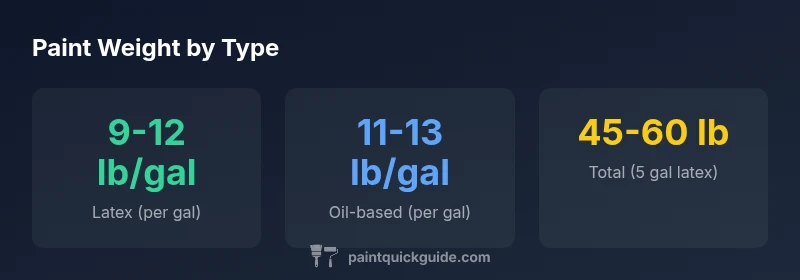
Latex (water-based) paints generally weigh about 9–12 pounds per gallon, while oil-based finishes sit around 11–13 pounds per gallon. These ranges reflect common pigment loads, resins, and additives used by manufacturers. When you multiply by five gallons, you get latex totals of about 45–60 pounds and oil-based totals around 55–65 pounds. Remember that exact figures vary by brand and formulation, so always check the label for the precise weight per gallon. These numbers provide a dependable framework for planning moves, storage, and estimates for project budgeting.
Calculating the Total Weight for a 5-Gallon Pail
To estimate the total weight for a 5-gallon container, multiply the per-gallon weight by five. For latex, that yields roughly 45–60 pounds; for oil-based finishes, roughly 55–65 pounds. If you need a more exact figure, factor in the container’s tare weight, which can add a few pounds depending on material (plastic vs metal) and design. A practical approach is to use the mid-point of the range for quick planning and then add a safety margin if you’ll be lifting or transporting without assistance. This section translates per-gallon figures into a usable total you can carry through doorways and into rooms.
Factors that Change Weight in Practice
Several real-world factors can nudge the expected weight. Temperature and humidity can slightly alter density, though the impact on total weight is usually minor for typical indoor environments. The pigment load and resin content determine the liquid’s mass, so two brands of the same paint type can differ by a pound or two per gallon. Age and viscosity changes can also affect how the paint settles in a container, potentially altering weight distribution within the can. When planning a large refresh, consider these nuances and verify weight from the product label for the most reliable figure.
Transport, Lifting, and Storage: Real-World Scenarios
Safe handling starts with a plan. For five-gallon containers, use a sturdy dolly or hand truck, keep cans upright, and avoid stacking on uneven surfaces. If you’re moving multiple cans, group them to balance weight and prevent tipping. During storage, place cans on level shelving or pallets and ensure doors or cabinets can accommodate the full height. Clear labeling helps prevent accidental mixing or miscounting of gallons. By thinking through the weight implications ahead of time, you reduce trips, protect floors, and minimize the risk of back strain.
Room-By-Room Example: A Small Kitchen
Imagine refreshing a small kitchen with two 5-gallon cans of latex paint. The total weight of the paint alone would be about 90–120 pounds (45–60 pounds per can). Add can weight and lids, and you’re approaching closer to 100–130 pounds in total. This scenario emphasizes the importance of planning path clearance, door widths, and lift assistance. Break the job into manageable steps: move one can at a time, prepare a stable staging area, and ensure your cart or helper is ready before you begin. These planning steps help avoid last-minute scrambles and keep project momentum steady.
Common Misconceptions About Paint Weight
A common misconception is that all five-gallon cans weigh the same regardless of content. In reality, weight varies with paint type and per-gallon mass. Some homeowners assume weight is fixed because a gallon is a gallon; however, formulation differences change the total mass. Another myth is that the weight only matters for transport; weight also affects storage space planning and tool selection. By debunking these myths, you’ll approach painting projects with clearer expectations and safer handling practices.
Quick Estimation Steps You Can Use Today
- Identify the paint type on the can label (latex vs oil-based). 2) Note the weight per gallon listed on the label. 3) Multiply by the number of gallons in your order (e.g., five). 4) Add an estimated tare weight for the container if you’ll be lifting the full bucket. 5) Round up to the nearest practical increment to account for lids and tools. This simple method gives you a reliable sense of the total handling weight before you begin a project.
Weight estimates for common paint types in a 5-gallon container
| Paint Type | Weight per Gallon (lb) | Five-Gallon Total (lb) |
|---|---|---|
| Latex (water-based) | 9-12 | 45-60 |
| Oil-based | 11-13 | 55-65 |
Your Questions Answered
What is the weight of a five-gallon bucket of paint?
The weight depends on paint type. Latex typically weighs about 45–60 pounds for five gallons, while oil-based finishes run about 55–65 pounds. Add the container weight if you’re lifting a bucket.
Five gallons weigh roughly forty-five to sixty-five pounds depending on the paint type.
Does paint weight change with temperature?
Temperature affects density very slightly, which can shift weight minutely. For practical purposes, weight changes are negligible, so use standard ranges unless you’re in extreme conditions.
Temperature changes density a little, but weight stays essentially the same for daily handling.
How much does a primer weigh in a five-gallon can?
Primers follow similar ranges by type. Expect about 9–13 pounds per gallon for most primers, translating to roughly 45–65 pounds for five gallons.
Primers weigh like regular paint per gallon, roughly forty-five to sixty-five pounds for five gallons.
Why does weight matter for storage and transport?
Weight determines how you move cans safely, what equipment you need (dolly, cart), and where you store them to prevent tipping or overloading shelves.
Weight matters to move safely and store without tipping or overloading shelves.
Are all five-gallon cans the same weight?
Not exactly. Weight varies with paint type and can material. Expect latex and oil-based weights; container weight can add a few pounds.
Not all five-gallon cans weigh the same; it depends on paint type and the can.
“Knowing weight helps you plan safe moves and storage, especially when loading or unloading from carts.”
Quick Summary
- Estimate total weight by paint type: latex or oil-based.
- Latex: 9–12 lb/gal; 5 gal = 45–60 lb.
- Oil-based: 11–13 lb/gal; 5 gal = 55–65 lb.
- Account for can weight when handling to plan safe movement.