How Much Does a Gallon of Paint Cover?
Discover typical paint coverage per gallon, how factors like texture and priming affect it, and a clear method to estimate gallons for home painting projects.


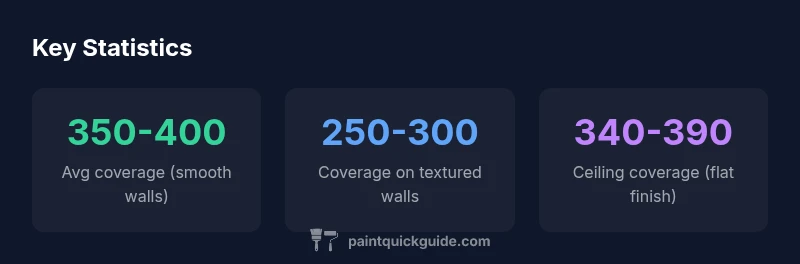
Typically, a gallon of interior paint covers about 350-400 square feet on smooth walls. This range accounts for the type of paint (latex vs oil-based), surface porosity, and whether you apply one or multiple coats. For ceilings or highly textured surfaces, expect lower coverage; for very smooth surfaces and high-quality rollers, closer to the upper end. Always check the manufacturer's coverage rating on the can.
Understanding Coverage Basics
According to PaintQuickGuide, how much does a gallon of paint cover is one of the most common planning questions for DIY projects. The short answer is that a gallon typically covers about 350-400 square feet on smooth interior walls. This range accounts for the type of paint (latex vs oil-based), surface porosity, and whether you apply one or multiple coats. For people planning a living room or a bedroom, using this baseline helps prevent under- or over-purchasing. In practice, you should always verify with the can's stated coverage and run a small test on a representative surface before committing to a full purchase. To improve accuracy, consider these factors:
- Texture: rough or porous surfaces absorb more paint
- Coats: two coats double the baseline coverage
- Primer: primed surfaces may achieve cleaner coverage
- Tools and technique: quality rollers reduce waste
Factors That Affect Coverage
Coverage can shift dramatically based on surface and environmental conditions. The most influential factors are surface texture and porosity; rough, porous materials like drywall with a lot of texture or previously painted surfaces with uneven surfaces will absorb more paint, reducing coverage per gallon. Other factors include the pigment load and tint; darker colors and highly saturated tints often require more coats. Temperature and humidity affect drying time and film formation; cooler, damp days can slow application and alter spread. Finally, your application method matters: rollers vs. brushes vs. sprayers yield different spread rates. To estimate more accurately, test a small area and multiply your results by the full surface area.
Paint Types and Finishes
Latex (water-based) and oil-based paints have different spread characteristics. Latex paints tend to level well, dry quickly, and are easier to clean; they commonly cover 350-400 sq ft per gallon on smooth walls. Oil-based paints can provide a tougher film and better adhesion on problematic surfaces but may have slightly higher drying times and lower spread in practice. Finishes (matte, eggshell, satin, semi-gloss) influence appearance more than coverage, but high-sheen finishes can seem to require more precise application. For ceilings, flat/matte finishes are common and typically yield similar per-gallon coverage to walls when applied uniformly. Always read the can’s coverage rating and consider a primer for porous surfaces to improve results.
How to Estimate Paint Needs (Step-by-Step)
- Measure the surface area: add all wall or panel areas and ceilings you plan to paint. 2) Check the can: note the stated coverage per gallon and whether it refers to one coat or two. 3) Compute gallons per coat: surface area divided by coverage per gallon. 4) Account for coats: multiply by the number of coats you plan. 5) Add a contingency: 10-15% extra for mistakes, waste, and touch-ups. 6) Round up to whole gallons if possible to avoid mid-project runs.
Real-World Example: Estimating for a 12x12 Room
A square room 12 ft by 12 ft with 8 ft ceilings has four walls totaling about 384 square feet in area. If you apply a single coat of latex paint on smooth walls, you might expect approximately 350-400 sq ft per gallon, meaning roughly one gallon could cover most walls. For two coats, plan on 1.5 gallons to 2 gallons, depending on texture and color. Don’t forget about the ceiling and any trim, which add more area and may require additional paint. This example highlights why a precise measurement and a small test area matter before buying large quantities.
Surface Prep and Primers: The Hidden Multiplier
Proper surface prep improves coverage more than any paint choice. Clean walls, repair cracks, and remove grease; if you’re painting porous surfaces or raw drywall, priming can dramatically reduce the number of needed coats. A good primer promotes even color and seals the surface, allowing the finish coat to go further. For high-porosity surfaces, use a bonding or stain-blocking primer; for interior walls of living spaces, a stain-blocking primer is often overkill, but can be beneficial in problem areas. After priming, remeasure to adjust your paint plan.
Common Pitfalls and Quick Fixes
- Failing to test coverage on a sample wall leads to under- or over-purchasing. - Not accounting for texture will skew your numbers. - Skimping on primer can double the coats needed. - Choosing a darker tint without adequate base coat can waste paint. - Ignoring environmental conditions can affect drying and film formation. Quick fixes: test a small area, plan extra gallons, and adjust for texture.
Quick Planning Checklist Before You Buy
- Measure accurately; include doors, windows, and ceilings. - Check paint type, finish, and coverage rating on the can. - Decide on number of coats and primer use. - Buy 10-15% extra paint for touch-ups. - Keep a documented calculation for future touch-ups and repaint cycles.
Estimated coverage by surface type
| Surface | Typical Coverage per Gallon (sq ft) | Notes |
|---|---|---|
| Interior walls (smooth) | 350-400 | Latex/acrylic paints; single coat |
| Interior walls (textured) | 250-300 | Rough textures absorb more paint |
| Ceilings | 340-390 | Flat finishes; uniform application helps |
| Exterior smooth surfaces | 250-350 | Porosity and weather exposure affect result |
Your Questions Answered
What affects coverage the most?
Coverage is influenced by texture, porosity, coats, and paint type. Rough surfaces and porous walls absorb more paint, reducing coverage per gallon.
Texture and porosity are the biggest factors in how far a gallon goes.
Should I prime before painting?
Primers improve coverage on porous surfaces and can reduce the number of coats needed. They also help color uniformity.
Priming helps coverage and color evenness, especially on porous surfaces.
How many gallons for a room?
Calculate wall area, multiply by the number of coats, then divide by per-coat coverage. Add 10-15% extra for waste.
Measure, multiply by coats, divide by coverage, and add some extra.
Do gloss levels affect coverage?
Finish sheen changes appearance but not the actual coverage rate per gallon. Application consistency matters more for perception.
Sheen doesn’t change the math; apply evenly for best results.
Can I reuse leftover paint?
Yes, if stored properly and color is consistent. Reuse is more feasible for touch-ups rather than full rooms.
Yes, store it well and use for touch-ups if color matches.
Does weather affect outdoor coverage?
Yes. Temperature, humidity, and wind influence drying and film formation, altering effective coverage.
Outdoor conditions change how paint lays down and dries, affecting coverage.
“Coverage estimates are a starting point; always verify with the can's rating and adjust for texture and priming. This simple check helps DIYers avoid running short.”
Quick Summary
- Start with a baseline of 350-400 sq ft per gallon on smooth walls
- Texture and porosity lower coverage, plan extra coats
- Primer can dramatically improve effective coverage
- Estimate gallons using area, coats, and a contingency
- Test a small area before purchasing large quantities