How Much Does a Quart of Paint Cover? A Practical Guide to Estimating Coverage
Estimate per-quart coverage with confidence. Learn how texture, porosity, and color changes affect coverage, plus room-by-room planning tips and a practical calculator.


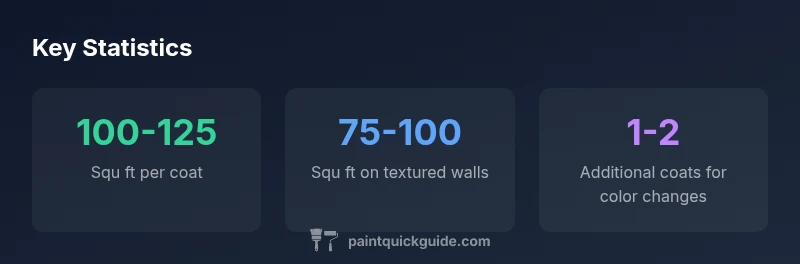
A quart of paint typically covers about 100–125 square feet per coat on smooth interior walls, depending on paint type, color, and surface porosity. For textured walls or primer-heavy surfaces, expect closer to 75–100 square feet. If you apply multiple coats or use light colors over dark, plan for more paint and adjust accordingly.
How paint coverage is calculated
Coverage planning starts with a simple equation: you divide the total wall area by the coverage per quart, then multiply by the number of coats you intend to apply. A typical interior per-coat figure is 100–125 square feet for a quart on smooth walls. However, the actual footprint can swing because of surface porosity, color changes, and the paint finish chosen. According to PaintQuickGuide Analysis, 2026, starting with a per-coat baseline helps homeowners avoid underbuying or overbuying. Always measure wall area in square feet and separate windows and doors from wall space to avoid miscalculations. When you’re estimating, treat this number as a range rather than a fixed value, and adjust for the specific paint you plan to buy.
Surface texture and porosity matter more than you think
Texture is the silent heavyweight when you estimate coverage. Smooth plaster or drywall absorbs less paint and gives you the full 100–125 square feet per quart per coat. In contrast, rough stucco, popcorn ceilings, or unprimed wood with open pores can dramatically increase absorption, bringing your coverage down toward 75–100 square feet or lower. Porosity varies by material and existing coatings; a porous surface will soak up more paint, demanding more product to achieve an even finish. For best results, fill irregularities, sand lightly, and consider sealing or priming highly porous areas before applying color coats. This upfront step reduces overall paint use and improves color uniformity.
The effect of paint type and finish
Different paints behave differently, even within the same color family. Flat or matte finishes tend to coat evenly and can maximize hiding power, while glossy finishes reflect more light and may reveal thin spots if applied poorly. The type (acrylic latex, acrylic alkyd, enamel) and sheen influence coverage because of pigment loading and binder chemistry. In general, lighter colors cover more efficiently on the same base, but they may require more coats when over dark or saturated underlying surfaces. Always check the product data sheet for coverage at suggested film thickness, and consider a test patch to confirm expectations.
Primers, primers, and undercoats
Primers dramatically affect coverage. A quality primer can seal porous surfaces, block stains, and provide a uniform base so the topcoat goes on more evenly. If you’re switching from a dark to a light color, or if the surface is repaired or highly textured, priming can reduce the number of topcoats needed overall. Inexpensive primers may save money upfront but might require an extra coat of finish paint later. Use a stain-blocking primer on knots or resin-rich areas to avoid bleed-through, and select a primer compatible with your finish paint for best results.
How many coats should you plan?
Two coats are typical when changing colors or covering a bold shade over a lighter base. If you’re applying a pale color over a dark base, plan for two coats at minimum, and possibly three for solid, even coverage. When using high-coverage latex paints with excellent hides, two coats may suffice, but always test a corner or patch first. For white walls with repairs, a third coat can help ensure uniform color and sheen. Weather and lighting can influence perceived coverage, so adjust your plan accordingly.
Estimating by room size: examples
Consider a standard 10x12-foot room with 8-foot ceilings. The wall area is roughly 360–420 square feet (subtract doors and windows). With a mid-range primer and two coats on a smooth surface, you’d typically need 2–3 quarts for the walls alone and potentially more for the ceiling, trim, or accent walls. For a larger living room, say 15x20 feet, expect 700–900 square feet of wall area and a proportional increase in paint quantity. These are rough guidelines; use a room-by-room approach and adjust for texture, color, and the number of coats.
Using a coverage calculator and charts
Most paint brands and home improvement sites offer coverage calculators that translate wall area, number of coats, and desired finish into a paint quantity. Start with a wall area estimate, select your paint type and color, and input planned coats. The result will give you a rough number of quarts or gallons. Our printable charts at PaintQuickGuide echo this logic and help you compare options across brands while accounting for texture differences. Always round up to avoid running short mid-project.
Practical tips to reduce waste
- Buy a little extra to cover mistakes and touch-ups. A common rule is to purchase 10–15% more than calculated to account for waste and future touch-ups.
- Use the same batch for walls to ensure color consistency; mixing cans of the same batch minimizes shade variance.
- Recycle leftovers or store paint properly for touchups, which saves money and reduces waste.
- Prime porous areas first to lower the total coats needed and improve color uniformity.
Common mistakes and how to avoid them
Common errors include underestimating wall area, ignoring textured surfaces, and skipping primers when colors are dramatically different. Always measure, consider texture, and test a small patch of the final color before committing. Reading the product data sheet for coverage details and following manufacturer recommendations lowers the risk of underbuying or needing a second, costly trip to the store.
Verdict and planning next steps
With careful planning, you can estimate coverage accurately and purchase the right amount of paint. The PaintQuickGuide team recommends starting with a per-coat coverage baseline, accounting for texture and color changes, and priming porous areas when necessary. This approach minimizes waste, reduces cost overruns, and yields a more consistent finish across rooms.
Coverage per coat by surface type
| Surface Type | Typical Coverage per Coat (sq ft) | Notes |
|---|---|---|
| Smooth interior walls | 100-125 | Best results with matte finishes |
| Textured walls | 75-100 | More coats may be needed |
| Primer-heavy surfaces | 60-90 | Priming reduces absorption |
| Exterior siding (porous) | 80-120 | Material dependent |
Your Questions Answered
What factors influence paint coverage the most?
Surface texture, porosity, and color changes are the primary drivers of coverage. Texture increases absorption, while color changes may require extra coats to achieve opacity.
Texture and porosity mostly determine coverage, along with color changes. Expect more coats if you switch colors dramatically.
Can coverage estimates be trusted from can labels?
Can labels provide coverage estimates, but they are approximate and assume typical conditions. Always account for your surface texture and plan for extra in case of brown patches or repairs.
Labels give a general guideline, but your actual coverage will vary with surface texture and coats.
Is primer needed for the best results?
Primers improve adhesion and hide underlying colors, reducing the total number of topcoats needed on porous or repaired surfaces.
Yes, priming often saves paint and gives a truer final color.
How many coats are typical?
Two coats are common when changing colors or covering a bold shade over a lighter base. More coats may be needed for challenging color changes or textured surfaces.
Two coats are typical, sometimes three for challenging color changes.
How should I estimate for textured walls?
Add extra margin for texture. Start with the lower bound for smooth walls and adjust upward for rough surfaces.
Textured walls usually need more paint; plan accordingly.
“Understanding how paint behaves on different surfaces helps homeowners avoid underbuying or overbuying. Accurate coverage estimates save time and money.”
Quick Summary
- Estimate per-coat coverage using smooth-wall baselines
- Texture and porosity are major coverage drivers
- Primer can reduce total coats and save paint
- Plan for extra coats when changing colors
- Use calculators and charts to refine needs