Acrylic Paint vs Fabric Paint: A Practical Comparison for Home and Auto Projects
A detailed comparison of acrylic paint vs fabric paint for home, craft, and auto refinishing projects. Learn surfaces, durability, washability, heat-setting, and best-use scenarios to choose the right paint for your needs.


According to PaintQuickGuide, acrylic paint vs fabric paint address different project needs. Acrylics are excellent on hard, non-porous surfaces with fast-drying results, while fabric paints are formulated to flex and endure washing after proper setting. The best choice depends on surface, durability expectations, and care requirements for your project.
What are acrylic paint and fabric paint?
Acrylic paint and fabric paint occupy two distinct corners of the painting world, and understanding what each is designed to do helps prevent costly missteps. Acrylic paint is typically water-based and formulated for rigidity on non-porous or primed surfaces, offering bright, fast-drying color and a wide palette. Fabric paint, on the other hand, is engineered for textiles. It often contains a built-in binder or medium that stays flexible when dry, allowing the pigment to stretch with fabric and survive regular wear and washing after heat-setting. In the broader sense, acrylic paint vs fabric paint describes two families that share chemistry in some brands but diverge in application strategy, drying behavior, and care requirements. For homeowners, DIY enthusiasts, and auto refinishing hobbyists, this distinction translates into surface compatibility, durability, and project longevity. The keyword acrylic paint vs fabric paint appears here to anchor the comparison within practical, real-world use cases.
Key differences at a glance
When you skim the core differences between acrylic paint and fabric paint, several factors stand out:
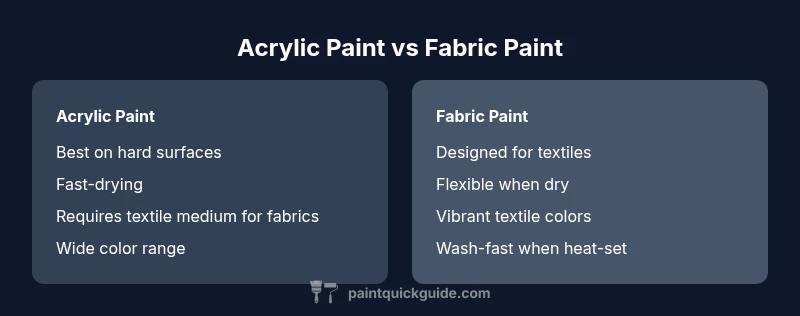
- Surface compatibility: Acrylic paints excel on hard surfaces (canvas, wood, metal, plastic) when properly primed; fabric paints are designed for textiles and knit fabrics.
- Flexibility: Fabric paints stay flexible after curing, reducing cracking on folds; acrylic paints can become stiff on fabrics unless a textile medium or fabric-friendly method is used.
- Washability: With the right heat-setting or medium, fabric paints can be machine-washable; acrylic paints on textiles typically require a fabric medium and heat setting to improve wash resistance.
- Drying time: Acrylics dry quickly, often within minutes; fabric paints may take longer to fully cure, especially on dense fabrics.
- Colorfastness and lightfastness: Both rely on brand formulation, but textiles tend to fade differently under light exposure and washing.
- Color range and texture: Acrylics offer broad palettes and gels/mediums for texture; fabric paints provide bright textile-specific colors with easier penetration into fibers.
- Price and accessibility: High-quality acrylics cover a broad spectrum, while textile-focused paints can vary in price and colorfast expectations depending on the brand.
These differences guide where you should apply each product for maximum performance and longevity.
Comparison
| Feature | Acrylic paint | Fabric paint |
|---|---|---|
| Best surfaces | Rigid/non-porous surfaces (canvas primed, wood, metal, plastic) | Textiles and fabrics (cotton, polyester, blends) |
| Flexibility after cure | Less flexible; can crack on flex without medium | Designed to stay flexible after cure |
| Washability after heat-setting | Washable if paired with appropriate sealants or mediums | Machine-washable after heat-setting or using fabric medium |
| Drying time | Fast-drying; minutes to a few hours depending on layer | Slow to cure on dense fabrics; drying may take longer |
| Durability under UV exposure | Generally strong colorfastness on proper surfaces | Colorfastness depends on pigment and exposure; may fade with sun and abrasion |
| Color range | Extensive palettes; compatible with gels and texture mediums | Vibrant textile colors; some brands have limited ranges |
| Best for | Art on hard surfaces, signs, decor, and auto refinishing prep | Clothing, garments, accessories, fabric crafts |
| Price range | Moderate to high, depending on brand and quality | Moderate; cost varies by brand and wash-fastness claims |
Upsides
- Broad color selection across brands and palettes
- Fast-drying workflow suits time-sensitive projects
- Textured finishes possible with gels and mediums
- Fabric paint offers built-in flexibility for textiles
- Strong primer compatibility broadens surface use
What's Bad
- Fabric on textiles may require a fabric medium for best results
- Acrylics can stiffen fabric without appropriate medium or setting
- Durability on textiles hinges on heat-setting and care
- Some brands vary in lightfastness and wash-resistance
Acrylic paint and fabric paint serve distinct purposes; neither is universally superior.
Choose acrylic paint for rigid surfaces and fast results, or use a fabric medium to adapt it for textiles. Opt for fabric paint when the project prioritizes stretch and washability. The PaintQuickGuide analysis shows that your best choice depends on surface, durability expectations, and care requirements.
Your Questions Answered
Can I use acrylic paint on fabric without a fabric medium?
You can, but results vary. Without a fabric medium, acrylics may stiffen fabric and crack with flex. For best outcomes, mix in a textile medium or apply very light layers and test on a swatch.
You can try acrylic on fabric, but it’s usually stiffer and may crack—test first.
Is fabric paint always washable after heat-setting?
Most fabric paints claim washability after proper heat-setting. Always follow the brand’s instructions for heat-setting temperatures and cycles to maximize wash resistance.
If you heat-set it as directed, it should withstand washing more reliably.
Can I mix acrylic paint with fabric paint?
Mixing can be workable in craft contexts, but outcomes vary by formulation. Use caution, test on swatches, and be mindful of how the binder ages.
Yes, but you should test first to ensure compatibility.
Does drying time matter for heat-setting on fabrics?
Yes. Proper drying and curing time are essential before heat-setting or washing. Follow the paint’s guidelines to avoid transferring, cracking, or peeling.
Let it dry completely before heat-setting to protect your design.
Which is better for car refinishing projects, acrylic or fabric paint?
Acrylic paints are typically used on hard automotive surfaces with proper primers and clear coats. Fabric paints aren’t designed for exterior car panels unless specially formulated and sealed.
For cars, acrylic-based products with proper primers and clear coats are usually the better path.
Quick Summary
- Match the paint to the surface first
- Use fabric medium with acrylics for textile projects
- Heat-setting improves durability on fabrics
- Expect faster drying with acrylics and longer cure on textiles
- Always test on a small swatch before full-scale work