Acrylic vs Fabric Paint: A Practical DIY Guide for Beginners
Compare acrylic paint with fabric paint for textiles and auto interiors. Learn when acrylics with fabric medium work, how to prep, and when to reach for purpose-built fabric paint. Practical steps, pros, cons, and decision tips.


Can you use acrylic paint instead of fabric paint? In many crafts, yes—if you add a fabric medium and heat-set according to instructions. Acrylics can deliver vivid color on textiles, but they require proper sealing to resist washing and may stay stiff. This quick comparison helps you judge when acrylics are a viable substitute.
Can you use acrylic paint instead of fabric paint?
The short answer is that can you use acrylic paint instead of fabric paint in many projects, but it isn’t a one-size-fits-all substitute. Acrylic paints are designed for rigid surfaces, while fabric paint is formulated to flex with fibers. When you plan to use acrylics on textiles, you typically mix in a fabric medium to improve adhesion and flexibility. The resulting paint layer can look vibrant and feel soft enough for decorative items, but durability under washing and wear will hinge on the medium, the type of fabric, and how you seal the surface. For decorative pillows, wall-hangings, or art on fabric that won’t be washed often, acrylic with fabric medium can be a practical option.
What are acrylic paints and fabric paints? Core differences
Acrylic paints are pigment suspensions bound by acrylic polymer emulsions. They dry quickly to a flexible film on many surfaces but can feel stiff on fabric unless softened by a medium. Fabric paints, by contrast, are typically acrylic-based paints formulated or augmented with binders specifically chosen for fabric. They’re designed to bond to fibers, remain flexible when dry, and resist typical laundering when fully cured. In essence, acrylics are versatile art supplies; fabric paints are textiles-specific, with properties tuned for long-wear on cloth.
Durability and washability: how they perform on fabric
Durability on fabric is the key trade-off. Acrylics with fabric medium can survive light handling and occasional washing when properly set, but they often require lower agitation and air drying to minimize cracking. Pure acrylic paint without a fabric medium tends to crack or peel as fabrics flex. Fabric paints usually offer superior wash-fastness straight from the tube or bottle, especially on cotton and blends, and their formulations are optimized for repeated washing and abrasion. Your fabric type and the intended use (garment, upholstery, or decorative piece) will largely determine which path yields better longevity.
The role of fabric medium and setting methods
A fabric medium acts as a binder that moderates the acrylic resin and enhances adhesion to fibers. It also helps keep the paint flexible after it dries. The ratio of acrylic to medium, plus heat-setting or air-drying, influences crack resistance and hand feel. Some mediums improve softness, reduce stiffness, and enhance color vibrancy. In auto-restoration or upholstery work, you may also consider sealants designed for durable, washable finishes. Always test on a scrap fabric sample before committing to a larger project.
Prep steps for fabric painting with acrylics
Preparing the fabric correctly improves outcomes significantly. Pre-wash and dry the fabric to remove finishes and sizing that can block adhesion. Tape or clip the fabric to a flat, clean surface. Use a light hand when applying acrylics; multiple thin coats often yield a smoother, more flexible finish than a single heavy layer. Allow each coat to dry fully before applying the next, and keep a damp cloth handy to clean brushes and spills. If you plan on washing the finished piece, plan a test wash on a scrap area.
Step-by-step: applying acrylic with fabric medium on cotton
- Pre-wash the cotton and let it dry completely. 2) Mix acrylic paint with a fabric medium according to the product instructions; start with a 1:1 ratio and adjust for coverage and feel. 3) Apply thin, even coats with a soft brush or foam applicator. 4) Allow each coat to dry thoroughly before adding another. 5) If you see brush marks, gently mist with water and brush outward to blend. 6) Cure the piece according to the medium’s guidance, usually with air-drying followed by heat-setting if recommended. 7) Finish with a fabric sealant or soft-finish spray to improve washability and hand feel.
On different fabric types: cotton, blends, synthetics
Cotton and cotton blends generally respond well to acrylics with fabric medium, delivering vivid color with reasonable flexibility after curing. Synthetics and blends may require different solvents or extra sealing to reduce stiffness or color bleed. Heavier fabrics, such as upholstery canvas, benefit from extra layers for opacity, while delicate fabrics like silk may require gentler approaches or professional textile paints designed for silk. Always start with a test swatch on the same fabric type to judge color fastness and texture.
Heat-setting, sealing, and finishing
Heat-setting is a common step to improve wash resistance for acrylic paint on fabric. The exact method depends on the medium and fabric; some systems require ironing on a parchment barrier, while others rely on an oven cure or a heat press. Sealing with a clear fabric satin or matte finish can further protect the paint from abrasion and washing, though it may subtly alter texture. Remember to verify temperature and time guidelines from the product you choose to avoid scorching or glazing.
Common failures and how to avoid them
Cracking often results from applying thick layers or in fabrics with heavy stretch. Peeling and stiffness occur when the fabric is not properly prepped or the medium ratio is off. Bleeding and color migration can happen on denser weaves or dark fabrics if you’re over-saturating the fibers. Prevent these issues by testing on swatches, using thin layers, and selecting a compatible fabric medium and sealant. If problems arise, recondition the surface with a fresh, compatible layer after cleaning and drying.
Decision framework: when to pick fabric paint or acrylic with medium
If the project involves frequent washing, high flex, and kid-friendly fabrics, fabric paint is usually the safer choice. For decorative textiles, art pieces, or projects requiring a broader color range and mixed-media techniques, acrylics with fabric medium offer flexibility and creative control. Consider the fabric type, the expected wear, the desired hand feel, and whether you’ll need to soften the finish with a fabric-friendly sealant. Always test first and follow the manufacturer’s instructions.
Project ideas and care tips for long-term results
Decorative throw pillows with graphic designs, painted tote bags, and wall-hangings on fabric can benefit from acrylic paints with fabric medium when care expectations are modest. For items that will be laundered, design around the washing cycle—avoid heavy gloss finishes that crack or peel and opt for softer hand finishes. Label the item with care instructions to help users avoid aggressive washing. Store finished pieces in a cool, dry place away from direct sunlight to minimize fading.
Authority sources
For more information on fabric painting and related techniques, consider these reputable sources:
- https://extension.umn.edu
- https://extension.illinois.edu
- https://www.harvard.edu
Comparison
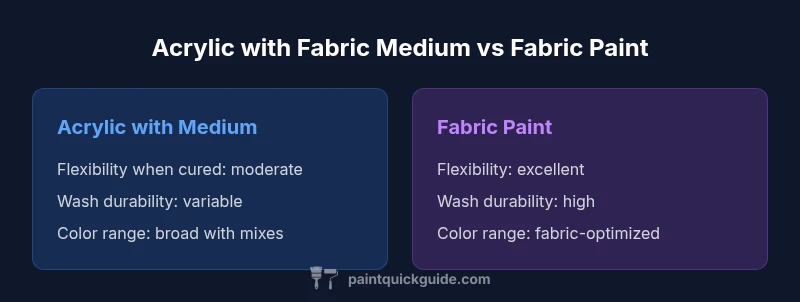
| Feature | Acrylic with medium on fabric | Dedicated fabric paint |
|---|---|---|
| Flexibility on fabric | Moderate when properly mixed | Excellent |
| Wash-fastness after curing | Variable; depends on medium and setup | High with correct setting |
| Color range | Broad palette with mediums | Fabric-optimized colors |
| Best for | Decorative art and non-washable items | Garments and washable textiles |
Upsides
- Versatile color options with broad palettes
- Can be mixed with fabric medium to improve flexibility
- Widely available and often cheaper than specialty fabrics
- Suitable for mixed-media textile projects
What's Bad
- May require multiple steps (mixing, sealing, heat-setting)
- Not as durable as dedicated fabric paint for frequent washing
- Can stiffen fabric if misused or over-applied
- Risks color bleeding on certain synthetic fabrics
Acrylic with fabric medium is a viable substitute for decorative textiles, especially when color variety and project flexibility matter.
Choose acrylic with medium for art on fabric that won’t be washed often. For garments and items that require frequent washing, fabric paint remains the safer, more durable choice.
Your Questions Answered
Is acrylic paint durable on fabric for clothing?
Acrylic paint can be durable on fabric when mixed with a fabric medium and heat-set correctly, but it is generally less reliable than dedicated fabric paint for frequent washing.
Acrylic paint can last on fabric if you use the right fabric medium and heat-set, but it’s usually not as durable as fabric paint for clothes.
Do I need a fabric medium or a sealer?
Yes. A fabric medium helps acrylic adhere and stay flexible on fibers, reducing stiffness. A sealer or fabric-safe topcoat can improve wash durability, but verify compatibility with your medium.
You’ll likely need a fabric medium and a compatible topcoat to boost wash durability.
Can acrylic paint survive washing?
It can survive washing if you use a proper fabric medium, follow heat-setting guidelines, and seal with a compatible finish. Test on a scrap fabric first.
With the right setup and curing, it can survive washing, but always test first.
Will acrylic paint crack on stretch fabrics?
Cracking is more likely on stretch fabrics if layers are thick or not properly bonded. Use light layers and a flexible medium to minimize cracking.
Stretch fabrics need light coats and a flexible medium to avoid cracking.
Is acrylic paint safe for kids’ fabric crafts?
Many acrylics are non-toxic once dry but check the product label. Use kid-friendly fabric mediums and avoid solvents. Supervise young crafters and follow care instructions.
Most acrylics are safe after they dry, but follow the product label and supervise kids.
Can I use acrylic paint for car interiors or auto fabrics?
Acrylics can be used for auto interiors with a compatible fabric medium and heat-setting, but automotive fabrics face harsher wear and cleaning conditions. Consider specialty auto fabrics or professional-grade products for durability.
You can in some cases, but auto fabrics need tougher, purpose-built products.
Quick Summary
- Consider fabric type and wash expectations before choosing paint
- A fabric medium is essential when using acrylic on textiles
- Heat-setting can boost wash durability but test first
- Fabric paint offers easier, more reliable durability for clothing
- Always test on a swatch before committing to a full project