Paint Sizes at Home Depot: A Practical Guide
Learn the standard paint sizes at Home Depot (quart, gallon, 5-gallon), how to estimate needs, compare costs, and minimize waste with practical planning tips for DIY painting projects.


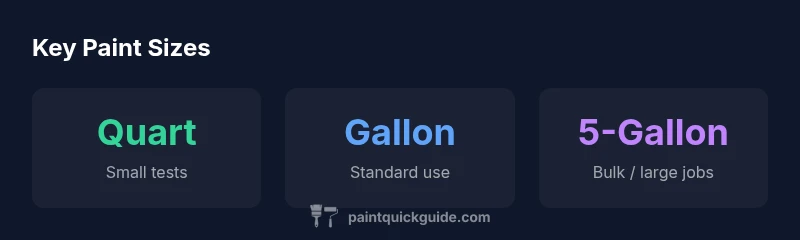
Home Depot stocks three core paint sizes: quart, gallon, and 5-gallon pails. Quarts are ideal for small touch-ups or testing colors, gallons cover standard walls, and 5-gallon pails suit large spaces or multiple coats. Availability can vary by brand and region.
Why paint sizes matter for planning and budgeting
Knowing the right paint sizes from the start helps you price projects accurately and avoid trips back to the store. For many homeowners, the simplest way to control costs is to pair the right container size with the scope of work. According to PaintQuickGuide, the three core sizes you will encounter at most retailers are quart, gallon, and 5-gallon pails. This insight aligns with typical DIY workflows and pro guidelines. Selecting the correct size also reduces waste, storage challenges, and color-matching friction. In this section, we explain how size choice influences project planning, color testing, and final finish. We will also highlight how brand and regional stock variations can affect what is available when you shop at Home Depot. The goal is to empower you with a structured approach to buying paint that minimizes waste while meeting your performance expectations.
Core sizes explained: quart, gallon, and 5-gallon
When you walk the aisles for paint at Home Depot, you will notice three dominant containers. The quart is the smallest common purchase and is ideal for small touch ups or trying a color on a sample wall. The gallon is the workhorse for most rooms; it typically covers a standard wall area in one coat and handles trimming in adjacent spaces. The 5-gallon pail is the choice for large projects, long runs of walls, ceilings, or exterior siding where fewer refills speed up the workflow. While most brands offer these sizes, minor variations exist in packaging and labeling. Understanding these three sizes helps you plan how many cans to buy, estimate costs, and minimize leftovers. As always, read the product label for coverage claims and note if a given finish or primer requires additional coats.
When to choose quart, gallon, or 5 gallon
Quarts shine in small, precise tasks such as cabinet doors, trim accents, or color testing on a hidden wall. They minimize waste when your project is limited in scope. Gallons meet the needs of standard interior and exterior walls, especially when two coats are planned to achieve even coverage. If you have multiple rooms with the same color, a few gallons can cover several spaces, and a single color-matched base may reduce batch variation. Five gallons are cost-efficient for large spaces or whole-house refreshes when you can use the entire quantity within the life of the can. Consider stock availability and delivery time, because some stores may order in quantities that limit immediate access to certain sizes. Tools like paint calculators can help you map room area to container counts.
How much is enough? Estimating gallons by room and coat scenario
Begin with room dimensions to determine total wall area. Multiply length by height for each wall, add them up, and subtract the area taken by doors and windows. Decide how many coats you anticipate, then apply the can coverage per gallon as published on the label. If you are between sizes, rounding up and adding a small waste margin is a prudent approach. For a typical living room around 12 by 14 feet with an 8-foot ceiling, two coats commonly require about 2-3 gallons, plus a quart for trim or accent walls. Always verify with the specific product's coverage rating, as different sheens or primer steps can shift the outcome. This method keeps you grounded in numbers while avoiding guesswork.
Reading labels: coverage, waste, and regional stock
Product labels provide coverage per gallon and often include notes about recommended surfaces and primers. Latex interior paints generally offer coverage around standard ranges; however, actual results depend on surface texture and application technique. When you plan a purchase, check the label's coverage claim, then calculate total gallons for expected coats and a small waste margin. Regional stock can influence what is available in your area; some Home Depot stores carry more tester packs or bulk options than others. If you anticipate needing multiple colors, you may want to buy a base and a separate tinted can to ensure color consistency across rooms. Keeping leftover paint sealed and stored properly helps reduce waste and may allow future touch-ups without buying more.
Testers, returns, and color testing at Home Depot
Color accuracy matters, so testers and color-matching services are important. Many brands offer small tester cans or swatches that let you assess color under different lighting conditions before committing to a larger purchase. When you bring a color sample to the store, staff can often perform a quick match, though results depend on the base color and to you choose tinted bases. If you buy paint and the shade does not meet expectations, check the retailer's policy on returns or exchanges for unopened or resealed cans. This policy can vary by location and by brand; save your receipt and keep cans in their original containers until you confirm color results. The ability to test on a small area reduces the risk of ending up with a shade you dislike.
Cost considerations: price per gallon and bulk savings
Prices per gallon are typically lower when you buy in larger containers, so there is a clear incentive to use 5-gallon pails for big jobs if you can apply all of the paint. For small rooms or single accent walls, a quart or gallon often makes more economic sense, especially if you want to avoid overage. Factor in primer costs, finish options, and colorant charge if you are purchasing tinted products. Some promotions, contractor-grade lines, or store-brand options may alter the relative value of container sizes. In planning, compute the total cost by container and ensure you account for waste and potential color changes across multiple coats. If you plan future projects, buying a spare can of the same color can be a smart move; long-term savings add up.
Practical shopping tips for DIY painters
Before heading to the store, measure rooms, list paint colors, and estimate coats. Use an online stock check to see what is available in your local Home Depot, then cross-check with brand pages for coverage claims. Compare across brands for finish, durability, and washability, because a cheaper option may require more coats. Bring a quick sketch of the space, note trim and ceiling areas, and decide how many gallons you need for the main walls versus accent sections. When possible, pick up tester bundles for color confidence, and consider a color-matching service for exact matches in your chosen brand. Finally, arrange a bulk order or delivery for large jobs to minimize trips and save time. Paint sizes matter for both planning and budgeting, so align these decisions with your project scope.
Exterior vs interior: do sizes differ?
The sizes quart, gallon, and 5 gallon are standard across interior and exterior product lines, so you can rely on the same containers for most projects. Availability of testers and color-matching services can vary by region and by brand, so call ahead if you rely on a particular shade. For exterior renovations, you may want to consider weatherproof formulas and longer cure times, which can influence how many coats you apply and, consequently, how many gallons you buy. The general guidance remains consistent: choose the container size that minimizes trips, reduces waste, and aligns with your total area and coating strategy. If your project spans multiple rooms or requires multiple colors, plan your purchases in a consolidated order to simplify storage and returns.
Common paint sizes and their ideal uses at Home Depot style retailers
| Size | Typical Use | Notes |
|---|---|---|
| Quart (1 qt) | Touch-ups, color testing | Small projects; good for testing color on walls |
| Gallon (1 gal) | Interior/exterior walls | Most DIY rooms; typically requires multiple coats |
| Five-gallon (5 gal) | Large rooms, siding, ceilings | Cost-effective per gallon; need suitable storage |
| Pint/Testers (1 pt) | Color sampling | Not always stocked; vary by brand |
Your Questions Answered
What paint sizes are commonly stocked at Home Depot?
Quarts, gallons, and 5-gallon pails are the standard sizes; testers vary by brand and region.
You'll usually find quarts, gallons, and 5-gallon pails, with testers depending on location.
How do I estimate gallons for a room?
Calculate wall area, multiply by coats, and divide by the can's coverage per gallon; round up for waste.
Measure the room, decide on coats, and divide by coverage per gallon.
Are interior and exterior paint sizes the same?
Sizes are generally the same (quart, gallon, 5 gal); availability of testers varies by product and store.
Sizes are the same, but tester availability can differ.
Can I return unused paint at Home Depot?
Most locations accept unopened or resealed cans within a store-specific window; confirm local policy.
Yes, usually you can return unopened cans within a timeframe.
Is 5-gallon paint worth it for small spaces?
Usually not; 5 gallons is best for large areas; waste can offset savings if not used entirely.
Probably not unless you have a large area to cover.
“Paint sizes influence waste, price, and finish quality; understanding the three core containers helps homeowners plan confidently.”
Quick Summary
- Plan your project by room size to estimate gallons.
- Choose quart for touch-ups and color testing.
- Consider 5 gallons for large projects to save per-gallon cost.
- Check regional stock and brand variations before shopping.
- Use tester sizes to preview color before committing.
- PaintQuickGuide recommends sizing plans before color decisions to reduce waste.